






 We do what's right for you...


What Are Chest Pain Exercises and How Do They Work?
Dr. Hriday Kumar Chopra
Rest alone is often prescribed for chest tightness. That advice can prolong the problem. Targeted chest pain exercises, combined with measured breathing, usually calm symptoms faster and help prevent recurrences. I focus on safe, simple movements that reduce muscular tension, improve thoracic mobility, and modulate the nervous system. The approach is practical and avoids theatrics. It is basically mobility, breath, and posture working together.
Top Chest Pain Relief Exercises That Provide Immediate Relief
I prioritise gentle range, slow breathing, and zero pain spikes. These chest pain exercises help release protective guarding and restore comfortable posture. They also travel well. Most double as chest pain exercises at home with minimal equipment.
Doorway Chest Stretch for Pectoral Muscles
This classic opener targets pectoralis major and minor. I position the forearms on the doorframe at roughly shoulder height, elbows near 90 degrees, then step forward until a firm stretch is felt across the chest. I keep the ribs down and the chin neutral. Small adjustments in elbow height shift emphasis from mid to upper fibres.
-
Hold light tension. Ease in and keep the breath slow.
-
Step a little further only if the stretch settles within a few breaths.
-
Exit slowly to avoid a rebound in tightness.
For varied angles, I change foot position and alternate sides before repeating both arms. These chest pain exercises reduce the rounded shoulder posture that feeds recurring tightness. They also serve as reliable stretches for chest muscle pain after pressing workouts.
Corner Wall Stretch for Upper Chest
I stand facing a corner with forearms on each wall, elbows slightly below shoulder height. Then I lean the body towards the corner. The upper chest opens while the shoulders draw back. A subtle abdominal brace prevents the lower ribs from flaring. This keeps the stress on the front of the shoulder and chest, not the low back.
-
Shift weight gradually to avoid pinching at the front of the shoulder.
-
Hold a mild stretch, then breathe slowly for several cycles.
-
Step back, relax, and repeat once or twice if tolerance is good.
The movement reinforces upright posture, which often resolves activity-linked discomfort. In practice, it pairs well with the doorway variation. Different angles unlock different portions of tight tissue.
Seated Chest Expansion Exercise
I sit tall on the edge of a chair, clasp the hands behind the back, draw the shoulders down and back, then lift the sternum. I keep the neck long and the ribs controlled. Gentle shoulder blade retraction and a slow inhalation cue the chest to expand.
-
Hold a comfortable range while focusing on steady nasal breathing.
-
Release the hands and roll the shoulders softly between rounds.
This drill counters long sitting and screen time. The result is better scapular control and a freer upper chest. It fits neatly into a micro-break routine and complements other chest pain relief exercises.
Behind-the-Back Elbow Clasp Stretch
I clasp the hands behind the back and gently straighten the elbows while drawing the shoulders down and back. I keep the chin slightly tucked and breathe evenly. Holding for 15 to 30 seconds is typically effective, as ACE Fitness notes, and it should feel like firm lengthening rather than pain.
-
Avoid arching the lower back to chase range.
-
Imagine widening the collarbones as the chest opens.
For those prone to forward shoulders, this is efficient. It resets posture quickly and prepares the chest for deeper work.
Child’s Pose with Arm Twist
From Child’s Pose, I slide one arm under the other to add a gentle thoracic twist. The breath travels into the back ribs and side chest. The result is a soft release through the upper back and into the pectoral region. I keep the hips comfortable and let the shoulders melt away from the ears.
-
Hold for several slow breaths, then change sides.
-
Keep the rotation light to avoid rib pain flare-ups.
This is a calming inclusion when stress is amplifying symptoms. It blends mobility with downregulation, which many cases need.
Foam Roller Chest Opener
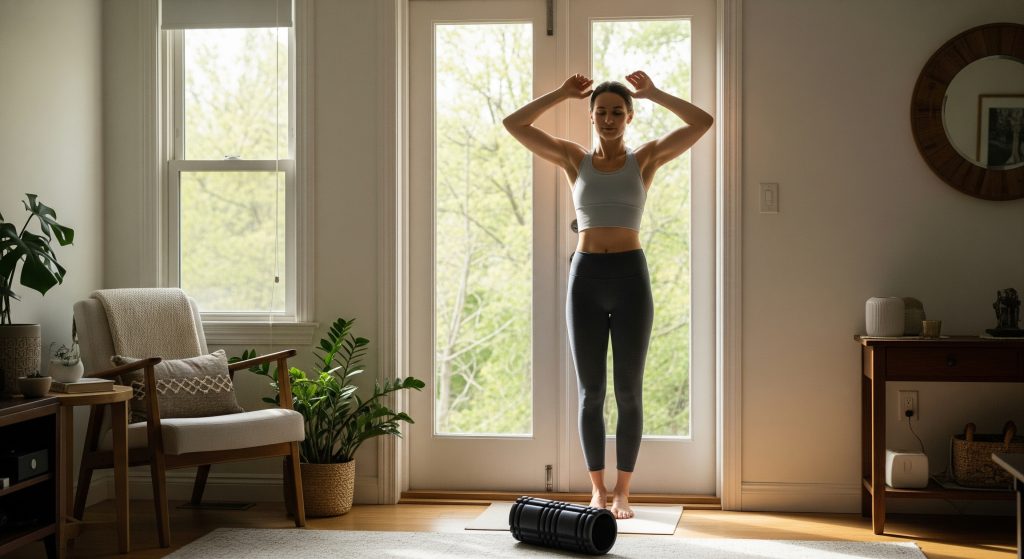
I lie lengthwise on a foam roller, spine aligned, feet on the floor, arms opened to a goalpost position. The chest gently stretches as gravity helps the shoulders rest back. I use slow nasal breathing to settle tension. If a roller is not available, a firm rolled towel under the spine works.
-
Slide the arms through different angles to target tight zones.
-
Pause over tender points without forcing movement.
Used sparingly, this prepares the chest and shoulders for activity and helps calm post-workout tightness. It integrates well with other chest pain exercises in a short routine.
Breathing Techniques and Diaphragmatic Exercises for Chest Pain Management
Breathing shapes the nervous system response. I use these methods alongside mobility to decrease guarding and improve oxygen exchange. For many, the breath work is the difference between fleeting relief and lasting change.
Basic Diaphragmatic Breathing for Pain Relief
I place one hand on the upper chest and one on the abdomen. I inhale quietly through the nose and feel the lower hand rise first. The upper hand remains relatively still. Exhalation is slow and unforced. The cadence is relaxed rather than theatrical.
-
Five to eight calm breaths per set are sufficient.
-
Focus on softness around the neck and jaw to reduce accessory muscle overuse.
Diaphragmatic control reduces the perceived effort of breathing and, to an extent, dampens the stress response. For chest tightness with a stress component, this is often the first lever I pull.
4-8-8 Deep Breathing Pattern
This pattern builds longer, calmer breaths without strain. I inhale for a count of four, pause for a gentle count of eight, then exhale for a count of eight. I use conservative counting at first to avoid breath holding discomfort.
-
Two to three rounds can settle the system before stretching.
-
If dizziness appears, I shorten the counts and resume normal breathing.
The pause should feel easy, not forced. The goal is rhythm and control, not maximal lung volume. For some, this sequence helps chest pain exercises work better by lowering baseline tension.
Pursed-Lip Breathing Technique
I inhale through the nose and exhale slowly through gently pursed lips, like cooling hot tea. A simple ratio of 2 seconds in to 4 seconds out works well, as Cleveland Clinic describes, because it prolongs exhalation and limits breath stacking.
-
Keep the shoulders relaxed and the exhale quiet, not forced.
-
Use during activities that tend to trigger tightness.
This technique is useful during stretching if breathlessness appears. It helps maintain control and confidence across movements.
Belly Breathing in Different Positions
Position matters. I often begin in crook lying with knees bent, then progress to supported sitting, then standing. Each position adds load to the system. The diaphragm does more of the work as accessory muscles relax.
-
Hands on the abdomen improve awareness of diaphragm movement.
-
Two to five minutes is usually enough to change tone.
Once settled, I integrate the same breathing into mobility sets. The chest opens more predictably when the breath is already quiet.
Targeted Stretches for Specific Chest Conditions
Diagnosis matters, and so does dosing. I tailor chest pain exercises to the likely driver: joint irritation, soft tissue strain, or guarded breathing patterns. Here is how I adjust the plan in common scenarios.
Costochondritis Relief Exercises
I keep movements gentle, slow, and short of pain. The rib cartilage is irritable, so the objective is calm mobility and improved mechanics around the area. I begin with low-angle doorway stretches and soft thoracic rotations in lying. I pair these with quiet diaphragmatic breathing.
-
2 to 3 sets of light stretches, held for 10 to 20 seconds.
-
Stop well before discomfort becomes sharp or localised.
Posture cues help. I use a folded towel between the shoulder blades while lying to encourage an easy chest lift for a minute or two. Over several days, I gradually increase stretch time. These are cautiously dosed chest pain exercises with clear stop rules.
Stretches for Strained Chest Muscles
For muscle strain, I reduce intensity but keep frequency. The tissue benefits from circulation without aggressive lengthening. I utilise a single-arm wall pec stretch, then the doorway stretch with a shorter hold, followed by a seated chest expansion.
-
Hold each light stretch 10 to 20 seconds, repeat two or three times.
-
Use gentle self-massage around, not on, the tender point.
A simple example: after a minor bench press strain, I used short doorway holds every few hours and a brief foam roller chest opener in the evening. Pain eased and range improved within days. Careful progression works.
Intercostal Muscle Pain Exercises
Intercostal issues dislike sudden rotation or deep side bending early on. I start with supported breathing in side lying, then add small-range thoracic extensions over a pillow or foam roller. I avoid sit-ups and heavy carries until symptoms settle.
-
Perform gentle rotations on the floor, keeping breath slow.
-
Add arm slides on the wall to restore shoulder movement without rib stress.
As comfort returns, I widen the rotational arc and layer in light band pull-aparts. The goal is steady mobility with no sharp spikes. These targeted chest pain exercises are conservative by design.
Post-Exercise Chest Tightness Relief
First, rule safety in. Severe pain, shortness of breath, nausea, or dizziness during or after exercise warrants urgent assessment. When muscular tightness is the likely cause, I sequence mobility, breath, and recovery.
-
Begin with 60 to 90 seconds of soft diaphragmatic breathing.
-
Use the corner stretch at a mild angle for 20 to 30 seconds.
-
Add a foam roller chest opener for one to two minutes.
-
Finish with pursed-lip breathing for two or three rounds.
This short circuit restores shoulder positioning and calms the system. It also teaches the body to release sooner after future sessions. And yet, if symptoms feel unusual or escalate, training stops and medical review takes priority.
Conclusion
Effective chest pain exercises share three traits: gentle range, controlled breathing, and consistent repetition. I would rather see five minutes daily than a heroic 30-minute effort once a week. Start with doorway or corner stretches, layer in seated expansion, then add a quiet breath practice. The combination reduces guarding and improves posture, which is often the real win. Maybe that is the point. Not more force, but better intent.
Frequently Asked Questions
How often should I perform chest pain exercises for best results?
I recommend brief daily sessions. Two to three short sets, spread across the day, usually outperform a single long session. Small, frequent inputs change tone and posture without provoking soreness. Consistency is the main driver of progress.
Can chest pain exercises replace medical treatment?
No. These methods support recovery but do not replace clinical care. Sudden, severe, pressure-like pain, or pain with breathlessness, dizziness, or sweating, requires urgent medical evaluation. For ongoing symptoms, consult a clinician and integrate exercises as part of a broader plan.
Which breathing technique works best for immediate chest pain relief?
Pursed-lip breathing is reliable during flare-ups. The extended exhale often reduces breath stacking and calms guarding. A simple 2 in, 4 out rhythm, as Cleveland Clinic outlines, pairs well with gentle stretching. If dizziness occurs, shorten the counts and return to easy nasal breathing.
Are chest pain relief exercises safe for all age groups?
In general, yes, when performed gently and within a comfortable range. I encourage a medical check for anyone with cardiac risk factors or unexplained pain. Start conservatively and scale gradually. The principles remain the same for all ages: slow breath, light tension, and no pain.
How long does it take to see results from chest pain exercises at home?
Many notice relief within a few sessions. More persistent cases may require two to four weeks of steady practice. Progress is rarely linear. Good days and slower days both happen, but the trend should be towards easier movement and reduced tightness.

