






 We do what's right for you...


Understanding Spinal Cord Surgery: A Simple Guide for Patients in India
Dr. Vishal Nigam
Conventional wisdom says waiting solves most back or neck problems. For persistent nerve compression or instability, waiting can cost function. I wrote this guide to clarify when spinal cord surgery is considered, what it involves, and how recovery actually works in India. It is a straightforward briefing so families can make informed, calm choices. I cover surgical options, financial planning, rehabilitation, and what risk really looks like in practice. If a clinician has already mentioned spinal cord injury treatment or lumbar decompression surgery, this will help frame the decision.
Common Types of Spinal Cord Surgeries
1. Minimally Invasive Procedures
When conservative care plateaus, I often evaluate minimally invasive options first. The goal is simple: relieve pressure and stabilise with the least tissue disruption. Techniques include microdiscectomy, tubular decompression, endoscopic approaches, and focused stabilisation. Each uses small incisions and targeted instruments to reduce muscle trauma. Recovery is usually faster because we avoid extensive soft tissue disruption.
This approach pairs well with clear radiology findings and focal symptoms. For example, a small lumbar disc herniation causing sciatica can respond well to microdiscectomy. The same logic applies to contained cervical disc problems with arm pain. The benefit is not just cosmetic. It is reduced blood loss, shorter stays, and fewer wound issues in suitable cases. But still, not every problem is small or focal. Diffuse stenosis and instability may require broader exposure.
-
Best suited for focal disc herniations, foraminal stenosis, and some revisions.
-
Often performed as day-care or short-stay procedures in experienced centres.
-
May be combined with limited stabilisation if the segment is unstable.
I use minimally invasive spinal cord surgery when the imaging and the exam tell the same story. Precision matters. So does restraint.
2. Decompression Surgeries
Decompression addresses the core problem of pressure on the spinal cord or nerve roots. The main methods are laminectomy, laminotomy, foraminotomy, microdiscectomy, and selected corpectomy. Each relieves pressure in a slightly different way. The choice is guided by anatomy, level, and the presence of instability on imaging.
In the neck, multilevel stenosis with cord changes may require posterior decompression. In the thoracic region, focal compression can demand a more direct route. In the lumbar region, symptoms often reflect canal or foraminal narrowing. That is where lumbar decompression surgery can restore space for the nerves. This is the workhorse in degenerative disease when non-surgical care has reached its limit.
-
Laminectomy: removes the lamina to widen the canal and relieve compression.
-
Foraminotomy: opens the exit passage for a pinched nerve root.
-
Microdiscectomy: removes offending disc fragments under magnification.
-
Corpectomy: removes part of a vertebral body when needed for central decompression.
Decompression is often combined with stabilisation if there is pre-existing or iatrogenic instability. I judge that need intra-operatively and by preoperative planning. The aim is durable relief without trading one problem for another.
3. Spinal Fusion Operations
Fusion joins two or more vertebrae to eliminate painful motion. I consider it when instability, deformity, or recurrent disc disease undermines function. The procedure uses bone graft and implants to create a single stable unit. Over time, the bone consolidates and secures the segment. It is not a casual decision. Fusion changes local mechanics and shifts load to adjacent levels.
Common approaches include posterior lumbar fusion, transforaminal or posterior lumbar interbody fusion, and anterior cervical discectomy and fusion. The surgical corridor depends on the level and goals. In the cervical spine, fusion frequently follows decompression for stenosis with radiographic instability. In the lumbar spine, it is used for spondylolisthesis, recurrent disc disease, or deformity correction. I balance symptom relief with long-term biomechanics.
-
Indications: instability, deformity, severe disc collapse, or revision after failed prior surgery.
-
Trade-offs: reduced segmental motion and potential stress at adjacent levels.
-
Adjuncts: cages, plates, screws, and biological graft materials for consolidation.
Spinal cord surgery is not always about fusion. But when stability is the limiting factor, fusion is the reliable tool.
4. Artificial Disc Replacement
Artificial disc replacement preserves motion at the diseased level while addressing pain from a degenerated disc. The prosthetic disc replaces the damaged one and aims to maintain natural biomechanics. Unlike fusion, the intent is to retain movement and reduce the risk of adjacent segment overload. This can suit younger, active patients with single-level disease and intact facet joints.
I compare disc replacement against fusion case by case. Pain pattern, imaging, alignment, and facet health guide the choice. When motion preservation aligns with the problem, outcomes are compelling. When instability or facet arthrosis dominate, fusion remains more predictable.
-
Motion preservation can reduce adjacent level stress over time.
-
Patient selection is critical for durable results and prosthesis longevity.
-
Best considered for one or two levels with concordant disc pathology.
In practice, artificial disc options are available at selected Indian centres with appropriate imaging and implant support. I use spinal cord surgery principles here as well: decompress precisely, stabilise only as needed, and respect biomechanics.
5. Emergency Surgical Interventions
Some spine problems do not wait. Red flag situations demand rapid evaluation and timely intervention. Cauda equina syndrome with new bladder or bowel symptoms, acute spinal trauma with neurological decline, and spinal epidural abscess with sepsis risk are examples. Here, delay risks permanent deficit. Surgery focuses on urgent decompression, stabilisation, and infection control when present. It is decisive, protocol driven, and coordinated with ICU care.
When I advise urgent spinal cord surgery, the goal is function preservation first. Pain control and alignment follow. It is a sequence, not a debate.
Understanding Surgery Costs and Financial Planning
Average Surgery Costs Across Indian Cities
Costs vary across Indian metros and tier-2 cities due to hospital category, implant systems, and theatre time. Large quaternary centres in metros generally quote higher fees because of infrastructure and specialist availability. Smaller accredited centres may offer lower packages while maintaining standards. The spread also reflects ward choice, implant selection, and rehabilitation intensity. I advise comparing itemised estimates rather than headline figures.
For clarity, here is a simple comparison framework to discuss with hospital administrators.
|
Cost component |
What to verify |
|---|---|
|
Surgical fees |
Includes primary surgeon, assistant, and anaesthesia team. |
|
Operating theatre and consumables |
Check if advanced tools, neuromonitoring, and disposables are included. |
|
Implants and prosthetics |
Ask for brand, warranty, and whether generic alternatives exist. |
|
Ward or ICU stay |
Per-day charges and services included in the package. |
|
Diagnostics |
Imaging, lab tests, and intra-operative monitoring coverage. |
|
Physiotherapy |
In-hospital sessions and early home programme guidance. |
|
Post-operative medicines |
Analgesics, anticoagulants, antibiotics, and take-home supply. |
|
Follow-up visits |
Number of visits included and suture removal policy. |
Spinal cord surgery cost discussions should be transparent. Itemisation prevents surprises and supports better budgeting.
Factors Affecting Treatment Expenses
-
Diagnosis and complexity: single-level microdiscectomy differs markedly from multilevel deformity correction.
-
Implant choice: premium brands and specialised prostheses raise costs.
-
Hospital tier: accreditation level, city, and ICU capacity influence pricing.
-
Length of stay: complications, comorbidities, and rehabilitation needs affect totals.
-
Technology used: navigation, neuromonitoring, and endoscopy add value and expense.
-
Rehabilitation plan: inpatient physio and assistive devices can be additional items.
I advise confirming how each factor applies to your case before scheduling spinal cord surgery. It keeps planning realistic and controlled.
Insurance Coverage Options
Most private health insurance plans in India cover medically necessary spine procedures. Pre-authorisation is common, and documentation must be complete. The policy fine print matters. Waiting periods, sub-limits on implants, and room rent caps can change out-of-pocket costs. Corporate group policies often provide wider coverage with fewer exclusions.
I recommend the following workflow.
-
Share the provisional operative note with your insurer for pre-approval.
-
Confirm room-rent linked caps that may proportionally reduce reimbursements.
-
Verify implant sub-limits and ask about top-up coverage if needed.
-
Check the network hospital list for cashless admission options.
-
Clarify documentation required for spinal cord surgery claims and timelines.
This process reduces claims friction and keeps focus on recovery rather than paperwork.
Government Healthcare Schemes
Patients from eligible households may receive support through national and state health schemes. Ayushman Bharat – Pradhan Mantri Jan Arogya Yojana offers hospitalisation cover at empanelled centres. Selected state schemes provide similar benefits to residents. Coverage varies by package, centre, and case complexity. Hospital social workers can help navigate eligibility and empanelment status.
For spinal cord injury treatment after trauma, coordinated care under public schemes can include surgery, rehabilitation, and assistive devices. Documentation should be organised early to prevent delays at admission.
Recovery Timeline and Rehabilitation Process
Hospital Stay Duration
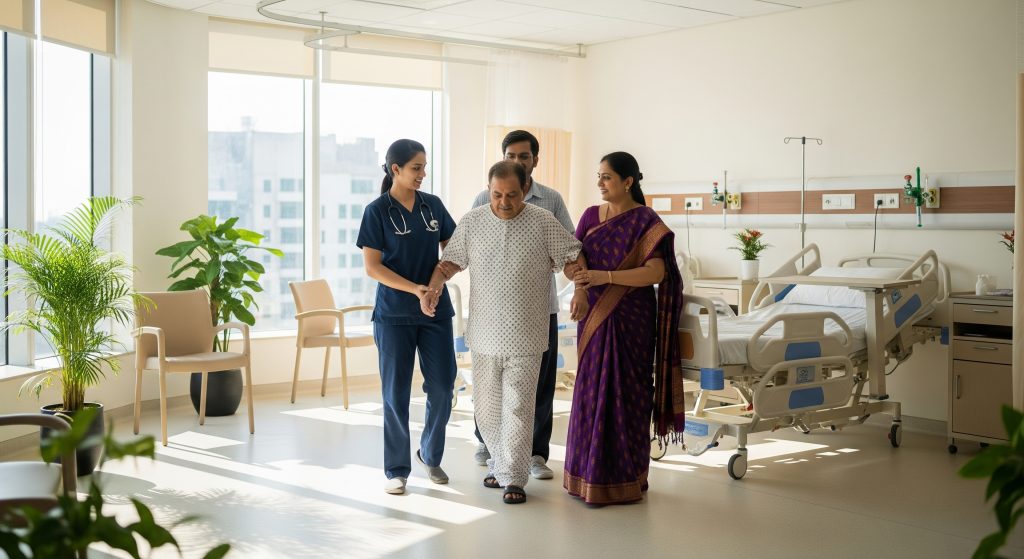
Length of stay depends on procedure type and comorbidities. Minimally invasive decompression can allow early discharge when pain is controlled and mobility is safe. Fusion or multilevel decompression usually involves a longer stay for monitoring and physiotherapy. I plan discharge when the wound is stable, pain is manageable, and mobilisation goals are met.
-
Early ambulation is encouraged once medically safe, often within a short time frame.
-
Escalation to ICU care is reserved for complex cases or medical instability.
-
Discharge planning includes home safety checks and medication counselling.
Spinal cord surgery recovery is not a race. It is staged and purposeful.
Week-by-Week Recovery Milestones
Recovery proceeds in phases rather than rigid dates. The following milestones are indicative. I tailor them based on procedure, age, and baseline fitness.
-
Week 1: pain control, wound care, and short supervised walks. Basic breathing exercises to reduce chest complications.
-
Weeks 2-4: progressive walking, gentle core activation, and posture training. Return to desk work may be possible with support.
-
Weeks 4-8: stamina building, light strength work, and movement pattern retraining. Start tapered brace weaning when applicable.
-
Months 3-6: sport-specific drills for selected patients and gradual return to higher loads with therapist oversight.
These milestones reflect typical progress after spinal cord surgery in stable cases. Complex reconstructions require slower pacing and closer review.
Physical Therapy Programmes
Rehabilitation is a clinical intervention, not an optional extra. The programme starts with pain education, safe movement drills, and neural gliding techniques when appropriate. As healing advances, I include graded loading, balance work, and endurance. Therapists also train ergonomic habits and return-to-work strategies. For athletes, we add phase-specific conditioning and objective readiness checks.
Key components that I emphasise:
-
Neuromuscular control: restore segmental stability and movement coordination.
-
Strength and endurance: build capacity in trunk, hips, and scapular stabilisers.
-
Gait retraining: refine stride length, cadence, and load symmetry.
-
Pain coping skills: use pacing and cognitive strategies to prevent flare cycles.
Spinal cord surgery sets the stage. Rehabilitation delivers the performance.
Long-term Rehabilitation Goals
Long-term goals are simple to state and hard to achieve without consistency. They include sustained pain reduction, durable function, and confident return to work or sport. For neurological injuries, goals also include spasticity control, pressure sore prevention, and independence in transfers. I align goals with patient priorities and role demands. A teacher, driver, and dancer have different end states. The plan must reflect that reality.
-
Functional benchmarks: stair tolerance, lifting capacity, and uninterrupted sleep.
-
Work readiness: task simulation, shift tolerance, and commute planning.
-
Sport return: measurable strength ratios and movement quality thresholds.
Spinal cord surgery should unlock these goals, not replace them. The operation creates possibility. The work afterwards creates outcomes.
Managing Risks and Complications
Immediate Post-Surgery Complications
Every operation carries risk. The common immediate issues are bleeding, infection, anaesthetic reactions, nerve irritation, and blood clots. Wound fluid collections and transient numbness can occur as inflamed nerves settle. In fusion, there is a risk of hardware malposition or non-union later. These events are uncommon in well-selected cases with proper technique. They are not zero. I discuss them plainly during consent.
-
We reduce infection risk with sterile protocols and targeted antibiotics.
-
We reduce clot risk with early mobilisation and risk-adjusted anticoagulation.
-
We monitor neurological function with clinical checks and, when indicated, neuromonitoring.
For spinal cord surgery, prevention begins before the first incision. Optimising diabetes control, nutrition, and smoking cessation lowers complication rates.
Preventing Secondary Conditions
Secondary complications usually arise from immobility or poor wound care. Pressure injuries, chest infections, deep vein thrombosis, and deconditioning are the main concerns. I counter them with early mobilisation, breathing work, skin checks, and hydration. Bracing, if prescribed, supports healing while therapy restores movement confidence. In neurological cases, bowel and bladder protocols maintain dignity and health.
Simple habits protect outcomes:
-
Change position regularly and offload pressure points with cushions.
-
Keep the wound clean and dry and watch for drainage or warmth.
-
Use a walking aid early if balance is uncertain to avoid falls.
Small, consistent actions compound over weeks. That compounding effect protects the result of spinal cord surgery.
Signs Requiring Urgent Medical Attention
Some symptoms should not be watched at home. New leg weakness, sudden loss of bladder or bowel control, fever with wound redness, and calf swelling require urgent review. Severe unrelenting pain unresponsive to medication also warrants assessment. When in doubt, I prefer a prompt call and a short hospital review. It saves time and worry. Sometimes it saves function.
Quality of Life Improvements
The aim is not just pain relief. It is better sleep, energy, and the ability to work and socialise. Patients report walking farther, sitting longer, and engaging with life more predictably. Well-executed spinal cord surgery enables those gains by removing mechanical and neurological barriers. The change is practical. Less fear of movement. More control over days and weeks.
Critics argue surgery is overused. They have a point in some settings. The answer is not avoidance. It is precise indications, strong execution, and serious rehabilitation.
Moving Forward with Spinal Cord Surgery
Here is the practical path I recommend. First, secure a clear diagnosis that matches symptoms and imaging. Second, exhaust skilled non-operative care unless red flags are present. Third, if function stalls, review surgical options that fit the anatomy and goals. Fourth, plan finances with written estimates and verified coverage. Finally, commit to rehabilitation with the same seriousness as the operation.
For trauma or progressive neurological loss, spinal cord injury treatment must be coordinated and timely. For degenerative problems, lumbar decompression surgery or targeted fusion can restore reliable function. The decision is not about bravado. It is about evidence, fit, and the life waiting on the other side of recovery.
Spinal cord surgery is a tool. Used well, it is a turning point. If a formal opinion or case review is needed, ask for one more expert set of eyes. It is worth the extra day.
Frequently Asked Questions
How long does spinal cord surgery typically take?
Duration varies with complexity and approach. A focused decompression is shorter than multilevel reconstruction. Preoperative planning and anaesthesia time add to the clock. I set expectations during consent so families have a realistic window.
Can I return to normal activities after lumbar decompression surgery?
Yes, in stages. Light daily activities resume early with guidance. Office work can return once sitting tolerance and wound healing are stable. Strenuous tasks and sport follow when movement quality and strength meet objective checks.
What is the success rate of spinal fusion surgery in India?
Success depends on indication, technique, and rehabilitation adherence. For well-selected cases, pain and function improve meaningfully. I define success with the patient before surgery using concrete functional goals. That alignment matters as much as any average.
Are robotic-assisted spine surgeries available in Indian hospitals?
Yes. Selected centres offer navigation and robotic assistance for implant placement. These tools support accuracy and planning. They complement, not replace, surgeon judgement and intra-operative assessment.
How soon can I walk after minimally invasive spine surgery?
Early walking is encouraged once medically safe. Many patients begin short supervised walks soon after surgery. The exact timing depends on procedure details, pain control, and baseline fitness.

