






 We do what's right for you...


Understanding Life After Radioactive Iodine Treatment
Dr. Rajesh Kumar Meena
Standard advice suggests recovery is linear after thyroid therapy. It rarely is. From the first week to the first year, life after radioactive iodine treatment is a series of adjustments that stabilise, then hold steady. I wrote this guide to make that arc clear, practical, and calm. It covers the parts people ask me about most, from safety at home to levothyroxine titration to travel letters and family planning.
Immediate Physical Changes and Recovery Timeline After RAI Treatment
The first phase sets the tone for life after radioactive iodine treatment. It involves short-term isolation, targeted hygiene, and simple routines that protect others while helping the body clear the isotope. It is manageable. With planning, it is also brief.
Recovery Timeline: First Days to Weeks
In the first 72 hours, I prioritise hydration, rest, and distance from vulnerable people. This is not overcautious. As Cancer Research UK explains, maintaining space from infants, young children, and pregnant people reduces avoidable exposure. By week two, most daily routines resume, with saliva and urine excretion of the isotope falling. For many, minor mouth or throat discomfort fades over days, not months.
Short, predictable dips in energy are common. I treat these as signals to pause, not problems to fix. That mindset eases the transition into life after radioactive iodine treatment and keeps expectations realistic.
Common Physical Side Effects During Recovery
Typical issues include a metallic taste, dry mouth, temporary neck soreness, and mild nausea. Parotid and submandibular gland tenderness can occur as the glands take up iodine. I encourage frequent sips of water and sugar-free lozenges. Gentle jaw movement and warm compresses help when salivary glands feel heavy or achey. These are classic radioactive iodine treatment side effects and, in most cases, resolve with conservative measures.
-
Metallic taste or dry mouth, often worse in the evening.
-
Mild nausea that improves with small, bland meals.
-
Transient neck discomfort after recent surgery.
-
Low mood or fatigue while hormones stabilise.
Managing Salivary Gland Problems
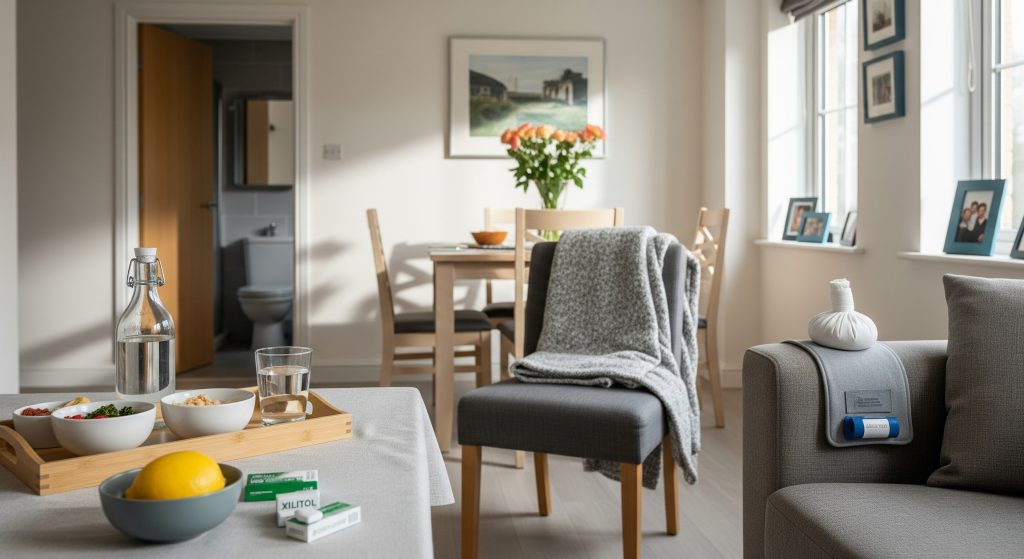
Salivary glands deserve early attention. I start with water on the hour, then add xylitol gum, lemon drops only if recommended, and warm compresses along the jawline. Gentle massage from the back of the jaw forward can ease congestion. I avoid very acidic foods if they trigger sharp twinges. Simple regimen. Solid results.
-
Hydration first, then sugar-free gum or lozenges.
-
Warm compresses for 10 minutes, twice daily.
-
Dental protection with high-fluoride toothpaste if dry mouth persists.
If swelling escalates, I discuss short-term anti-inflammatory strategies with the clinical team. Targeted care prevents small issues from lingering and complicating life after radioactive iodine treatment.
Radiation Safety Precautions at Home
The principles are distance, time, and hygiene. Keep space from others, especially children and pregnant people. Limit close contact for several days. Use personal utensils and linens. Flush the toilet twice, wash hands thoroughly, and store personal items separately. In guidance that is widely used in clinics, a conservative buffer of several days protects family members while the isotope clears.
For specificity on the most common timeframe for separation and monitoring implications, one clinical FAQ notes a distancing period of several days and that security detectors can be triggered for weeks; in those cases, a doctor’s travel letter is prudent, as FAQs Radioactive Iodine sets out. I keep the approach practical rather than punitive. It protects others and lets me move on sooner.
-
Sleep separately for the advised period.
-
Assign a single bathroom if feasible and clean high-touch areas.
-
Do not share towels, cutlery, or reusable water bottles.
-
Bag laundry separately during the highest-excretion window.
Returning to Normal Activities
By late week one, many return to desk work. Physical roles may require an extra few days. I resume driving when alert and off sedating medicines. Social plans are easier once the period of strict distancing ends. This staged return helps embed life after radioactive iodine treatment without strain.
Travel raises practical questions. Airport detectors can be sensitive. I carry a brief clinic letter confirming recent radioactive iodine therapy and the date. For childcare, I delay prolonged close contact until the team confirms the green light. The principle holds: normal activities resume in steps that reflect dose and home context. Not all at once. And that is fine.
Lifelong Thyroid Hormone Replacement Therapy
Once the thyroid is ablated or removed, replacement becomes the constant. Levothyroxine sits at the centre. Dose, timing, and adherence shape energy, cognition, and long-term recurrence risk. This is the quiet backbone of life after radioactive iodine treatment.
Starting Levothyroxine After RAI
I start levothyroxine as advised by the treating team, usually in the days after therapy or surgery. The aim is twofold: replace physiological hormone and, in some cases, suppress TSH to reduce stimulation of residual cells. In routine follow-up, the dose is adjusted to symptoms and bloods. The schedule is simple. Precision matters.
Clinical materials outline that daily dosing with periodic blood tests is standard practice to achieve stable levels and, where indicated, TSH suppression; this framework is emphasised in endocrine guidance and patient materials from major clinics, including Mayo Clinic. I keep a consistent time each morning, separate from calcium or iron. Small routine, large payoff.
Finding Your Optimal Dosage
Dose-finding is iterative. I use weight, age, cardiac history, and risk category to pick a starting point, then recheck in 4 to 6 weeks and adjust. For typical adults without cardiac disease, a weight-based estimate guides the first prescription. For older adults or those with coronary disease, I start lower and step up carefully.
For readers who prefer an explicit frame, initial levothyroxine dosing for many adults is approximately 1.6 micrograms per kilogram per day, with lower starting doses of 12.5 to 25 micrograms for older adults or those with cardiac disease, as American Family Physician summarises. I then titrate to clinical comfort and biochemical targets. It is basically careful, slow optimisation.
-
Take on an empty stomach with water.
-
Separate from calcium, iron, and soy by 4 hours.
-
Recheck TSH and free T4 after any change.
TSH Target Levels for Different Risk Groups
Targets vary by recurrence risk. For low-risk differentiated thyroid cancer, the TSH goal is in or slightly below the normal range. For high-risk disease, deeper suppression is often preferred. I tailor the boundary to the individual and the disease course.
As a practical anchor, targets often cited for low risk sit between 0.5 and 2.0 mIU/L, while high-risk groups may aim below 0.5 mIU/L, with recurrence risk rising at substantially elevated levels; these ranges are outlined by endocrine groups including American Thyroid Association. I keep the plan adaptive to symptoms and imaging. Rules help, judgement decides.
|
Risk category |
Typical TSH target |
|---|---|
|
Low risk DTC |
0.5 to 2.0 mIU/L |
|
Intermediate risk |
0.1 to 0.5 mIU/L |
|
High risk |
Below 0.1 to 0.5 mIU/L (clinician judgement) |
Managing Hypothyroid Symptoms
While titrating, some symptoms may persist. Dry skin, constipation, slowed thinking, or cold intolerance signal a need to check levels. I distinguish symptoms of low thyroid from side effects of treatment or general fatigue. Patterns over weeks matter more than a single bad day.
-
Track sleep, mood, and bowel habit for patterns.
-
Confirm adherence and timing before dose changes.
-
Consider interacting medicines and supplements.
This steady approach supports a stable life after radioactive iodine treatment without overcorrecting to each fluctuation.
Regular Monitoring Schedule
Monitoring cadence is simple and strict. I recheck TSH and free T4 every 6 to 8 weeks after dose changes, then every 6 to 12 months once stable. For those with thyroid cancer history, I align bloods with imaging and thyroglobulin where appropriate. Consistency prevents slow drift away from targets. It also keeps the bigger picture in view.
Diet and Nutrition Management Post-Treatment
Food routines loosen after therapy yet still support recovery. The shift back from a low-iodine diet is staged. Hydration remains central. I keep this practical and flexible so it fits normal life after radioactive iodine treatment.
Transitioning From Low-Iodine Diet
Once cleared by the team, I reintroduce iodised salt and dairy in small steps. I start with one reintroduction per day to observe tolerance. Seaweed and supplements containing iodine remain excluded unless specifically advised. If a scan is planned, the timing of reintroduction follows the imaging plan. Simple rule: reintroduce slowly, then eat normally.
Hydration Requirements After RAI
Hydration helps clear residual isotope and manages dry mouth. I target regular sips across the day rather than large boluses. Herbal tea and diluted juice support variety. Hydration is also the easiest lever to reduce salivary discomfort. It is unglamorous. It works.
Foods That Support Recovery
I focus on protein, fibre, and micronutrients that aid mucosal recovery and energy. This is not a special diet. It is targeted common sense that supports a sustainable life after radioactive iodine treatment.
-
Lean protein for repair: fish, eggs, legumes.
-
High-fibre carbs for regularity: oats, whole grains, vegetables.
-
Healthy fats for satisfaction and vitamins: olive oil, nuts, seeds.
-
Neutral, soothing foods during mouth tenderness: yoghurt, soups, soft fruits.
Managing Digestive Sensitivities
Nausea or altered taste can change appetite. I suggest small, frequent meals, bland options early, and spices later. If constipation develops during dose titration, I increase fibre and fluids, then add a gentle osmotic laxative if needed. For diarrhoea, I reduce caffeine and rich foods and consider a short course of probiotics. Targeted, brief, and monitored.
Long-term Health Considerations and Follow-up Care
Long-term care extends beyond blood tests. It includes fertility planning, surveillance, late effects management, and emotional steadiness. These elements define the quality of life after radioactive iodine treatment as much as the initial therapy.
Fertility and Pregnancy Guidelines
For those planning a family, timing matters. I generally advise delaying conception for a clinically recommended interval after therapy and until thyroid levels are stable. Preconception review of dose and TSH targets protects maternal health and fetal development. During pregnancy, the levothyroxine dose may rise. Early antenatal testing confirms adequacy. One principle holds: plan ahead, then monitor closely.
Cancer Recurrence Monitoring
Follow-up schedules are risk-based. Typical elements include clinical review, thyroglobulin and anti-Tg assays where appropriate, ultrasound of the neck, and periodic diagnostic imaging. I anchor appointments on a 6 to 12 month cadence, refined by risk and response. Surveillance is not paranoia. It is structured reassurance that underpins life after radioactive iodine treatment.
-
Annual ultrasound in the early years for higher-risk cases.
-
Stimulated or baseline thyroglobulin based on protocol.
-
Targeted imaging only when indicated.
Managing Late Side Effects
Most late issues are mild and manageable. Persistent dry mouth, dental caries risk, and altered taste can linger. I coordinate with dental care for saliva substitutes, high-fluoride paste, and routine checks. In rare cases of significant salivary dysfunction, I consider specialist referral. Bone health deserves attention in those on long-term deeper TSH suppression. Surveillance and early intervention protect the day-to-day experience.
Second Cancer Risk Assessment
The risk of second malignancies after RAI is discussed often and, for most, remains low. Risk appears dose related and modulated by age and cumulative exposure. I keep the conversation balanced. Screening follows standard national programmes unless specific factors dictate earlier checks. Clarity here reduces background worry and helps people focus on the habits that matter.
Emotional and Psychological Support
Anxiety spikes are normal near scan time. Sleep can wobble. I encourage structured coping: brief journaling, a predictable exercise routine, and, if helpful, a therapist familiar with cancer survivorship. Peer groups provide validation and practical tips. The goal is not relentless positivity. It is steadiness. And the ability to enjoy life after radioactive iodine treatment without constant medical noise.
Living Well After Radioactive Iodine Treatment
Living well is a method, not a mood. I design it around stable hormones, modest routines, and clear boundaries for work, rest, and family. I keep medical administration simple with a single weekly check-in for refills and appointments. I choose movement over intensity: brisk walks, light resistance training, and stretching. These rebuild capacity without risking injury.
For relationships, I communicate early about short-term precautions and the long view. That removes ambiguity and preserves closeness. For work, I phase back in blocks and schedule thinking tasks at the most alert time of day. And for meaning, I return to the pursuits that signal identity beyond patienthood. This is where life after radioactive iodine treatment becomes ordinary again. In the best possible sense.
-
Routine first, ambition second.
-
Appointments batched, results recorded, worries contained.
-
Energy protected for people and projects that matter.
Frequently Asked Questions
How long does it take for thyroid hormone levels to stabilise after RAI?
Most people stabilise within two or three dose checks. That usually means two to three months from the initial prescription, with adjustments every 4 to 6 weeks. Variability is expected if there are interactions or adherence issues. The objective is reliable function and a predictable day. That is the bedrock of life after radioactive iodine treatment.
Can thyroid tissue grow back after radioactive iodine treatment?
Regrowth of meaningful thyroid tissue is uncommon after successful ablation. Small remnants can remain by design to protect nearby structures. Those remnants can produce tiny amounts of hormone in some cases. Ongoing monitoring ensures that any changes are detected early, so life after radioactive iodine treatment remains predictable and safe.
What are the travel restrictions after RAI treatment?
Short term, I avoid crowded travel until the distancing window ends. When flying soon after therapy, I carry a clinic letter in case radiation detectors are triggered. Security staff appreciate the clarity. Hydration and hand hygiene during transit are still useful. These steps are simple and allow life after radioactive iodine treatment to proceed without friction.
How does RAI affect salivary glands in the long term?
Some people report persistent dryness or taste change. Risk relates to dose, individual sensitivity, and oral care. I mitigate with hydration, saliva substitutes, xylitol gum, and dental follow-up. Most find symptoms fade or become minor background issues. A small minority need specialist care. These strategies help after radioactive iodine treatment for thyroid cancer and for benign conditions treated similarly.
When can I resume intimate contact after treatment?
I resume intimate contact after the advised separation period ends and personal items are no longer restricted. This often coincides with the end of close-contact precautions. Communication with partners prevents uncertainty. The aim is safety first, then normality. It is a straightforward step back into life after radioactive iodine treatment.
Practical checklist
-
Confirm your levothyroxine dose, timing, and first blood test date.
-
Plan distancing and hygiene for the initial days at home.
-
Reintroduce foods gradually and maintain steady hydration.
-
Book follow-up imaging and endocrine review on one calendar.
-
Prepare a brief travel letter if relevant.
Two final notes. First, personal baselines differ. Roughly speaking, recovery speed reflects dose, surgery timing, and general health. Second, routines beat willpower. Small, automatic habits sustain health far better than big, intermittent pushes. That is how life after radioactive iodine treatment settles into something steady, durable, and yours.
Glossary
|
TSH |
Thyroid stimulating hormone. A pituitary signal that prompts the thyroid to produce hormones. |
|
Tg |
Thyroglobulin. A tumour marker used in follow-up for differentiated thyroid cancer. |
|
CAC (context) |
Customer acquisition cost. Irrelevant clinically, but as an analogy, knowing your CAC is like knowing your TSH target: fundamental to control. |
One contrarian reminder. Perfection is not the target. Consistency is. And yet, when the basics hold, confidence returns quickly. That is the quiet success of life after radioactive iodine treatment.
For those tracking keywords or looking for concrete phrasing, here is the plain statement of context: This guide addresses radioactive iodine treatment for thyroid cancer and the common radioactive iodine treatment side effects that follow. It is written to support informed decisions and stable routines.

