






 We do what's right for you...


Understanding Guttate Psoriasis: Causes, Triggers, and Treatments
Dr. Payal Gupta
Conventional advice treats guttate psoriasis as a short detour. It often is. I take a stricter view. Early, structured care shortens the episode and reduces escalation risk. That is the practical aim of any guttate psoriasis treatment plan. Resolve the current flare. Cut the trigger. Protect the skin barrier. And restore confidence fast.
Effective Treatment Options for Guttate Psoriasis
I approach guttate psoriasis treatment with a stepped and time-bound plan. Symptom relief starts immediately, while the trigger search runs in parallel. The regimen below reflects that sequence.
1. Topical Corticosteroids
Topical corticosteroids remain first line. I match potency to body site and flare intensity. Thin skin requires low potency agents. Trunk and limbs tolerate moderate options for short periods.
-
Short courses reduce erythema, pruritus, and scaling quickly.
-
Intermittent use limits skin atrophy and tachyphylaxis risk.
-
Ointments suit dry scaling plaques. Lotions or foams suit hairy areas.
For many patients, this is the backbone of guttate psoriasis treatment in the acute phase. I taper rather than stop abruptly to avoid rebound.
2. Vitamin D Analogues
Vitamin D analogues normalise keratinocyte proliferation. I often combine them with a mild steroid to balance efficacy and tolerance. This reduces steroid load over two to four weeks.
-
Useful for daytime application with a steroid at night.
-
Helps maintain clearance once lesions flatten.
This combination keeps guttate psoriasis treatment consistent without overuse of higher potency steroids. It is a practical maintenance bridge.
3. Phototherapy
Narrowband UVB is targeted and efficient. I recommend it when lesions are widespread or when topical adherence is difficult. Sessions are brief and scheduled two or three times weekly.
-
Consider for rapid control when quality of life is affected.
-
Pair with emollients to reduce dryness and improve comfort.
Phototherapy integrates well with guttate psoriasis treatment after an infectious trigger has been addressed. It is precise and supervised, which reassures anxious patients.
4. Systemic Retinoids
Systemic retinoids are reserved for severe or refractory cases. They reduce scaling and speed lesion flattening. I monitor lipids and liver function during therapy.
-
Not suitable for pregnancy. Strict contraception is essential.
-
Often combined with phototherapy for synergy.
In practice, I keep the systemic phase brief, then shift back to topical control. This keeps guttate psoriasis treatment proportional to risk.
5. Biologics
Biologics are rarely first line for guttate patterns. They can be justified in exceptional, persistent, or overlapping phenotypes. Safety screening is mandatory before initiation.
-
Considered if lesions persist beyond typical duration with significant impact.
-
Assess personal and family comorbidity profiles before selection.
Biologics can rescue difficult trajectories. But they should follow a clear rationale and a documented response to prior guttate psoriasis treatment steps.
6. Antibiotics for Streptococcal Infections
A recent or current streptococcal infection is a common precipitant. I screen with clinical history and focused testing where appropriate. If positive, I start antibiotics based on local guidance.
-
Target the throat or skin source if identified.
-
Treat close contacts only when clinically indicated.
Antibiotics do not treat psoriatic lesions directly. They remove the immune trigger. The rest of the guttate psoriasis treatment handles the skin response and symptom burden.
Recognising Symptoms and Identifying Triggers
Accurate recognition accelerates the right care. I use clinical pattern, timing, and preceding illness to confirm the diagnosis and isolate the trigger. This improves guttate psoriasis treatment success.
Early Warning Signs
Onset is abrupt in many cases. Patients describe a sore throat one to two weeks earlier. Lesions appear in crops across the trunk and extremities.
-
Fine scaling with bright salmon-pink colour.
-
Pruritus ranges from minimal to distracting.
Drop-Like Lesion Characteristics
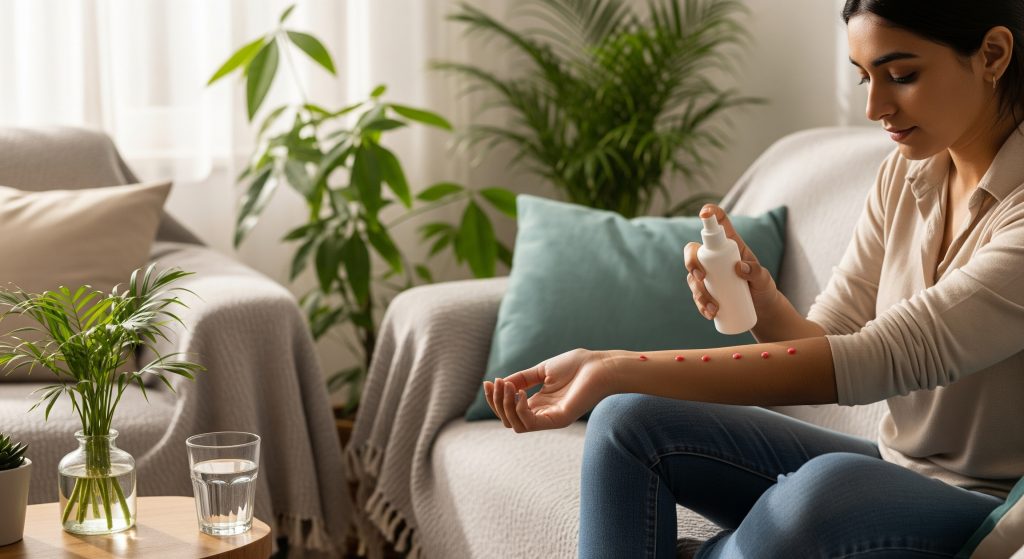
Guttate means drop-like. Lesions are small, round, and discrete. They often spare the palms and soles and cluster on the trunk, arms, and thighs.
-
Diameter typically a few millimetres to a centimetre.
-
Koebnerisation may occur after friction or scratching.
This morphology separates the pattern from chronic plaques. It also guides a lighter, faster guttate psoriasis treatment plan.
Consult a dermatologist immediately if you notice these kind of lesions.
Streptococcal Connection
A recent streptococcal throat infection is a common trigger. I ask about fevers, sore throat, or swollen neck nodes. A rapid swab or culture can support the suspicion.
-
Timing often aligns with a 1 to 3 week delay after infection.
-
Household outbreaks suggest a shared respiratory exposure.
When this link is present, antibiotics and guttate psoriasis treatment run side by side. The aim is to remove the spark and quiet the skin.
Additional Triggering Factors
Other triggers exist. Skin trauma, stress, certain drugs, and seasonal infections can play a role. I document any recent changes in routine or medication.
-
Trauma can seed new lesions at pressure points.
-
Stress amplifies itch and delays resolution.
These details sharpen the plan. Addressing them makes guttate psoriasis treatment more efficient and predictable.
Diagnostic Considerations
Diagnosis is clinical in most cases. I reserve biopsy for atypical presentations. Differential diagnosis includes pityriasis rosea, tinea, and drug eruptions.
-
Throat swab or ASO titre may support a streptococcal link.
-
Rule out dermatophyte infection when lesions are annular.
This structured approach keeps testing proportionate. It also avoids delays when rapid guttate psoriasis treatment is warranted.
Key Differences Between Guttate and Plaque Psoriasis
Lesion Appearance and Distribution
|
Feature |
Guttate Psoriasis |
Plaque Psoriasis |
|
Lesion size |
Small, drop-like papules with fine scale |
Larger, thick plaques with adherent scale |
|
Distribution |
Trunk, arms, thighs; often widespread |
Extensor surfaces, scalp, lower back |
|
Onset |
Acute, clustered appearance |
Insidious, chronic course |
The pattern dictates management tempo. Smaller lesions encourage a shorter, targeted guttate psoriasis treatment window.
Age of Onset
Guttate psoriasis often presents in children, adolescents, or young adults. Plaque psoriasis peaks later, though both can occur at any age. Family history informs risk but does not fix trajectory.
Age shapes counselling. School or work routines must be protected during guttate psoriasis treatment to preserve normality.
Progression Patterns
Guttate flares are frequently self-limited. Some cases resolve fully. A subset transitions to chronic plaques over time.
-
Close monitoring for new plaque formation is prudent.
-
Trigger control reduces repeat episodes to some extent.
This is why I prefer decisive early action. It compresses the flare and increases the odds of a shorter guttate psoriasis treatment course.
Response to Treatment
Guttate lesions respond quickly to phototherapy and topicals. Plaques may require prolonged topical cycles, systemic agents, or biologics. Expectations should be framed accordingly.
Responsiveness is a motivational tool. It keeps adherence high during a focused guttate psoriasis treatment plan.
Complementary and Alternative Management Approaches
Adjunctive measures can support comfort and adherence. I set clear boundaries here. They complement, not replace, evidence-led guttate psoriasis treatment.
Ayurvedic Interventions
Ayurvedic care often focuses on diet, detoxification practices, and herbal formulations. Quality and standardisation vary widely. Safety checks are essential before use.
-
Discuss potential interactions with prescribed medicines.
-
Avoid preparations without clear sourcing or labelling.
When patients choose Ayurveda, I integrate it into a monitored guttate psoriasis treatment plan. The medical regimen remains primary.
Homeopathic Remedies
Homeopathy is commonly requested. Evidence for efficacy remains limited. Placebo benefit and supportive consultations can still improve wellbeing.
-
Maintain topical care and phototherapy as indicated.
-
Track lesion count and itch scores objectively.
Diet and Lifestyle Modifications
Diet does not cause psoriasis, but it can influence inflammation and weight. A balanced plan helps energy and overall health. Hydration and moderated alcohol intake also help the skin.
-
Prioritise whole foods, lean protein, and fibre.
-
Correct vitamin D deficiency where documented.
These changes reduce friction on recovery. They strengthen the effect of any guttate psoriasis treatment already in place.
Stress Management Techniques
Stress can amplify itch and sleep loss. I recommend simple routines that fit life and work. Short daily practices outperform occasional long sessions.
-
Breathwork, brief mindfulness, or light exercise.
-
Regular sleep and screen limits before bed.
I often see a measurable difference in comfort. Better sleep supports immune balance and improves guttate psoriasis treatment adherence.
Conclusion
Guttate psoriasis is disruptive, visible, and often sudden. It is also highly manageable with the right structure. A decisive, layered guttate psoriasis treatment clears lesions faster and reduces the chance of lingering plaques. Identify the trigger. Treat the skin. Support the person. Then step down methodically. That sequence works.
My closing advice is simple. Act early and document progress week by week. Small, consistent gains compound into clearance.
Frequently Asked Questions
Can guttate psoriasis transform into chronic plaque psoriasis?
Yes, a subset can progress. The risk varies by genetics and triggers. Early, structured guttate psoriasis treatment reduces persistent inflammation. I monitor for plaque formation and adjust therapy if plaques appear.
Should antibiotics be prescribed for all guttate psoriasis patients?
No. Antibiotics are reserved for confirmed or strongly suspected streptococcal infection. They remove the trigger, not the lesions. Skin care still requires a full guttate psoriasis treatment plan with topicals or phototherapy.
What role does phototherapy play in treating guttate psoriasis?
Phototherapy, especially narrowband UVB, is highly effective for widespread lesions. It fits when adherence to topicals is difficult or when quick control is needed. I often combine it with emollients within a broader guttate psoriasis treatment pathway.
Is guttate psoriasis contagious?
No. The skin condition is not contagious. A preceding streptococcal infection may be transmissible, but the psoriasis itself is not. Standard hygiene and appropriate antibiotics address the infectious component when present.
What percentage of guttate psoriasis patients experience complete recovery?
Recovery rates vary depending on trigger control and adherence. Many cases resolve fully after a single episode. A focused guttate psoriasis treatment course and prompt management of infections improve the likelihood of full clearance.

