






 We do what's right for you...


Understanding Food Poisoning Prevention and Safe Food Handling
Dr. Urvashi Gupta
Conventional wisdom says food safety is just common sense. It is not. Effective food poisoning prevention demands discipline, clear systems, and consistent execution under time pressure. I treat it as an operational standard, not a set of helpful hints. In practice, that means knowing where hazards arise, controlling temperature at each step, and building habits that hold when the kitchen is busy. The aim is simple. Keep harmful pathogens out, keep them from multiplying, and kill what slips through. The following guide lays out precise, workable methods that hold up in real kitchens and real homes.
Essential Food Poisoning Prevention Methods
Hand Hygiene and Personal Cleanliness Standards
I start with hands because they are the fastest vector. Handwashing must be deliberate: warm water, soap, vigorous rubbing for **20** seconds, then thorough drying. Jewellery, long nails, and phone use near prep areas increase risk. I keep a short routine: wash before food prep, after handling raw food, after waste, and whenever switching tasks. Single-use gloves help, but they never replace washing. Gloves must be changed frequently and always between raw and ready-to-eat tasks. This is foundational food poisoning prevention and it sets the tone for the whole kitchen.
-
Keep a dedicated handwash sink with soap and disposable towels.
-
Tie back hair and cover cuts with blue plasters and gloves.
-
Remove rings and watches during prep to reduce harbourage points.
Kitchen Surface Sanitisation Techniques
Clean first, then sanitise. Detergent removes grease and debris. Sanitiser reduces microbes. I use a two-step approach or a combined detergent-sanitiser with the stated contact time. Microfibre cloths are effective, but I rotate colours to separate raw and ready-to-eat work. Air dry when possible. Heat also works: a dishwasher cycle at appropriate settings gives reliable results for utensils and small boards. Structured surface care underpins food poisoning prevention by breaking the invisible chain of contamination.
-
Work top to bottom to prevent recontamination of cleaned areas.
-
Replace cloths frequently or use disposable options for high-risk tasks.
-
Sanitise high-touch points: fridge handles, taps, and switches.
Cross-Contamination Prevention Strategies
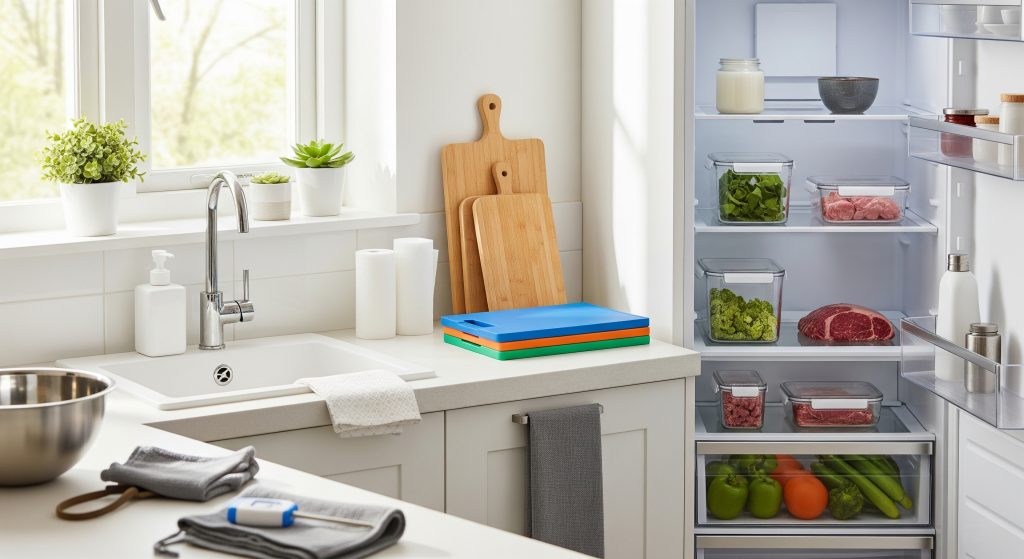
Cross-contamination often hides in the mundane. Raw poultry drips in a shared fridge. A knife moves from meat to herbs with a quick rinse, not a wash. I build barriers: equipment separation, time separation, and storage separation. Colour-coded boards reduce errors. So does a designated raw zone with its own tools and wipes. It sounds rigorous. It is, and it needs to be for effective food poisoning prevention.
-
Store raw foods below cooked or ready-to-eat items.
-
Use dedicated utensils for allergens and high-risk foods.
-
Change aprons when shifting from raw prep to service plating.
Proper Cooking Temperature Guidelines
Heat is non-negotiable. I cook whole cuts to safe levels and ensure minced, chopped, or mechanically tenderised meats reach higher targets. Piping hot throughout is not a proxy for safe internal temperatures. A calibrated probe is essential. Insert into the thickest part and check more than once. This step is a decisive control in food poisoning prevention.
|
Food |
Minimum internal temperature |
|---|---|
|
Poultry (whole or minced) |
At least **75** C for **30** seconds |
|
Reheated leftovers |
At least **75** C throughout |
|
Minced meats, sausages |
At least **70** C for **2** minutes |
|
Fish |
Opaque flesh, firm, ideally **63** C |
|
Egg dishes |
Until yolk and white are set or **70** C |
Safe Water and Beverage Practices
Contaminated water defeats even the best kitchen routine. I use potable water for cooking, ice, washing produce, and making drinks. Ice is food. Treat it as such with dedicated scoops and covered bins. In areas with doubtful supply, I boil water, use certified filters, or choose sealed bottles. This is a quiet pillar of food poisoning prevention that many neglect until there is a problem.
Safe Food Handling Practices from Purchase to Plate
Selecting Fresh and Safe Food at Markets
Quality in starts safety out. I examine temperature control at the counter, not just the freshness of the fillet. Chilled foods must be cold to the touch. Packaging should be intact, with no swelling or leaks. I avoid dented cans and cracked shells. For produce, I prioritise items without breaks in the skin and I skip pre-cut fruit if it is not kept chilled. These choices support safe food handling practices from the very first step.
-
Check odour, colour, and texture. Off smells or tackiness indicate risk.
-
Verify use-by dates and rotation at the retailer.
-
Choose reputable vendors with visible hygiene discipline.
Proper Food Transportation and Storage After Purchase
The clock starts at purchase. I pack raw meats separately and place chilled items together to keep them cold. An insulated bag with ice packs is valuable for longer trips. At home, I refrigerate or freeze promptly. High-risk foods go in first. These small logistics make safe food handling practices routine rather than aspirational.
-
Place raw meat on the lowest fridge shelf in a tray.
-
Cool hot foods quickly before refrigeration using shallow containers.
-
Label and date items for clear stock rotation.
Safe Thawing and Defrosting Methods
I avoid bench-top thawing. Thaw in the fridge, under cold running water, or as part of cooking if suitable. Microwave defrosting is acceptable if I cook immediately after. Refreezing raw food that was thawed at room temperature is unsafe. Controlled defrosting is a quiet but crucial piece of food poisoning prevention.
-
Plan ahead for large joints and whole poultry.
-
Contain thawing foods to catch drips and prevent spread.
-
Keep fridge temperature steady during extended defrosting.
Cutting Board Safety and Separation Rules
Boards carry memory. I assign colours: red for raw meat, blue for fish, green for produce, brown for cooked meat, and white for bakery or dairy. Deep knife grooves trap residue, so I replace boards before they degrade. Cleaning alone is not enough without physical separation. It is an everyday expression of food hygiene tips that actually matter.
Reheating and Leftover Management Guidelines
Leftovers are economical and safe when handled well. I cool rapidly, store in shallow containers, and reheat once to at least **75** C throughout. I discard if the food spent more than **2** hours in the temperature danger zone. Smell and appearance help, but time and temperature decide. This is disciplined food poisoning prevention in action.
-
Do not mix fresh batches with older leftovers.
-
Stir during reheating to eliminate cold spots.
-
Date-label and use within **2** to **3** days where appropriate.
Temperature Control and Food Storage Guidelines
Refrigerator Organisation and Temperature Zones
The fridge is not uniform. The back and lowest shelves are cooler. Doors are warmer and suit condiments, not milk. I set the fridge between **0** C and **5** C and verify with a thermometer. I store ready-to-eat foods high, raw items low. Clear containers help me see status and reduce door time. These are practical food safety guidelines that reduce guesswork.
-
Keep air flow clear by avoiding overfilling.
-
Wipe spills immediately to prevent microbial spread.
-
Assign a strict place for each category to enforce habit.
Freezer Storage Times and Best Practices
Freezing pauses microbial growth but does not sterilise. Packaging matters; I use freezer-grade bags, remove air, and label with date and contents. I keep the freezer at **-18** C or lower. Rotation is simple: first in, first out. Texture degrades over time even if safety holds. I plan with that in mind.
|
Food |
Suggested maximum freezer time |
|---|---|
|
Raw poultry pieces |
Up to **9** months |
|
Minced meat |
Up to **3** months |
|
Fish (fatty) |
Up to **3** months |
|
Fish (lean) |
Up to **6** months |
|
Cooked stews or curries |
Up to **3** months |
|
Bread |
Up to **3** months |
Room Temperature Storage Rules
The danger zone lies roughly between **5** C and **60** C. Within this range, bacteria can multiply quickly. I keep perishable foods out for no longer than **2** hours, total, before chilling. Dry goods need cool, dark, low-humidity conditions. I decant into sealed containers and date the transfer. The rule is simple. Control time and temperature or accept unnecessary risk.
Understanding Use-By and Best-Before Dates
Use-by dates relate to safety. Best-before dates relate to quality. I never consume high-risk foods beyond their use-by date. For best-before items such as cereals or biscuits, sensory checks and packaging integrity guide decisions. I still apply caution if the pack has been opened. These distinctions turn vague advice into practical food hygiene tips that prevent avoidable errors.
Special Storage Requirements for Different Food Groups
Different foods, different rules. Eggs store best in their carton, pointed end down, at a steady cold temperature. Leafy greens benefit from washing, drying, and wrapping to reduce surface moisture. Soft cheeses require strict separation from raw meats. Cooked rice deserves special attention; I cool it quickly and refrigerate to prevent Bacillus cereus growth. Tailored rules protect quality and safety together.
-
Keep onions and potatoes separate to slow sprouting and spoilage.
-
Store nuts in the fridge or freezer to delay rancidity.
-
Use shallow trays for cooling large volumes of cooked food.
High-Risk Foods and Special Considerations
Foods Most Likely to Cause Food Poisoning
High-risk categories include raw or undercooked eggs, poultry, minced meats, unpasteurised dairy, shellfish, and pre-cut fruit. Ready-to-eat deli meats also present risk once opened. Sprouts can harbour pathogens due to warm, moist growth conditions. I apply stricter controls, shorter storage times, and absolute temperature discipline for these foods. This targeted vigilance is central to food poisoning prevention.
Food Safety for Vulnerable Groups
Infants, older adults, pregnant people, and those with compromised immunity require elevated protection. I avoid soft cheeses made from unpasteurised milk, raw sprouts, and runny eggs for these groups. I reheat deli meats until steaming and ensure all leftovers reach safe temperatures. The margin for error narrows here. So the controls must tighten.
-
Prefer pasteurised products for dairy and juices.
-
Serve freshly cooked foods rather than buffet-style portions.
-
Shorten storage windows and prioritise same-day consumption.
Monsoon Season Food Safety Precautions
Humid, warm periods elevate risk by accelerating microbial growth and increasing water contamination. I double down on sealed storage, rapid cooling, and boiling or filtering water. I avoid cut fruit sold in the open and insist on piping hot, freshly cooked foods. Street drains, pests, and damp conditions increase cross-contamination potential. Strong basics, rigorously applied, keep control during challenging weather.
Street Food and Restaurant Safety Tips
Eating out requires quick evaluation. I watch for clean worktops, glove use, and hot holding at proper temperatures. Food should be cooked to order or held hot, not lukewarm. I avoid stalls with poor waste control or heavy flies. Busy vendors with consistent turnover can be safer, as food spends less time in the danger zone. Discretion here is a practical form of food poisoning prevention.
-
Check that reheated dishes are steaming throughout.
-
Decline garnishes that sit uncovered at room temperature.
-
Favour bottled water from sealed sources if supply is uncertain.
Conclusion
Preventing illness from food is not about perfection. It is about repeatable systems that make the right action the easy action. I focus on three anchors: clean hands and surfaces, strict separation between raw and ready-to-eat, and time-temperature control from purchase to plate. Build those into habits and tools. Use simple prompts, labelled containers, colour-coded boards, and a reliable thermometer. The result is predictable safety, better flavour, and less waste. That is the point. Food should nourish without qualification.
Frequently Asked Questions
How long can cooked food stay at room temperature before becoming unsafe?
I apply the **2** hour rule. Perishable cooked foods should not sit in the **5** C to **60** C range for more than **2** hours total before chilling. If they exceed **2** hours, I discard. If the environment is very warm, I shorten that window. Time and temperature control is the backbone of food poisoning prevention.
What are the first signs of food poisoning in children?
Symptoms often include nausea, vomiting, diarrhoea, abdominal cramps, and sometimes fever. Dehydration is the key risk for children. I monitor for reduced urination, lethargy, and dry mouth. Prompt medical advice is appropriate if symptoms are severe, persistent, or if blood appears in stools. Vigilance matters, as severity can escalate quickly in younger children.
Can vegetarian food cause food poisoning?
Yes. Cooked rice, sprouts, leafy greens, unpasteurised juices, and cut fruit can all carry risk. Cross-contamination from raw meat areas can also affect vegetarian dishes. I apply the same safe food handling practices: thorough washing of produce, separation, rapid cooling, and correct storage. Vegetarian does not automatically mean low-risk.
How do I know if leftover food is still safe to eat?
I check storage time, temperature, and handling history. Properly cooled leftovers kept in the fridge should be eaten within **2** to **3** days. They must be reheated until steaming hot throughout. Off smells, unusual texture, or bulging containers are clear warning signs. When in doubt, I discard. Safety outranks salvage.
What temperature should my refrigerator be set to prevent food poisoning?
I set the fridge at **0** C to **5** C and confirm with a separate thermometer. Warmer settings allow rapid bacterial growth. I also avoid overfilling, which impedes air circulation. Fridge discipline is a simple but powerful lever for food poisoning prevention.
Is it safe to eat food past its best-before date?
Often yes, with caution. Best-before dates refer to quality, not safety. I inspect for intact packaging, normal smell, and sound texture. For high-risk foods with use-by dates, I do not consume past the printed date. Sensible judgement works here, supported by labelling and storage records.
food poisoning prevention, food safety guidelines, safe food handling practices, food hygiene tips

