






 We do what's right for you...


Understanding Cholesterol Care: Diet, Drugs and Lifestyle Essentials
Dr. Hriday Kumar Chopra
Disclaimer: The content shared here is for informational purposes only. Always consult a specialist doctor before attempting any treatment, procedure, or taking any medication independently.
Conventional advice says cholesterol care begins and ends with a pill. That view misses the point. Medication matters, but diet quality, training volume, and daily routines often do the quiet heavy lifting. In this guide, I outline a clear plan that blends nutrition, a cholesterol levels chart explained in plain language, appropriate medicines, and cholesterol lowering exercises that actually fit a busy schedule.
Foods and Diet for Cholesterol Control
Best Foods to Lower Cholesterol
I prioritise soluble fibre, smart fats, and protein swaps. This trio makes cholesterol care practical and sustainable. Soluble fibre from oats, barley, beans, and fruit traps cholesterol in the gut. Smart fats from olive oil, rapeseed oil, nuts, and seeds nudge LDL-C down while helping HDL-C do its job. Protein swaps replace fatty red meat with fish, legumes, or tofu to cut saturated fat without shrinking portions.
-
Whole grains: oats or barley at breakfast, wholegrain rotis at lunch, brown rice or millets at dinner.
-
Legumes: chana, rajma, masoor, or moong on most days for fibre plus protein.
-
Nuts and seeds: a small handful of almonds or walnuts, and a spoon of seeds, for plant sterols and healthy fats.
-
Fruit and veg: apples, citrus, berries, leafy greens, and crucifers for pectin and phytonutrients.
-
Fish: fatty fish twice weekly for omega-3s, which support triglyceride control.
Plant sterols and stanols from fortified foods can help to an extent, especially when diet and training are already dialled in. In practice, I recommend building meals around fibre and plants first, then layering in sterol-fortified items if targets remain out of reach.
Indian Superfoods for Heart Health
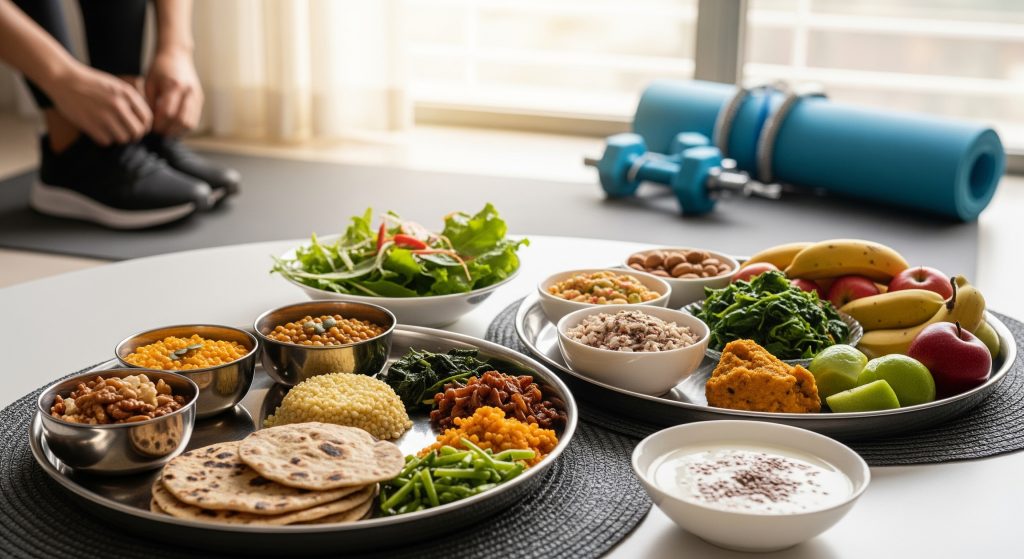
I lean on the thali pattern here. It is basically a built-in portioning system that supplies whole grains, lentils, seasonal vegetables, fermented dairy, and a small serve of ghee or oil. That breadth keeps nutrition balanced and consistent with cholesterol care. Sesame, flax, and groundnut offer robust fats and helpful phytochemicals. Spices like turmeric and ginger bring anti-inflammatory support, which complements lipid management. Yoghurt adds live cultures and a modest protein boost, and it pairs well with fruit and seeds.
-
Whole grains and millets: jowar, bajra, ragi, red rice.
-
Legumes: kala chana, toor dal, urad dal, soy chunks in rotation.
-
Seeds: sesame and flax as chutney podi or a sprinkle on curd rice.
-
Spices: turmeric and ginger in daily cooking for a gentle, cumulative effect.
-
Fermented dairy: dahi or chaas for a light, gut-friendly finish.
There is growing interest in an Indian-adapted Mediterranean pattern that uses local pulses, spices, and oils to deliver a plant-forward, cardioprotective plate. The point is not a strict label. It is a repeatable way to cook that your family will actually enjoy.
Foods to Avoid Completely
Total avoidance is reserved for a short list. This is deliberate. Cholesterol care works better when the rules are simple and enforceable.
-
Partially hydrogenated oils and trans fat sources: vanaspati, some bakery shortenings, and cheap fried snacks.
-
Ultra-processed meat: sausages, salami, and bacon, which bring saturated fat and salt without compensating nutrients.
-
Deep-fried fast food as a routine choice, not an occasional indulgence.
-
Excess alcohol patterns that drive triglycerides and calorie overshoot.
Everything else sits on a spectrum. I minimise butter, cream, and high-fat cheese, but I do not turn meals into rules. Consistency wins.
Weekly Meal Planning Guide
A weekly template removes decision fatigue. It also anchors cholesterol care to the shopping list, which is where results are made. Below is a simple rotation that emphasises fibre, plants, and oily fish. Swap within categories to keep variety.
-
Breakfasts (pick 3-4 to repeat): oats porridge with fruit and nuts; vegetable poha with peanuts; ragi dosa with sambar; Greek yoghurt with berries and flax; barley upma with vegetables.
-
Lunches: dal or chana with brown rice and sabzi; millet khichdi with curd; rajma with wholegrain roti and salad; grilled fish with quinoa and greens.
-
Dinners: moong dal cheela with paneer bhurji; vegetable sambar with red rice; tofu stir-fry with mixed veg and soba; chickpea salad with olive oil and lemon.
-
Snacks: an apple or orange, a small handful of walnuts or almonds, roasted chana, or buttermilk.
Micro-prep helps. Soak pulses on Sunday, chop a batch of onions and tomatoes, pressure-cook a pot of beans, and roast a tray of mixed vegetables. Fifteen quiet minutes now remove five noisy decisions later.
Portion Control Strategies
Most diets fail on quantity, not quality. I use three controls. A visual plate model, measured staples, and slow eating. The plate model is simple: half vegetables, a quarter whole grains, a quarter protein, plus a spoon of healthy fat. Measured staples keep energy dense foods in check. Slow eating gives satiety signals enough time to work.
-
Use smaller plates for everyday meals.
-
Measure grains and oils at the stove, not at the table.
-
Serve once. Leave the pot in the kitchen to limit mindless seconds.
-
Eat without screens to reduce distracted overeating.
-
Pause halfway. If still hungry after two minutes, finish the plate.
This is cholesterol care at the behavioural level. It is quiet, repeatable, and effective.
Cholesterol Levels Chart and Medical Management
Understanding Your Numbers
A lipid profile reports four items: total cholesterol, LDL-C, HDL-C, and triglycerides. LDL-C is often the primary target because it drives plaque formation. HDL-C helps remove cholesterol from tissues. Triglycerides reflect fat transport and overnutrition, and they track closely with refined carbohydrate intake and alcohol. Non-HDL-C is another useful marker. It combines all atherogenic particles and is often a practical treatment target.
-
LDL-C: the main risk driver to bring down first.
-
HDL-C: supportive, but difficult to raise meaningfully with pills.
-
Triglycerides: responsive to weight loss, alcohol moderation, and exercise.
-
Non-HDL-C: a convenient marker when fasting status is uncertain.
A cholesterol levels chart is only helpful when linked to action. For example, a high LDL-C with normal triglycerides suggests saturated fat reduction and statins. High triglycerides point to weight loss, alcohol limits, and training volume. The test is a map, not a verdict.
Age-Based Cholesterol Ranges
Targets vary by age and risk. Early adulthood focuses on lifetime risk reduction through habits. Later decades emphasise specific LDL-C thresholds and overall cardiovascular risk. As Healthline summarises, optimal LDL values for adults 20-39 are below 130 mg/dL, with stricter targets below 100 mg/dL often advised from 40 onwards.
-
20-39 years: prioritise diet quality, training, and weight stability.
-
40-55 years: track numbers and address blood pressure, glucose, and waist size.
-
56 years and beyond: tighten LDL-C goals and consider combination therapy if needed.
Family history of premature heart disease, diabetes, kidney disease, and smoking shift targets downward. The same number can mean different action for different people.
Common Cholesterol Medications
Statins are first line for most high-risk profiles. They inhibit hepatic cholesterol synthesis and upregulate LDL receptors. Dose and potency matter. As Mayo Clinic notes, higher-intensity regimens can reduce LDL-C by up to 60 percent.
-
Statins: cornerstone therapy for lowering LDL-C and stabilising plaques.
-
Ezetimibe: blocks intestinal absorption, useful when statins alone are insufficient.
-
PCSK9 inhibitors: injectable agents for very high risk or statin intolerance.
-
Bempedoic acid or inclisiran: options when targets remain unmet.
Side effects are uncommon but real. I monitor muscle symptoms, transaminases, and glucose, especially in higher-risk patients. In practice, most tolerate therapy well with careful dose selection and follow-up.
Natural Supplements That Work
Supplements complement, not replace, a solid plan. Psyllium husk, plant sterols or stanols, and fish oil sit at the top of the evidence stack. I reserve niacin for specific cases given tolerability issues and drug interactions. Herbal products have mixed data, and quality control varies widely. If a supplement is added, I document a clear goal and stop if it does not move the needle after a defined trial.
-
Psyllium: soluble fibre to support LDL-C reduction.
-
Plant sterols or stanols: reduce cholesterol absorption when taken with meals.
-
Fish oil: useful where triglycerides stay high after diet changes.
-
Niacin: specialist use only due to side effects and limited incremental value.
Supplements work best alongside structured diet changes and cholesterol lowering exercises. Not as a shortcut around them.
When to Start Treatment
I start with absolute risk. ASCVD risk calculators estimate 10-year risk using age, blood pressure, cholesterol, smoking, and diabetes. LDL-C level, family history, and inflammatory markers also inform decisions. Lifestyle-first is valid when risk is low and numbers are near target. Medication is appropriate where risk is moderate to high, or where LDL-C is very high. Early control compounds over time. That is the quiet advantage of starting sooner rather than later.
Cholesterol Lowering Exercises and Lifestyle Changes
1. Aerobic Activities for Heart Health
Aerobic training is the single most reliable fitness lever for lipid improvement. As Mayo Clinic notes, at least 150 minutes of moderate activity per week is a sensible baseline.
-
Steady walks with purpose: 30-45 minutes most days.
-
Cycling, swimming, or brisk stair climbs as cross-training.
-
One longer session weekly to build capacity and confidence.
I ask for progressive overload without bravado. If 20 minutes feels taxing, hold it for a week and then add 5 minutes. Better to build a habit that survives Monday morning.
2. Strength Training Benefits
Resistance work improves insulin sensitivity and trims visceral fat. Both effects support lipid control. Two or three full-body sessions weekly deliver most of the benefit. Focus on compound moves and large muscle groups. Technique first. Load later.
-
Core lifts: squats or sit-to-stands, hip hinges, pushes, pulls, and carries.
-
Rep range: 8-12 controlled reps for 2-3 sets per move.
-
Progression: small increases each week, with at least one recovery week each month.
For readers new to the gym, machines and bands are perfectly acceptable. Consistency beats novelty.
3. Yoga and Pranayama Techniques
Yoga helps through two pathways. Gentle aerobic demand from flowing sequences and stress regulation via breath control. I see value in a short daily practice that lowers the mental temperature and loosens tight hips and hamstrings. This combination makes the next aerobic session more likely to happen.
-
Asanas: sun salutations, bridge pose, and seated twists for mobility and core control.
-
Pranayama: box breathing or alternate nostril breathing for 5-7 minutes.
-
Finisher: a brief body scan in savasana to consolidate the effect.
It is a modest intervention with outsized adherence. And yet, many skip it because it appears too simple. That is precisely why it works.
4. Daily Activity Modifications
Formal workouts are only part of the equation. Non-exercise activity thermogenesis, or NEAT, shapes energy balance across the week. I set small rules to raise NEAT without micromanagement.
-
Take the stairs for two floors up and four floors down.
-
Stand or pace during calls. Short, frequent movement breaks accumulate.
-
Park further away and walk the last five minutes.
-
Do ten bodyweight squats before each meal as a glucose buffer.
These habits sound trivial. The weekly total is not.
5. Stress Management Methods
Chronic stress pushes cortisol up and sleep down. Lipids drift in the wrong direction under both. I treat stress care like any other training block. Defined tools, regular practice, and simple tracking.
-
Breathwork: five minutes after lunch on workdays.
-
Evening off-ramp: a 20-minute walk or gentle stretch before screens.
-
Boundaries: three screen-free meals each week.
-
Sleep: a consistent lights-out, cool bedroom, and minimal evening caffeine.
Some prefer journaling, others prayer, others a calm tea. The method is secondary. The routine is primary.
Taking Control of Your Cholesterol
Effective cholesterol care is not a mystery. It is a stack of small, durable behaviours with targeted medical support when needed. Build meals around fibre and plants. Use oily fish and smart fats. Keep portions honest. Train the heart and the muscles. Respect stress and sleep. Then use the right medicine at the right dose for the right duration. That is the system.
Two final prompts to make it real:
-
Pick one anchor habit this week: a daily 30-minute walk or oats at breakfast. Start today.
-
Book a lipid panel and review a personalised plan. Bring questions and a food log.
The goal is not perfection. It is steady control that compounds across the years.
Frequently Asked Questions
Can children have high cholesterol?
Yes, particularly with a strong family history or obesity. I start with a food-first plan that increases fibre and reduces ultra-processed snacks. Activity targets should be age appropriate and enjoyable. Medication is rare but considered in familial hypercholesterolaemia under specialist care.
How often should I check my cholesterol levels?
For low-risk adults with stable numbers, every 1-3 years is reasonable. For those starting a new treatment or making substantial changes, recheck at 8-12 weeks, then every 6-12 months once stable. Post-event or very high risk requires closer follow-up as advised by the treating team.
Is ghee safe for high cholesterol?
Small culinary amounts can fit within an overall plan that is low in saturated fat. The emphasis stays on oils with monounsaturated fats, such as olive or groundnut oil. If LDL-C remains elevated, ghee should be reduced or replaced to hit targets.
Can cholesterol be reversed without medication?
To a degree. Weight loss, fibre-rich diets, and cholesterol lowering exercises can deliver meaningful improvements. However, genetics and baseline LDL-C often set limits. Where risk is high, medication provides additional protection. The prudent approach blends both.
What are early warning signs of high cholesterol?
There are usually none. That is the challenge. Rare physical signs include xanthelasma or tendon xanthomas in genetic conditions. Most people discover an issue on routine testing. Regular screening is the safest route.

