





 We do what's right for you...


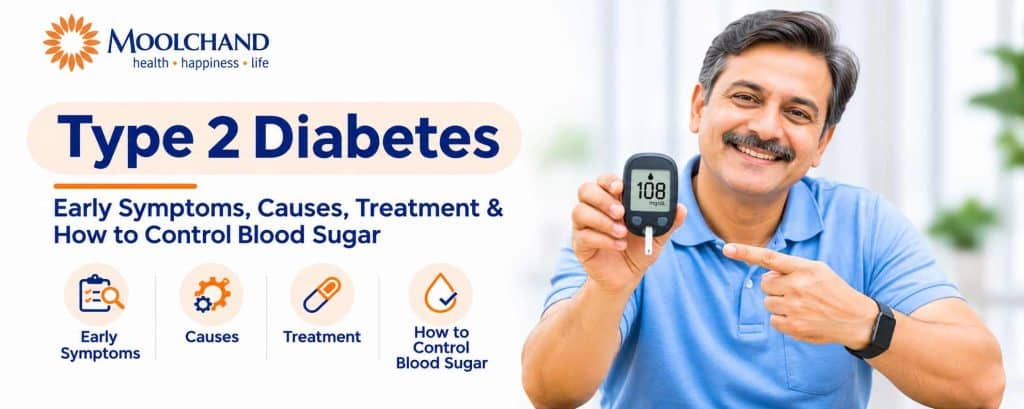
Type 2 Diabetes: Early Symptoms, Causes, Treatment & How to Control Blood Sugar
Dr. Virender Anand
Treatment for diabetes type 2 does not always start with insulin. Type 2 diabetes affects millions of people, often without a clear warning. The condition develops slowly, so many people miss the early signs.
This guide explains the early symptoms and root causes. It also explains why insulin is not always the first step. You will learn which options doctors consider and when insulin becomes necessary. Read it calmly, then discuss your own case with a doctor.
What Is Type 2 Diabetes?
Type 2 diabetes means the body does not use insulin well. Insulin moves sugar from the blood into the body’s cells. Over time, cells respond less to insulin. Doctors call this insulin resistance. The pancreas makes extra insulin for a while. Later, it may struggle to keep up. Blood sugar then stays high. High sugar can harm the eyes, kidneys, nerves and heart over time.
The good news is that early care works well. Many people improve their sugar levels with steady changes. Regular monitoring helps doctors spot problems early.
Diabetes is a lifelong condition, but it is not a sentence to fear. Many people live full, active lives with careful planning. The key is consistency. Small daily actions protect the heart, eyes and kidneys over many years. Your doctor is your partner in this work. Ask questions freely and share your concerns honestly.
Type 2 Diabetes Symptoms
Type 2 diabetes symptoms can be mild at first. Many people feel fine for years. Watch for these common signs. Some signs appear slowly over many months. Others appear suddenly during illness or stress. Note any change that lasts more than two weeks. Keep a short diary of thirst, urination and energy levels. Bring that diary to your doctor. It helps the doctor see patterns that a single visit may miss.
- Strong thirst: You drink more water than usual and still feel dry.
- Frequent urination: You pass urine often, especially at night.
- Constant tiredness: Your energy stays low even after rest.
- Blurred vision: Your eyes may focus poorly for short periods.
- Slow healing: Small cuts and wounds take longer to close.
- Tingling feet: You may feel numbness or burning in the feet.
If several signs continue, book a blood test. A fasting sugar test and an HbA1c test give clear answers.
Do not wait for a crisis before seeing a doctor. Some people only learn about their sugar during a routine checkup. That visit is also a good time. Ask about Type 2 diabetes symptoms you may have ignored. Describe every change, however small. Doctors often find clues in the details people almost forget.
Type 2 Diabetes Causes
Type 2 diabetes causes usually combine several factors. Genes, lifestyle and age all play a part. Doctors look at the whole picture rather than one cause. Your family history, weight, activity and sleep all matter together. Some people carry strong genetic risk but stay healthy with good habits. Others have mild risk but gain weight quickly and develop sugar problems. Understanding your personal pattern helps you choose the right steps.
- Family history: Risk rises if a parent or sibling has diabetes.
- Extra body weight: Fat around the belly makes insulin work less well.
- Physical inactivity: Muscles use less sugar without regular movement.
- Poor diet: Sweets, refined flour and fried food raise blood sugar.
- Poor sleep and stress: Both can push sugar levels higher.
- Certain medicines: Some steroids can raise blood sugar levels.
Many causes can change with daily habits. Knowing your risks helps you act early.
Type 2 diabetes causes often build up for years before symptoms appear. Weight gain may start slowly after a stressful job change. Activity may drop after an injury or a move to a new city. Sleep may shrink after shift work or long screen time. Each change seems small on its own. Together, they can push blood sugar higher over time.
Related: World Diabetes Day 2026: Early Action on Diabetes
Type 2 Diabetes Treatments
Type 2 diabetes treatments work best as a combined plan. Doctors usually start with simple steps. Each option has benefits and limits. Your doctor compares them with your age, kidney function, heart health and daily routine. The goal is steady sugar control with few side effects. Type 2 diabetes causes also include stress hormones and disturbed sleep. Many people need adjustments over time as their body changes. Regular reviews keep the plan safe and effective.
- Lifestyle changes: Better food, daily walks and good sleep form the base.
- Metformin tablets: Metformin is the most common first medicine. It lowers sugar made by the liver.
- Other tablets: Additional tablets help when sugar stays high.
- Newer medicines: Some newer tablets or injections protect the heart and kidneys. Doctors choose them for selected patients.
- Insulin therapy: Insulin is added when other steps are not enough.
Your doctor will choose the plan based on your health.
Type 2 diabetes treatments can also change as your life changes. A new job, pregnancy or illness may require a new plan. Your doctor may adjust doses, add a tablet or review your goals. Keep your medicine list updated at every visit. Bring the actual packs or photos of them. This helps prevent mistakes and duplicate tablets.
How to Control Blood Sugar Every Day
Daily habits make a big difference to blood sugar. Eat meals at regular times rather than skipping them. Choose whole grains such as oats, brown rice and millets. Fill half your plate with vegetables at every meal. Limit sugary drinks, sweets and fried snacks. Take a short walk after meals to reduce sugar spikes. Sleep seven to eight hours each night. Manage stress through breathing exercises or relaxing activities. Drink enough water throughout the day. Keep a water bottle within easy reach at work. Small steps every day add up to strong control over time. Type 2 diabetes treatments work best with daily habits. Daily habits also support your Type 2 diabetes treatments plan.
Early Detection and Regular Monitoring
Early detection protects your health. Regular checks reveal problems before they cause harm. Many people with diabetes feel well while damage is quietly building. Routine checks catch that damage early. Keep a record of every result. Compare results across visits to see the trend.
- Fasting sugar test: Measures blood sugar after an overnight fast.
- HbA1c test: Shows average sugar over about three months.
- Yearly eye check: Screens for early damage to the retina.
- Kidney tests: Urine and blood tests check kidney function.
Ask your doctor how often you need each test. Regular checks also reveal Type 2 diabetes causes linked to weight and sleep.
Some patients need tests more often when sugar is hard to control. Others need fewer tests when readings stay steady for a long time. Your doctor will set the schedule. Keep every appointment, even when you feel well. Missed checks can hide problems that grow slowly.
Related: 7-Day Diet Plan for Diabetic Patients | Simple Indian Chart
Why Expert Care Matters
Diabetes care works best with a trained team. Families often look for expert support in a busy city like Delhi. A physician, an endocrinologist, a dietitian and a diabetes educator can share the work. Good communication helps you follow the plan. Ask questions at every visit. Write down the answers so you remember them.
- Clear explanations: Your team should explain every option in plain words.
- Regular follow-up: Visits every few months help adjust treatment.
- Support for daily life: Dietitians and educators help with meals and routines.
Many people search for the best endocrinologist in delhi for complex cases. Some families also seek a second opinion before major decisions. A good specialist listens closely and explains each choice.
Supportive Care in Lajpat Nagar
Moolchand Hospital in Lajpat Nagar offers multi-specialty care. Its outpatient services support long-term patients with regular reviews. Confirm the current diabetes services with the hospital before your visit. Patients can discuss diabetes treatment with specialists and follow regular checks. Many families also choose a Private Hospital in delhi. They value quick access to tests and follow-up. Patients looking for Diabetes Treatment in Delhi can start small. One consultation and a clear plan is a good first step.
- Specialist consultation: Meet a doctor who reviews your reports and history.
- Diagnostic tests: Blood, urine and eye tests help track progress.
- Personal plan: Your team builds a plan around your health and routine.
- Education: Staff explain medicines, diet and daily checks.
Conclusion
Type 2 diabetes is manageable with the right plan. Treatment works best when started early and followed steadily. Insulin is one tool, not a sign of failure. Talk openly with your doctor about your goals. Small daily choices add up over time.
Look for the best hospital in Delhi with trained specialists, clear tests and steady follow-up. Ask about costs, appointment times and follow-up support before you book. Take the first step today.
A good plan balances medicine, meals, movement and rest. Small changes add up across months and years. Celebrate progress, even when it feels slow. Your health is worth steady attention every day.
Take Control of Your Sugar Today
Type 2 diabetes is manageable with the right steps. Start with small daily habits and regular checkups. Keep your reports and medicine list ready for each visit. Share your goals with your family, who can support you. Your health is worth the effort. Choose a Private Hospital in Delhi only after checking its diabetes services. Start today, one healthy choice at a time. Explore diabetes treatment in Delhi with a trusted team
Frequently Asked Questions
What causes type 2 diabetes?
Insulin resistance, often linked to excess weight, inactivity, poor diet, family history and age.
Can type 2 diabetes be reversed?
It can go into remission with sustained weight loss and healthy habits, but it can return without them.
What blood sugar level means diabetes?
A fasting sugar of 126 mg/dL or higher on two tests, or an HbA1c of 6.5% or higher.
What are the early symptoms of type 2 diabetes?
Thirst, frequent urination, tiredness, blurred vision and slow-healing wounds.
What should I eat with type 2 diabetes?
Whole grains, vegetables and legumes, with less refined sugar and sweets.
Does type 2 diabetes always need medicine?
No. Some early cases are controlled through diet, activity and weight loss, but many people need medicine.
Is type 2 diabetes the most common type?
Yes. It accounts for about 90% of diabetes cases.
Which medicine is usually the first choice?
Metformin is commonly the first medicine, with others added as needed.
Can young adults get type 2 diabetes?
Yes. It is increasingly seen in younger adults with weight gain or family history.
When should I see an endocrinologist?
When sugar stays high despite treatment, or when the case is complex.