






 We do what's right for you...


Topical Antibiotics Explained: What They Are and When to Use Them
Dr. Payal Gupta
Not every minor skin infection needs a topical antibiotic. The reflex to apply an ointment at the first sign of redness often prolongs problems and fuels resistance. I focus on when a topical antibiotic genuinely adds value, how to use it precisely, and which product fits a given diagnosis. Clear decisions prevent overtreatment and protect future options.
Common Types of Topical Antibiotics Available
Clinically, my aim is to match the topical antibiotic to the suspected pathogen and site. Coverage, formulation, and resistance patterns guide the choice. It is basically selecting the narrowest effective option to minimise collateral harm.
Mupirocin (Bactroban)
Mupirocin remains the workhorse topical antibiotic for localised, non-bullous impetigo and other superficial infections due to gram-positive organisms. The agent inhibits bacterial protein synthesis at the isoleucyl tRNA stage, so it is targeted. In practice, that selectivity translates to strong action against Staphylococcus aureus and Streptococcus pyogenes with limited systemic exposure.
For small, crusted lesions, do a thin application two to three times daily after gentle debridement. As PubMed reports, mupirocin achieved an 86% cure rate in typical skin infections compared with 47% for oral erythromycin, which supports its role in localised disease.Avoid prolonged, intermittent use to limit resistance pressures.
Fusidic Acid
Fusidic acid is another first-line topical antibiotic for superficial pyodermas, with reliable activity against S. aureus. It penetrates skin effectively and handles small impetigo clusters or localised folliculitis well. I reserve it for short courses and rotate away if there is slow response or recurrent need, as resistance risk rises with repeated exposure.
Formulation matters. Ointments occlude and help crusted lesions; creams suit moist or intertriginous areas. I reassess if there is no clear improvement within five to seven days, as delayed reassessment encourages inappropriate continuation.
Bacitracin and Polymyxin B
The bacitracin and polymyxin B combination targets gram-positive and gram-negative bacteria, respectively. I use it sparingly for minor cuts or abrasions that show clear signs of bacterial contamination, not as routine prevention. It is easy to reach for topical antibiotic ointments, but petrolatum alone often suffices for clean wounds.
Contact dermatitis from bacitracin is not rare. When the surrounding skin becomes weepy or eczematous, I discontinue and switch to a bland barrier. Triple combinations that include neomycin increase sensitisation risk so rarely advised.
Ozenoxacin
Ozenoxacin is a newer topical antibiotic with activity against methicillin-resistant S. aureus in vitro and a favourable safety profile. It is licensed for impetigo and suits paediatric use. As the Clinical Review Report details, 1% cream is approved from two months of age and dosed twice daily for five days. That defined course helps adherence and limits unnecessary exposure.
We consider ozenoxacin when local resistance to older agents is concerning, or where adverse reactions to other agents have occurred. It is not a universal upgrade. Judicious selection remains the priority.
Retapamulin
Retapamulin, a pleuromutilin derivative, is indicated for impetigo caused by susceptible organisms. It blocks protein synthesis at the 50S ribosomal subunit. Usually reserved for patients who cannot tolerate first-line agents or for settings with documented resistance to alternatives. Short courses only. Extended or repeated use erodes its value.
Gentamicin
Gentamicin cream or ointment provides gram-negative coverage and some gram-positive action. It fits specific scenarios such as secondary infection in macerated toe-webs or otitis externa skin involvement, where gram-negative organisms are plausible. I avoid routine use on skin because sensitisation and overgrowth of resistant flora are real risks.
Silver Sulfadiazine
Silver sulfadiazine is not a classic topical antibiotic, but it has broad antimicrobial action and appears in burn protocols. I restrict its use to partial-thickness burns when guided by burn care standards. For small, superficial burns, simple non-adherent dressings often outperform medicated creams by reducing irritation and preserving the healing milieu.
Specific Conditions Treated with Topical Antibiotics
Diagnosis must drive selection. A topical antibiotic is helpful for a narrow set of superficial bacterial infections. When used with proper wound care, results are predictably better.
Treating Impetigo with Topical Antibiotics
For localised non-bullous impetigo, I typically select mupirocin, fusidic acid, or ozenoxacin. These options align with the evidence base and are fast acting when crusts are softened and removed. The phrase topical antibiotics for impetigo tends to imply a single best choice. In truth, local resistance patterns and prior exposure determine the best fit.
-
Clean gently with warm water to lift crusts before applying the topical antibiotic.
-
Apply a thin film two to three times daily or as specified by the regimen.
-
Treat close contacts only if they show lesions or a clinician advises decolonisation.
In households with repeated spread, I check for nasal carriage and hygiene gaps. When lesions are numerous or systemic features appear, oral therapy is more appropriate than a topical antibiotic.
Managing Folliculitis with Topical Applications
Superficial folliculitis from shaving friction or occlusion often settles with hygiene measures. Consider topical antibiotics for folliculitis when pustules persist or there is clear bacterial involvement. A keratolytic wash can help reduce recurrence by clearing follicular debris.
-
For isolated lesions, mupirocin or fusidic acid can be used briefly.
-
Address the driver: friction, occlusion, or contaminated razors.
Recurrent disease calls for culture or altered tactics, not endless cycles of a topical antibiotic.
Secondary Infected Dermatitis Treatment
Inflamed eczema can become secondarily infected with impetiginisation. I prioritise anti-inflammatory control and add a topical antibiotic for short bursts when yellow crusting or oozing appears. The goal is to quell bacterial load while restoring barrier function with emollients and appropriate topical steroids. I stop antibiotic therapy promptly once exudate resolves.But a dermatologist consultation is important to formulate a correct treatment path.
Minor Wound and Burn Care
For clean, small cuts, petrolatum and a dressing usually outperform routine antibiotic ointment. A topical antibiotic has a role when a wound is obviously contaminated or early signs of local infection appear. In burns, I assess depth and location, then choose dressings that maintain moisture and minimise trauma on removal. Silver-based products can help selected partial-thickness burns..
-
Do not apply a topical antibiotic to closed, intact skin as a preventive measure.
-
Reassess at 48 hours. Escalate if erythema spreads or pain worsens.
-
Keep dressings simple and non-adherent. Change with clean technique.
Application Guidelines and Best Practices
Technique and timing matter. A correctly selected topical antibiotic loses impact if applied poorly or for too long. Small improvements in practice prevent failure and resistance.
Proper Application Techniques
-
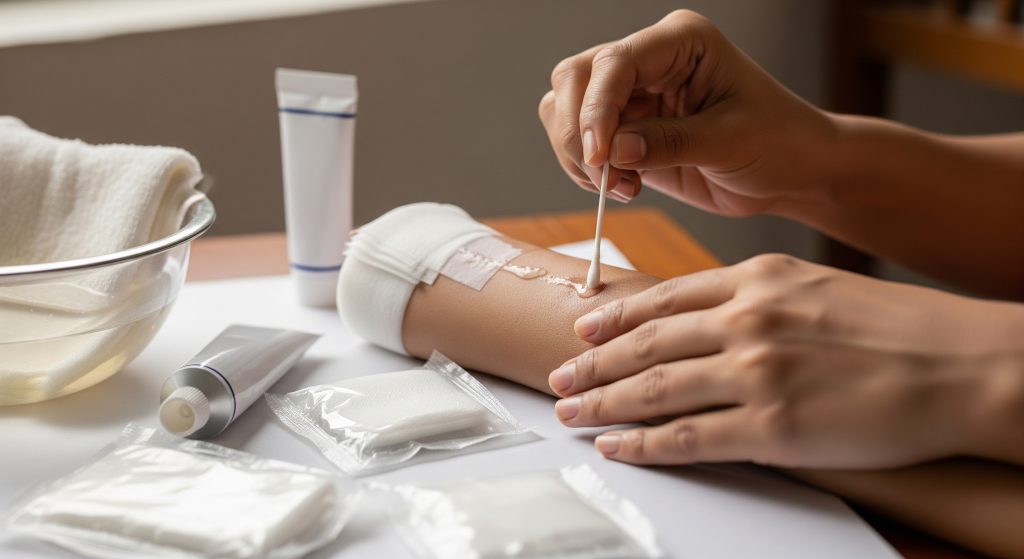
Clean first. Use saline or lukewarm water to remove crusts and debris.
-
Dry the area. Damp skin dilutes the topical antibiotic and impairs adherence.
-
Apply a thin film. More is not better, and occlusion can irritate.
-
Wash hands before and after. Reduce cross-contamination to nearby sites.
-
Avoid mixing with heavy emollients in the same pass. Stagger applications if both are needed.
For hairy areas, gels or lotions can spread more evenly than ointments. It is a small formulation choice that improves outcomes.
Duration of Treatment
Most superficial infections respond within five to seven days. I rarely exceed 7 to 10 days with any topical antibiotic. Prolonged courses select for resistance and trigger dermatitis. If progress stalls at 72 hours, reassessment beats extension. The message is simple. Treat, then stop promptly.
When to Choose Topical Over Oral Antibiotics
I prefer a topical antibiotic when disease is localised, superficial, and limited in surface area. Oral therapy is better when lesions are numerous, rapidly spreading, or associated with fever or systemic malaise. Special sites like the face in infants or periorbital areas also warrant caution with low thresholds for escalation. Immediately consult a dermatologist for these.
Age-Specific Application Guidelines
-
Infants and toddlers: Choose agents with clear safety data. Limit area and duration.
-
School-age children: Teach hand hygiene to reduce autoinoculation and spread.
-
Adolescents: Address shaving technique and occlusive clothing in folliculitis.
-
Older adults: Fragile skin needs gentler cleansing and minimal adhesive dressings.
Dose forms matter across ages. Ointments soothe dry, crusted lesions. Creams suit moist sites. A topical antibiotic should fit the skin, not just the bug.
Understanding Antibiotic Resistance and Prevention
Resistance is not abstract. Every unnecessary or prolonged use of a topical antibiotic nudges flora toward harder problems. I aim to compress course length, narrow the spectrum, and treat the cause beneath the infection.
Current Resistance Patterns in India
Data vary by centre and method, but resistance to older agents is rising to an extent. Urban clinics report more mupirocin and fusidic acid resistance in recurrent impetigo and chronic dermatitis settings. Rural patterns differ. Sampling biases exist and seasonal factors complicate interpretation. The practical takeaway is to avoid reflex reuse of the same topical antibiotic after recent exposure.
Signs of Treatment Failure
-
No improvement at 72 hours or worsening erythema, swelling, or pain.
-
New lesions distant from the initial site.
-
Systemic features such as fever or malaise.
-
Marked local irritation suggesting contact allergy to the agent or base.
At that point, I reassess the diagnosis, culture when indicated, and consider oral therapy. A stalled response is a signal, not a cue to extend the same topical antibiotic.
When to Switch Antibiotics
I switch when cultures support a different agent, when intolerance appears, or when objective response fails by day three to five. For recurrent cases, I step back and address reservoirs such as nasal carriage, shaving practices, or eczema control. Switching without correcting drivers is rotating deckchairs. It achieves little.
Conclusion
Used precisely, a topical antibiotic is a focused tool for small, superficial bacterial infections. The right agent, applied properly, shortens illness and limits spread. Overuse, on the other hand, drives resistance and dermatitis and disappointment. My approach is consistent. Confirm the need, choose the narrowest option, apply a thin film for a short course, and review early. Maybe that is the point. Better skin care and sharper decisions make antibiotics work harder, for less time.
Frequently Asked Questions
How long should I apply topical antibiotic ointment?
Most courses run five to seven days. I stop earlier if lesions resolve and there is clear healing. I avoid exceeding 7 to 10 days with any topical antibiotic, because prolonged use increases resistance and irritation risk.
Can I use topical antibiotics without a prescription in India?
Some products are available over the counter. That does not mean they should be used for every cut. I recommend clinical guidance for facial lesions, large areas, children, or any infection that is spreading. Responsible use preserves effectiveness.
What’s the difference between mupirocin and fusidic acid?
Both target gram-positive pathogens and work well in localised impetigo. Mupirocin inhibits isoleucyl tRNA synthetase. Fusidic acid interferes with elongation factors in protein synthesis. Practical differences relate to resistance patterns, prior exposure, and formulation preferences. I choose the agent that best fits the lesion and the recent history.
Are topical antibiotics safe for children under 5 years?
Yes, several agents are approved in young children when used as directed. I keep applications thin, limit the treated area, and use short courses. If there is no improvement within 72 hours, I reassess rather than extend the same topical antibiotic.
Should I cover the area after applying topical antibiotics?
Cover small lesions only if they rub against clothing or the child might touch them. Occlusion can macerate skin and increase irritation. A breathable, non-adherent dressing is preferred when coverage is needed.
Can topical antibiotics cause allergic reactions?
Yes. Contact dermatitis occurs, especially with bacitracin and neomycin mixes. If itching, redness, or weeping worsens around the treated skin, I stop the product and switch to bland care. Patch testing may be considered for recurrent reactions.

