






 We do what's right for you...


Thyroid Profile Test Explained: What It Measures and Why It Matters
Routine advice says one marker is enough. It is not. A modern Thyroid Profile Test gives a clearer view of your thyroid by combining key markers, antibody screens, and clinical context. That broader picture helps you act sooner, avoid over-treatment, and feel better faster.
What a Thyroid Profile Test Measures
TSH Blood Test Values
The tsh blood test is the anchor of the Thyroid Profile Test. As StatPearls notes, higher TSH generally points to hypothyroidism while lower TSH often indicates hyperthyroidism. TSH responds to circulating hormones through a precise feedback loop. It signals whether your thyroid is under or overworking.
Still, context matters. As Thyroid function tests: Thyroid disease: assessment and management explain, TSH alone can mislead in specific scenarios, so pairing it with free T4 and sometimes free T3 is prudent. This is why a full thyroid function test does not stop at one value. It looks at the downstream hormones too.
-
TSH is a sensitive early indicator of primary thyroid dysfunction.
-
Free hormones clarify atypical or secondary causes.
-
TSH trends guide treatment adjustments over time.
As American Thyroid Association guidance summarises, a combined panel of TSH, FT4, and FT3 supports diagnosis and follow up. That is the backbone of a robust Thyroid Profile Test.
Free T4 Hormone Levels
Free T4 reflects the hormone available to your tissues. As Assessment of thyroid function with hormone assays highlights, free T4 outperforms total T4 when binding proteins are abnormal. It is crucial when hyperthyroidism is suspected or when results conflict.
Reflex strategies help too. As Which TSH Cutoffs Are Optimal for Testing Free T4? suggests, using thoughtful TSH cutoffs can reduce unnecessary free T4 tests without missing real disease. That keeps your Thyroid Profile Test efficient and accurate.
Free T3 Measurements
Free T3 can matter when symptoms suggest hyperthyroidism but FT4 looks normal. As Thyroid function tests explain, free hormone measurements track biologically active hormone, not the protein-bound fraction. That is critical for nuance.
Assay method quality also matters. As How reliable are free thyroid and total T3 hormone assays? notes, LC-MS/MS offers higher accuracy than many immunoassays. Reliable assays prevent false reassurance and missed diagnoses in your Thyroid Profile Test.
Thyroid Antibodies Testing
Antibody tests uncover autoimmune causes. As The Usefulness of Thyroid Antibodies reviews, TPO and TRAb testing supports diagnosis of Hashimoto’s and Graves’ disease and helps monitor response. Antibodies also flag future risk in seemingly mild cases.
As InformedHealth.org explains, TPO and Tg positivity can predict later thyroid dysfunction. This is why thyroid hormone levels are not the whole story. Antibodies add an early warning system.
Complete Panel Components
A comprehensive Thyroid Profile Test typically includes TSH, free T4, sometimes free T3, and targeted antibodies. As American Thyroid Association outlines, this mix provides a practical overview for most patients. Panels can be broadened based on symptoms and history.
-
Core markers: TSH, FT4, FT3 (as indicated).
-
Antibodies: TPOAb, TgAb, TRAb when autoimmune disease is suspected.
-
Repeat testing to confirm unexpected results and avoid overreaction.
Understanding Your Thyroid Test Results
Normal Range Values
Reference ranges vary by laboratory. As UCLA Health notes, adult TSH often spans 0.4 to 4.2 mIU/L, with pregnancy and age altering norms. Some experts prefer a narrower TSH window in healthy populations.
For orientation, typical ranges are used in clinical practice. As NCBI Bookshelf compiles, TSH usually sits between 0.3 and 4.0 mU/L, with FT4 and FT3 anchored in consistent lab ranges. Your report will state the lab’s own intervals.
|
Test |
Common adult reference range |
|---|---|
|
TSH |
0.4 to 4.2 mIU/L |
|
Free T4 |
0.7 to 2.1 ng/dL |
|
Free T3 |
0.2 to 0.5 ng/dL |
Ranges are guides. They are not verdicts. Trends, symptoms, and medications shape interpretation of a Thyroid Profile Test.
Hyperthyroidism Indicators
Hallmarks include suppressed TSH with elevated FT4 or FT3. Symptoms often include palpitations, tremor, and heat intolerance. Your Thyroid Profile Test will align these clues with data. Antibodies such as TRAb support a Graves’ diagnosis when positive.
Hypothyroidism Signs
Elevated TSH with low FT4 suggests hypothyroidism. Fatigue, weight gain, and cold intolerance are common. Your Thyroid Profile Test helps distinguish overt disease from early change. Antibodies can point to an autoimmune driver like Hashimoto’s.
Subclinical Conditions
Subclinical hypothyroidism presents as raised TSH with normal FT4. As Screening and Treatment of Subclinical summarises, treatment decisions often hinge on TSH above 10 mIU/L, symptoms, and cardiovascular risk. Younger patients with TSH 4.5 to 10 may be monitored first.
Cardiometabolic risk is part of the calculus. As Subclinical Hypothyroidism and Vascular Risk indicates, lipid changes and vascular stiffness can appear even without overt disease. Your Thyroid Profile Test guides a measured plan, not a reflex prescription.
Age-Specific Variations
Ranges shift across life. As Age-related variation in thyroid function notes, TSH tends to be higher at the extremes of age, so uniform cutoffs can misclassify results. Paediatric ranges are distinct.
As Reference ranges in children reports, TSH, FT4, and FT3 change markedly in early years before stabilising. Your Thyroid Profile Test must be interpreted with the appropriate age band.
When and How to Get a Thyroid Function Test
Symptoms Requiring Testing
Consider testing if you have fatigue, weight change, hair loss, mood shifts, or temperature intolerance. As Integrated Laboratory–Clinical Approach notes, these symptoms warrant screening, especially with a family history. A targeted thyroid function test can prevent prolonged uncertainty.
-
Persistent fatigue or brain fog.
-
Unexplained weight gain or loss.
-
Hair thinning, brittle nails, or dry skin.
-
Palpitations, tremor, anxiety, or heat intolerance.
-
Constipation, cold sensitivity, or slowed heart rate.
High-Risk Groups
Screening is more urgent for specific groups. As Clinical Strategies notes, subclinical disease affects up to roughly 10 percent of older women. Pregnancy requires special attention due to fetal effects and maternal risk.
As Screening and Treatment of Subclinical outlines, risk is higher with family history, autoimmune disease, and the postpartum period. Diabetic patients deserve closer monitoring too. A precise Thyroid Profile Test is prudent in these settings.
Test Preparation Steps
Preparation is simple, but consistency matters. As MedlinePlus notes, some medicines interfere with thyroid hormone levels, so confirm instructions with your clinician. Test at a similar time of day where possible.
-
Share all medicines and supplements with your clinician.
-
Avoid biotin for at least 48 hours unless told otherwise.
-
Keep timing consistent between tests for reliable trends.
-
Manage stress and sleep before testing if feasible.
As Verywell Health adds, fasting, time of day, and acute stress can shift results. Aim for stable conditions for your Thyroid Profile Test. Small habits protect the signal.
Finding Thyroid Test Near Me
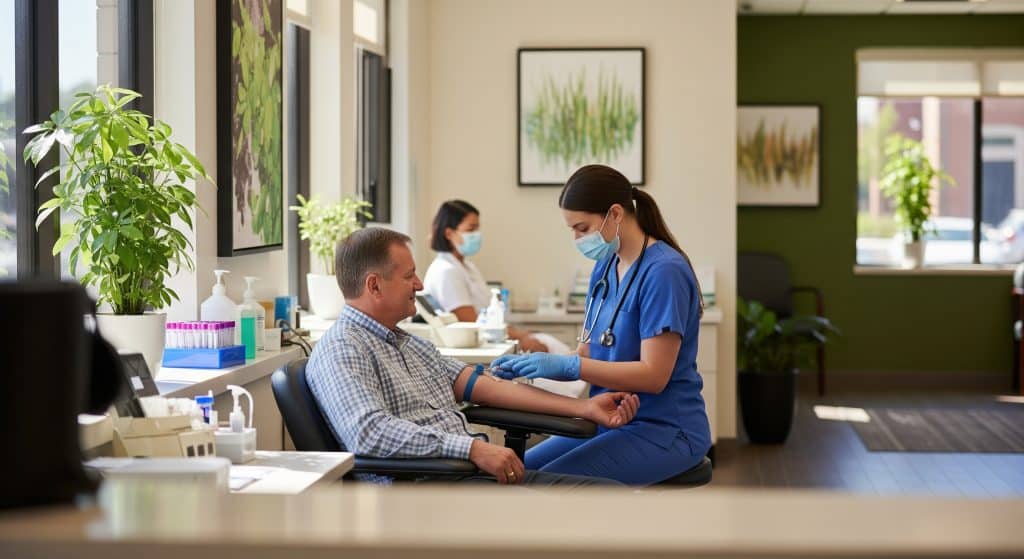
Access is straightforward. As MinuteClinic explains, many walk-in clinics offer screening with on-site blood draws. You can also book with national labs for fast results.
As Labcorp notes, locations provide TSH and free T4 testing with quick turnaround. Search for thyroid test near me to find options within minutes. Choose a provider that reports clear ranges and offers follow up.
Testing Frequency Guidelines
Timing depends on context. As Minimum Retesting Interval summarises, retest TSH every 4 to 6 weeks after any medication change until stable. Stable patients usually move to yearly checks.
Specific groups need tighter monitoring. As Lithium monitoring reports, patients on lithium benefit from 6-month testing due to higher dysfunction risk. Pregnancy demands more frequent testing across trimesters. Your Thyroid Profile Test schedule should reflect these realities.
Managing Abnormal Thyroid Hormone Levels
Treatment Options Available
For hypothyroidism, levothyroxine is first line. As Hypothyroidism: Diagnosis and Treatment notes, usual starting doses are weight based, with lower starts in older or cardiac patients. Pregnancy often requires a prompt dose increase.
For hyperthyroidism, options include antithyroid drugs, radioactive iodine, or surgery. As Treatment and Management of Thyroid Disorders sets out, choice depends on aetiology, severity, and patient preference. Severe crises like thyroid storm require urgent multi-drug therapy and supportive care.
Medication Adjustments
Thyroid replacement is not set and forget. As Levothyroxine Dose Adjustment explains, physiology, age, and interacting drugs shift dose needs across life. Monitor and adjust with care.
Avoid overtreatment. As Exogenous subclinical hyperthyroidism warns, low TSH from excess levothyroxine raises cardiovascular and bone risks, especially in older adults. Your Thyroid Profile Test keeps therapy on track and side effects in check.
Lifestyle Modifications
Medication does the heavy lifting. Lifestyle multiplies the gains. As Nutrients notes, exercise and dietary quality improve lipids and insulin sensitivity in thyroid disorders. These changes support better outcomes.
-
Prioritise consistent sleep and stress management.
-
Adopt a fibre-rich diet with adequate protein and iodine.
-
Train with moderate intensity cardio and resistance work.
-
Consider yoga for energy, mobility, and mood stability.
As International Journal of Yoga suggests, yoga-based programmes improved quality of life in hypothyroidism. Use lifestyle to complement your Thyroid Profile Test and prescribed plan.
Monitoring Requirements
Monitoring is non negotiable. As Hypothyroidism: Diagnosis and Treatment advises, check TSH 6 to 8 weeks after dose changes, then annually when stable. Some conditions require shorter intervals.
As 2024 European Thyroid Association Guidelines emphasise, high risk groups, including those on lithium or with diabetes, benefit from tailored schedules. A precise Thyroid Profile Test cadence prevents drift in thyroid hormone levels.
Taking Control of Your Thyroid Health
Use structure and data. Start with a complete Thyroid Profile Test, not a single marker. Confirm unexpected results and track trends over time. Ask for assays that measure free hormones when results do not match symptoms.
Simple steps help.
-
Choose consistent test timing and conditions.
-
Record doses, symptoms, and lab values together.
-
Discuss antibody results and their implications for risk.
-
Plan retesting after any dose change at 4 to 6 weeks.
You live and die by your TSH and FT4 trend. That is your core KPI in practical thyroid care. Keep those numbers in range and your symptoms in view. The right thyroid function test and a disciplined routine deliver stability.
Frequently Asked Questions
What is the most important thyroid test to check?
Start with TSH. It is highly sensitive to primary dysfunction. Pair it with free T4 in most cases, and add free T3 if hyperthyroidism is suspected. A full Thyroid Profile Test provides the right context for decisions.
Can I eat before a thyroid profile test?
Fasting is usually not required for TSH, FT4, or FT3. Keep conditions consistent between tests for reliable comparison. Confirm any medication-specific instructions before your Thyroid Profile Test.
How often should I repeat thyroid function tests?
Repeat every 4 to 6 weeks after any dose change, then yearly when stable. Pregnant patients and high risk groups need more frequent checks. Your Thyroid Profile Test schedule should reflect your situation.
What causes abnormal TSH blood test results?
Common reasons include true thyroid dysfunction, illness, medications, and assay interference like recent biotin use. Repeat testing and free hormones clarify the cause. A complete Thyroid Profile Test resolves most uncertainty.
Are thyroid tests covered by insurance?
Most health plans cover medically indicated labs, including TSH and free hormones. Coverage varies by policy and provider. Use in-network labs where possible and include a clinical indication on your order.
Can children have thyroid problems requiring testing?
Yes. Children have age-specific ranges and distinct patterns. Use paediatric reference intervals and clinical context. A child’s Thyroid Profile Test must be interpreted with age-appropriate norms.

