






 We do what's right for you...


Preventing Appendicitis: What You Should Know
Dr. Shiv Chopra
Common advice says appendicitis cannot be avoided. That view oversimplifies the issue. I focus on the controllable inputs: diet, bowel habits, and prompt recognition of risk. None of this guarantees safety, but it shifts probabilities in your favour. In that spirit, I outline practical steps for preventing appendicitis, clarify appendicitis causes that are plausible, and show how early recognition of appendicitis symptoms helps avoid serious complications.
Prevention Methods for Appendicitis
High-Fibre Diet to Reduce Blockage Risk
I treat fibre as the first lever for preventing appendicitis. The mechanism is simple. Softer, bulkier stools reduce faecal stasis and lessen the chance of obstruction at the narrow appendiceal opening. That obstruction is a common pathway in appendicitis causes, so reducing it matters.
-
Target diverse fibre from whole grains, pulses, fruit, and non-starchy vegetables.
-
Include both soluble and insoluble fibre for stool bulk and consistency.
-
Increase intake gradually to reduce bloating and discomfort.
Here is why I emphasise variety. Different fibres feed different gut microbes and influence motility in complementary ways. This diversity supports regular transit. It also supports the broader aim of preventing appendicitis by limiting the set-up for blockage and inflammation.
|
Fibre source |
How it helps |
|---|---|
|
Oats, barley |
Soluble fibre forms gels and softens stools. |
|
Wheat bran |
Insoluble fibre adds bulk and speeds transit. |
|
Beans and lentils |
Blend of fibres supports regularity and satiety. |
|
Berries and pears |
Pectin-rich, gentle on the gut when introduced steadily. |
|
Leafy greens |
Low energy, high fibre for daily volume. |
As I see it, consistent fibre intake is a modest, repeatable safeguard for preventing appendicitis. Not perfect. Still practical.
Foods to Include for Digestive Health
My rule is straightforward. Build plates that make regularity easy most days. That is the quiet work of preventing appendicitis.
-
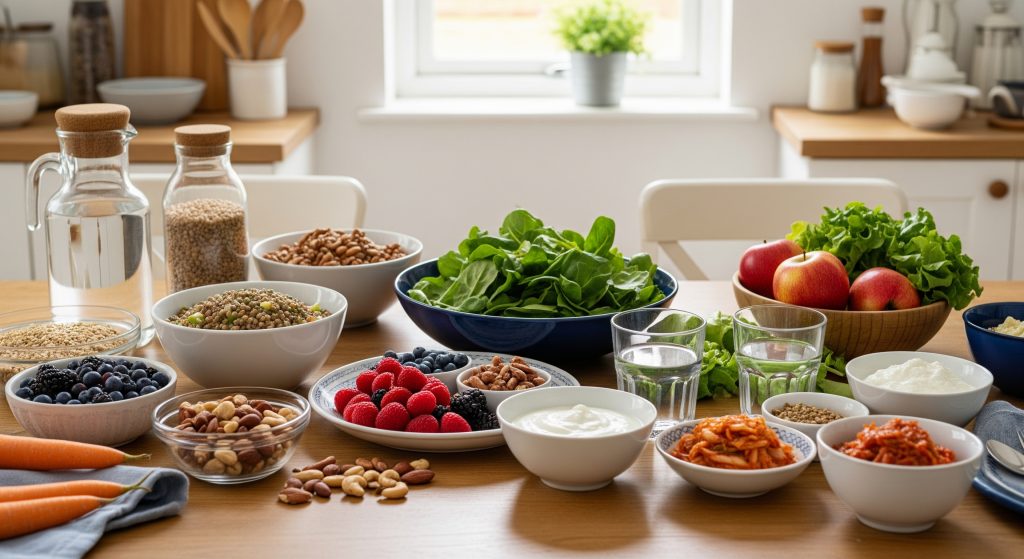
Whole grains: brown rice, whole wheat pasta, oats.
-
Pulses: chickpeas, black beans, red lentils.
-
Fruit: apples with skin, raspberries, kiwifruit, oranges.
-
Vegetables: broccoli, carrots, spinach, Brussels sprouts.
-
Nuts and seeds: almonds, flaxseed, chia.
In practice, I rotate two fibre-rich components per meal. For example, oats with berries in the morning, lentil salad at lunch. Small, reliable choices support preventing appendicitis more than occasional overhauls.
Hydration and Regular Bowel Movements
Fibre without fluid backfires. Water enables fibre to do its job. It softens stool and reduces strain. That combination underpins bowel regularity, which is central to preventing appendicitis.
-
Drink consistently across the day rather than in large evening volumes.
-
Use hydrating foods such as fruit and soups to raise water intake.
-
Link fluid cues to daily anchors such as meetings or commutes.
I advise pairing any fibre increase with additional water. That pairing supports predictable bowel habits, which are the quiet foundation of preventing appendicitis.
Probiotics and Gut Microbiome Balance
A balanced microbiome supports stool form and motility. That is helpful when the aim is preventing appendicitis. Fermented foods offer an accessible entry point.
-
Include yoghurt with live cultures, kefir, kimchi, or sauerkraut.
-
Feed those microbes with prebiotic fibres such as onions, garlic, and asparagus.
Evidence varies by strain and product, so I set a pragmatic expectation. Aim for regular fermented foods and prebiotic vegetables. The goal is steadier digestion, which supports the broader aim of preventing appendicitis.
Lifestyle Modifications That May Help
Small routines compound. The following habits support intestinal transit and overall gut function. That makes preventing appendicitis more plausible, to an extent.
-
Daily movement: brisk walking supports colonic motility.
-
Toilet timing: respond to the urge to avoid stool hardening.
-
Sleep regularity: circadian consistency influences bowel patterns.
-
Stress reduction: diaphragmatic breathing or brief mindfulness can help.
None of these guarantees protection. Yet habit consistency reduces the need for heroic fixes later. That is the disciplined route to preventing appendicitis in daily life.
Foods and Dietary Habits to Avoid
Low-Fibre and Processed Foods
Low-fibre patterns slow transit and promote hard stools. That raises obstruction risk. For preventing appendicitis, I limit items that crowd out fibre.
-
Refined grains such as white bread and sugary cereals.
-
Ultra-processed snacks with minimal fibre content.
-
Meals that combine low fibre with dehydration, such as salty fast food.
The principle is substitution, not restriction. Replace rather than simply remove. That mindset is more sustainable and keeps preventing appendicitis realistic.
High-Fat and Fried Food Items
Very fatty meals can slow gastric emptying and may disrupt bowel rhythm. That is unhelpful for preventing appendicitis. I especially moderate fried foods that displace fibre-rich sides.
-
Deep-fried takeaways and heavy fast food combinations.
-
Repeated snack grazing on crisps and fried appetisers.
Strategic swaps work. Choose grilled options and add a high-fibre side. The aim remains preventing appendicitis by protecting routine bowel function.
Red Meat and Fatty Dairy Products
Meals dominated by red meat and full-fat dairy often arrive with low fibre. That combination is the actual issue. For preventing appendicitis, proportion matters more than prohibition.
-
Keep lean portions modest and surround them with legumes and vegetables.
-
Alternate animal protein with plant protein across the week.
Balance first. Extremes invite other problems and rarely endure. A measured plate supports preventing appendicitis without overreach.
Foods That May Irritate the Appendix
There is no definitive list of appendix irritants. Claims that specific seeds or kernels cause appendicitis lack good evidence. My position is simple. Track personal triggers that slow transit or cause constipation. That focus is consistent with preventing appendicitis.
-
If a food repeatedly causes constipation, scale it back and add fibre.
-
If low-residue days stack up, correct course with pulses and greens.
What this means is practical self-monitoring. I care about patterns, not folklore. Patterns help with preventing appendicitis; myths do not.
Alcohol and Sugary Beverages
Alcohol and high-sugar drinks can displace water and fibre-rich foods. That indirectly affects regularity. For preventing appendicitis, moderation serves two aims: hydration and dietary quality.
-
Alternate alcoholic drinks with water during social occasions.
-
Favour unsweetened tea, coffee, or sparkling water between meals.
This is not abstinence by default. It is a hydration and substitution strategy that aligns with preventing appendicitis and broader gut health.
Understanding Appendicitis Risk Factors
Primary Causes of Appendix Blockage
Appendiceal obstruction often precedes inflammation. The blockage may arise from hard stool fragments, lymphoid tissue swelling, or rarely a growth. These pathways explain why regularity links to preventing appendicitis.
-
Faecaliths: dehydrated stool fragments that lodge at the appendiceal opening.
-
Lymphoid hyperplasia: immune tissue swelling after some infections.
-
Less common: parasites or tumours obstructing the lumen.
I describe these not to alarm, but to clarify the controllable factor. Softer, regular stools reduce the chance of faecalith formation. That is the practical contribution to preventing appendicitis.
Age Groups Most Affected
Incidence peaks in adolescence and early adulthood, though cases appear at any age. Children often progress faster to severe illness. Elderly patients may present atypically, which delays care. Recognising these patterns supports preventing appendicitis complications through faster action.
My takeaway is direct. Youthful peaks do not imply immunity later. Vigilance across ages supports safer outcomes and sustains the goal of preventing appendicitis.
Genetic and Family History Factors
A family history may raise risk, though estimates vary by study. This is a predisposition, not a destiny. I still prioritise the same basics: fibre, hydration, and prompt assessment of appendicitis symptoms. Those steps are the universal moves for preventing appendicitis.
Critics argue genes overshadow diet. There is some truth. Yet lifestyle still shifts day-to-day risk. That is enough rationale for disciplined habits and timely medical review.
Environmental and Geographic Variations
Rates appear to vary by region and by diet profile. Roughly speaking, higher fibre diets align with lower observed incidence. Mechanisms likely include differences in stool form, microbiome patterns, and infection exposure. The actionable point remains clear. Emphasise fibre and routine hydration as the simple base for preventing appendicitis.
Recognising Appendicitis Symptoms and Pain Location
Early Warning Signs to Watch For
I watch for a pattern more than a single sign. A typical sequence begins with vague central abdominal pain, then nausea or appetite loss, then more localised discomfort. If these cluster together, I consider appendicitis symptoms highly likely and I escalate care quickly.
-
Loss of appetite, nausea, or vomiting after the onset of pain.
-
Low-grade fever with abdominal tenderness.
-
Worsening pain on movement or coughing.
Early recognition will not count as preventing appendicitis. It does prevent serious outcomes. That distinction matters.
Characteristic Pain Migration Pattern
The classic pain shift starts near the navel and moves to the lower right abdomen. That migration helps confirm the index of suspicion. If asked about appendicitis pain location, I state this pattern first.
-
Pain onset around the mid-abdomen or navel.
-
Gradual movement towards the lower right abdomen within several hours.
-
Localised tenderness that intensifies with movement.
There are exceptions. Atypical anatomy or pregnancy can alter the mapping. I still use the migration story as a strong heuristic for triage.
Symptoms in Different Age Groups
Children may struggle to pinpoint pain and can deteriorate faster. As Cleveland Clinic reports, appendicitis affects about 70,000 children annually in the United States, where early pain near the belly button that shifts right is a critical sign.
Elderly patients often show muted or nonspecific patterns. In a study summarised by the Alexandria Journal of Medicine, the perforation rate in patients over 60 reached roughly 69.5%, highlighting the danger of delays.
Diagnostic delay is common in older adults. As Vinmec notes, more than 75% of elderly patients may receive diagnosis after 24 hours, which increases complication risk.
I adjust my threshold for action accordingly. For children and older adults, I move faster with imaging and surgical consultation. That speeds management when preventing appendicitis is no longer possible and complications loom.
When to Seek Emergency Medical Care
Seek urgent assessment if pain localises to the lower right abdomen and intensifies with movement, especially with fever or vomiting. Sudden relief after severe pain can indicate rupture. That is an emergency. Preventing appendicitis may not be achievable at that point. Preventing sepsis and peritonitis is the immediate aim.
-
Severe, progressive right lower abdominal pain over several hours.
-
Fever, repeated vomiting, or rigid abdomen.
-
Inability to keep fluids down, or faintness with pain.
I advise calling emergency services rather than driving if symptoms are severe. Time costs outcomes. Fast decisions protect lives.
Complications of Untreated Appendicitis
Untreated cases risk perforation, abscess formation, and sepsis. Recovery is longer and more complex after rupture. That is the blunt reality. Once inflammation begins, preventing appendicitis is off the table. Preventing complications becomes the urgent priority.
Prompt diagnosis and timely surgery convert a dangerous condition into a routine recovery.
I highlight this to make one point. Swift escalation is not alarmist. It is prudent risk management.
Making Informed Choices for Appendix Health
Prevention is about probability, not guarantees. My approach is disciplined but simple. I prioritise fibre and water every day, encourage steady activity, and insist on early assessment for suspicious pain. That is preventing appendicitis in practice, not in theory.
-
Build a fibre baseline you can sustain on busy days.
-
Pair fibre with water to keep stools soft and regular.
-
Use symptom patterns, not hunches, to decide when to seek care.
I also communicate these basics across families. Shared habits make adherence easier and improve outcomes. Preventing appendicitis sits inside routine health, not outside it.
One final thought. Healthy routines lower risk, but early action saves outcomes. Hold both truths at once. That balance is how I advise preventing appendicitis today.
Frequently Asked Questions
Can appendicitis be completely prevented through diet alone?
No. Diet alters risk, it does not guarantee protection. A high-fibre, well-hydrated routine supports regularity and lowers the chance of blockage. That makes preventing appendicitis more plausible, though not certain.
How much fibre should I consume daily to reduce appendicitis risk?
As guidance, I aim for roughly 25 to 35 grams per day, depending on size and activity. Increase gradually and pair with water. The goal is soft, regular stools most days. That practical outcome supports preventing appendicitis.
What are the first signs of appendicitis pain I shouldn’t ignore?
Watch for pain starting near the navel that migrates to the lower right abdomen. Add nausea, appetite loss, or fever, and escalate. If asked to describe appendicitis pain location briefly, I cite that migration pattern.
Are there specific foods that directly cause appendicitis?
No individual food has been proved to directly cause appendicitis. Patterns that produce constipation are the real issue. I focus on fibre, hydration, and balanced meals as the practical core of preventing appendicitis. That approach addresses root mechanisms rather than blaming single foods.
Does having a family history of appendicitis increase my risk?
Family history may raise risk to some extent. It is not determinative. I still prioritise the same levers: fibre, water, movement, and fast response to appendicitis symptoms. These are the durable measures for preventing appendicitis regardless of background.
Can children prevent appendicitis differently than adults?
The preventive fundamentals are similar: fibre, hydration, sleep, and activity. The operational difference is vigilance. In children, symptoms accelerate faster. Early assessment protects them when preventing appendicitis is no longer possible and swift treatment is essential.
Quick reference table
|
Topic |
Practical takeaway |
|---|---|
|
Diet baseline |
Diverse fibre with adequate water for regular stools. |
|
Hydration |
Spread intake through the day and add hydrating foods. |
|
Warning signs |
Pain moving to lower right abdomen with nausea or fever. |
|
When to act |
Escalate promptly if pain localises and intensifies. |
|
Framing |
Use habits to reduce risk while staying ready to seek care. |
Final note: I use two checks to keep intent clear. First, am I improving regularity this week. Second, would today’s pattern make me delay care. Those questions keep preventing appendicitis grounded in daily choices and timely action.
appendicitis causes, appendicitis symptoms, appendicitis pain location

