






 We do what's right for you...


Plantar Fasciitis Medication Explained: What You Need to Know
Dr. Neetan Sachdeva
Rest and insoles are often presented as the whole answer to heel pain. They help, but they are not a plan. Plantar fasciitis improves fastest when the right plantar fasciitis medication is paired with precise loading, time limits, and a clear fallback if progress stalls. In this guide, I explain how medications fit into that plan, what they do, and how to combine them with practical therapy so pain settles and function returns.
Top Medications for Plantar Fasciitis Relief
NSAIDs: Ibuprofen, Naproxen, and Alternatives
I begin with NSAIDs because they are the most used plantar fasciitis medication in primary care. Ibuprofen and naproxen reduce inflammatory signalling and blunt pain so walking and progressive loading are possible. For many patients, a short, time boxed course is sufficient. I typically pair NSAIDs with activity modification and taping for stability.
-
Ibuprofen suits intermittent dosing for flares and post activity soreness.
-
Naproxen offers longer dosing intervals with steady coverage through the day.
-
Consider a COX 2 selective option if gastric risk is high, after medical review.
As a rule, I cap continuous NSAID use and reassess at set intervals. Relief without progress is a warning sign. It often means load management or technique is off, not that more plantar fasciitis medication is required.
Corticosteroid Injections and Their Usage
Injections are a second line option when pain blocks rehabilitation. They are not a cure, but they can reset pain to a lower baseline. Ultrasound guidance improves accuracy and reduces scatter. I insist on a strict rehab window after any injection to protect the fascia while symptoms are quieter.
As Zahedan Journal of Research in Medical Sciences reported, methylprednisolone injections produced significant pain reduction at three weeks, with roughly 70% of patients noting considerable relief.
-
Use for refractory cases after conservative care has been attempted.
-
Limit frequency to reduce risks such as plantar fascia weakening.
-
Pair with progressive loading and footwear changes in the following weeks.
There are risks. Fat pad atrophy, transient pain spikes, and rare rupture have been documented. Informed consent matters here.
Acetaminophen and Paracetamol Options
Paracetamol does not reduce inflammation. It does reduce pain, which can aid sleep and morning mobility. I use it when NSAIDs are contraindicated, or as a bridge between doses. It is a useful adjunct to plantar fasciitis medication in patients with gastric sensitivity. Monitor total daily dosage and avoid duplication in combination products.
Topical Anti-inflammatory Creams and Gels
Topical diclofenac gels provide local anti inflammatory effect with lower systemic exposure. For patients who cannot take oral NSAIDs, a topical route is a pragmatic alternative. Application around the medial heel and arch, not only under the calcaneus, often improves comfort with standing tasks.
-
Apply after icing and before donning supportive footwear or orthoses.
-
Wash hands after application and avoid broken skin.
Topical therapy rarely solves pain alone. It is a facilitator. The goal remains gradual tissue loading, not indefinite gel use.
Prescription Medications: Celecoxib and Meloxicam
For patients with persistent pain or gastric risk, celecoxib or meloxicam may be considered. These remain NSAIDs, but their selectivity profiles differ. Celecoxib is COX 2 selective, which may reduce gastric irritation in suitable patients. Meloxicam provides once daily dosing with reliable analgesia.
I position these agents as short courses aligned to a rehab phase. The purpose is to create a window where plantar fasciitis exercises can progress without repeated pain spikes. If a patient needs extended therapy, I review biomechanics, footwear, and training errors before escalating plantar fasciitis medication.
Opioid Painkillers for Severe Cases
Opioids do not treat the underlying condition and carry meaningful risks. I reserve them for acute, severe pain where other agents are contraindicated or ineffective, and then only for very short durations. The focus remains function. If opioids are considered, I actively plan the stop date and the return to non opioid measures in advance.
Some argue for broader opioid use in recalcitrant plantar heel pain. I disagree. The benefit is modest for chronic pain, and adverse effects accumulate. The safer route is targeted loading, bracing, and, where appropriate, a limited steroid intervention rather than stronger plantar fasciitis medication.
Understanding How Plantar Fasciitis Medications Work
Anti-inflammatory Mechanisms in NSAIDs
NSAIDs inhibit cyclooxygenase enzymes, which lowers prostaglandin production. Less prostaglandin means less local sensitisation and reduced swelling. In practice, patients report easier first steps in the morning and less ache after standing tasks. This pharmacology does not repair the fascia. It creates a therapeutic window where the tissue can tolerate progressive loading.
There is also a ceiling effect. Beyond a point, more NSAID does not equal more relief. That is why correct dosing and duration are essential for any plantar fasciitis medication strategy.
Corticosteroid Effects on Heel Pain and Inflammation
Corticosteroids suppress inflammatory pathways at multiple points. The local anaesthetic often mixed with the steroid provides immediate numbness, while the steroid effect builds over days. When used judiciously, the result is a short period of lower pain and improved tolerance for gait retraining and strengthening.
And yet, tissue quality matters. Repeated exposure can weaken collagen to an extent. This is why I limit dose count and insist on a staged return to impact. Relief without structure invites recurrence.
Duration and Dosage Guidelines for Safe Usage
Safe use starts with clear limits. I align medication courses to specific rehab milestones and I document a stop rule. Below is a general guide that I use when discussing options with patients and prescribers.
|
Medication |
Typical adult dosing guidance |
|---|---|
|
Ibuprofen |
Short courses, divided doses with food. Avoid prolonged continuous use without review. |
|
Naproxen |
Twice daily with food for limited days. Reassess if relief is incomplete. |
|
Celecoxib |
Often 100 to 200 mg once or twice daily in adults, depending on need and risk profile. |
|
Meloxicam |
Commonly 7.5 mg once daily, with potential increase to 15 mg if required and tolerated. |
|
Paracetamol |
Used for pain control within safe daily limits. Check combination products to avoid duplication. |
For dosage specifics and risk counselling, I reference standard drug monographs. As Mayo Clinic outlines, meloxicam commonly begins at 7.5 mg daily in adults, with monitoring for gastrointestinal or cardiovascular risks.
Duration matters. I prefer short courses aligned to a two week rehab block, then evaluate progress. If pain returns on stopping, I audit training load, footwear, and technique before renewing plantar fasciitis medication.
Comparing Oral Medications with Injectable Treatments
Oral NSAIDs smooth pain fluctuations and are simple to administer. Injections can produce a sharper early drop in pain, which helps when walking is severely limited. Both approaches rely on the same downstream goal: regain capacity to load the plantar fascia progressively and safely.
Evidence supports this hierarchy. In a comparator trial, local steroid injections delivered superior short term pain relief with lower early recurrence versus oral NSAIDs, with a statistically significant difference reported in the early phase. As Lippincott Williams & Wilkins documented, the injectable group showed a greater initial reduction in pain intensity.
Long term outcomes improve most when physiotherapy and load education accompany any plantar fasciitis medication. Drugs create conditions for change. Rehabilitation delivers it.
Advanced Treatment Options Beyond Traditional Medication
Platelet-Rich Plasma Therapy
PRP aims to stimulate healing by concentrating platelets at the injury site. Results vary by protocol and patient profile. I consider PRP after at least three months of structured loading and footwear optimisation, especially if plantar fasciitis symptoms fluctuate despite good adherence. It is not a first step. It is a targeted escalation for chronic cases.
Extracorporeal Shockwave Therapy
Shockwave delivers mechanical energy to the fascia and adjacent tissues. The intended effect is analgesia and, to an extent, tissue remodelling. In practice, patients often report improved pain after several sessions. I time shockwave to precede a planned progression in plantar fasciitis exercises so the gained relief translates into capacity.
Botulinum Toxin Injections
Botulinum toxin can reduce muscle overactivity in the calf complex, potentially lowering plantar fascia strain. It remains a niche option with mixed protocols. I reserve it for select cases with clear, persistent calf hypertonicity where conventional therapy has plateaued.
Ayurvedic Medicines and Natural Remedies
Some patients prefer herbal anti inflammatory preparations, oil massages, or poultices. I take a balanced view. If a remedy is safe and does not delay evidence based care, I integrate it alongside structured loading and footwear changes. Any oral product should be checked for interactions with prescribed plantar fasciitis medication.
Iontophoresis and Acetic Acid Treatment
Iontophoresis uses a mild electrical current to drive topical agents through the skin. Acetic acid or dexamethasone are typical choices. This can settle stubborn, localised pain in some patients. The best results appear when it complements a carefully staged strengthening plan rather than replacing it.
Combining Medications with Plantar Fasciitis Exercises and Therapies
Essential Stretching Exercises for Pain Relief
Medication reduces pain. Movement restores tolerance. I prioritise two groups of plantar fasciitis exercises that consistently help.
-
Calf complex loading:
-
Soleus biased bent knee heel raises for slow strength.
-
Gastrocnemius stretches against a wall for 45 to 60 seconds.
-
-
Plantar fascia specific loading:
-
Toe elevated heel raises with the big toe dorsiflexed.
-
Plantar fascia stretch by pulling the toes back while seated.
-
Two to three sessions per week for strengthening is a sensible start. Daily gentle stretching helps morning steps. Pain should guide dose, not ego.
Physical Therapy Alongside Medication
Physiotherapy provides load progression, gait cues, and manual therapy where appropriate. I set clear milestones: tolerate standing for 30 minutes, complete single leg raises without sharp pain, then reintroduce low impact cardio. When plantar fasciitis medication is active, I take advantage of the lower pain to lock in these gains.
-
Manual techniques are adjuncts. The keystone is progressive loading.
-
Foot intrinsic strengthening reduces over reliance on the fascia.
-
Cadence tweaks during running can lower impact per step.
Night Splints and Orthotic Support
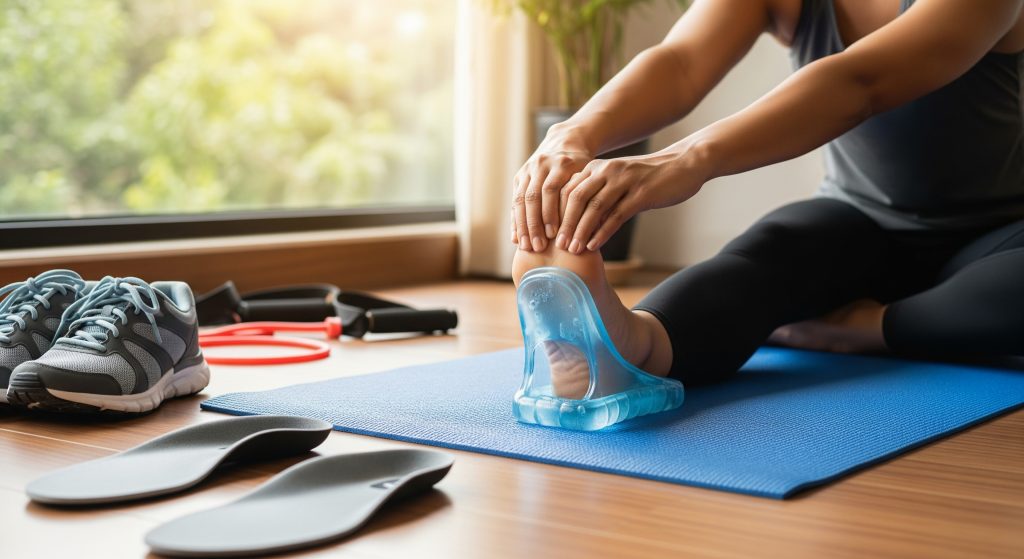
Night splints maintain the ankle in dorsiflexion to reduce morning stiffness. Compliance varies, but relief can be meaningful for early steps. For daytime, I prefer semi rigid orthoses that support the medial arch without blocking natural foot splay. Footwear with a mild heel drop and firm heel counter is a practical pair to any plantar fasciitis medication.
Orthoses are scaffolding. The long term goal is stronger tissue, not permanent bracing.
Ice Therapy and Anti-inflammatory Medications
Ice reduces local nerve conduction and perceived pain. I use short, frequent bouts after activity. When used with NSAIDs, patients often report better tolerance for the evening routine and improved sleep onset. A simple bottle roll under the arch for five to 10 minutes is effective and repeatable.
Activity Modifications During Treatment
Load management decides outcomes. I reduce repetitive impact early on and swap to cycling or pool running. Then I reintroduce walking volume in measured blocks. I track steps, surfaces, and footwear. If medication is easing pain, I still avoid spikes. Pain free does not mean tissue ready.
-
Cut hills and speed work temporarily.
-
Break long standing periods with seated tasks.
-
Use a weekly plan, not day to day impulses.
This is where many fail. The fascia needs consistency and patience. Quick wins tempt overuse. Resist that urge.
Making the Right Choice for Your Plantar Fasciitis Treatment
Good decisions follow a simple structure. Identify the role of each tool. Set limits. Measure response. Here is how I frame it with patients.
|
Option |
Best use case |
Key consideration |
|---|---|---|
|
Oral NSAIDs |
Short term pain control to enable rehab |
Gastrointestinal and cardiovascular risk screening |
|
Topical NSAIDs |
Localised pain relief with lower systemic exposure |
Consistent application around symptomatic zones |
|
Paracetamol |
Pain relief where NSAIDs are contraindicated |
Monitor total daily dose across products |
|
Corticosteroid injection |
Refractory pain blocking function |
Limit frequency and pair with staged loading |
|
Shockwave or PRP |
Chronic cases with stalled progress |
Integrate with footwear and exercise progression |
Two closing points. First, plantar fasciitis medication is a means, not an end. It creates space for the real work of graded loading and gait mechanics. Second, investigate plantar fasciitis causes in parallel. Training errors, weak calf soleus strength, and unsupportive footwear often hide beneath the pain. Fix those and the need for medication falls away.
Frequently Asked Questions
How long should I take NSAIDs for plantar fasciitis pain?
I recommend short, defined courses. A typical window is one to two weeks, aligned to a specific rehab phase. If pain returns immediately on stopping, reassess load, footwear, and form before continuing the same plantar fasciitis medication. Long, continuous use without review is unwise.
Can plantar fasciitis heal without medication?
Yes, provided load is managed and the tissue is retrained. Many patients improve with targeted plantar fasciitis exercises, supportive footwear, and activity changes. Medication accelerates comfort but is not mandatory. The essentials are consistent loading, sufficient recovery, and attention to calf strength.
What are the side effects of corticosteroid injections for heel pain?
Potential risks include post injection pain flare, fat pad thinning, infection, and, rarely, plantar fascia rupture. The risk rises with repeated injections. I limit frequency and use ultrasound guidance where possible. When used judiciously alongside a structured plan, benefits can outweigh risks.
When should I see a doctor for plantar fasciitis medication?
Seek medical review if pain persists beyond several weeks despite measured self care, if morning pain is severe, or if numbness or swelling suggests another diagnosis. A clinician can screen for contraindications, choose the right plantar fasciitis medication, and rule out alternative causes of heel pain.
Are there any medications specifically approved for plantar fasciitis in India?
There is no medication designed solely for plantar fasciitis. Treatment uses general analgesics and anti inflammatories, plus injections when indicated. Availability and brand names vary by region. The principles remain the same: short courses, clear goals, and integration with rehabilitation.
Can I combine different medications for better plantar fasciitis relief?
Combination therapy can be appropriate, for example a topical NSAID with paracetamol. Avoid duplicating NSAIDs or exceeding safe daily doses. If adding a second agent, define the purpose and the stop date. More plantar fasciitis medication is not always better. Smarter use usually is.
What medications should I avoid if I have plantar fasciitis?
Avoid unsupervised long term NSAID use, especially with gastric, renal, or cardiovascular risks. Be cautious with opioids for chronic pain. If pregnant, breastfeeding, or poly medicated, review any new drug with a clinician. The safest plan centres on measured loading and selective, time limited pharmacology.
To close, the formula is simple. Use plantar fasciitis medication to create a window of lower pain and higher tolerance. Use that window to fix load, strength, and movement. And keep testing what actually helps, because progress that sticks is the only result that counts.

