






 We do what's right for you...


Nail Fungus Cream Explained: Uses, Types & Tips
Standard advice says nail fungus is purely cosmetic. That view is too narrow. Chronic infection reshapes nails, fuels discomfort, and quietly undermines daily function. Nail fungus is difficult to trat with just topical antifungals because of issue of penetrability of drug into nails. They can only supplement oral antifungals or given if oral therapy can not be used..
Types of Nail Fungus Creams Available
Nail infections respond best to targeted, consistent therapy. A well-chosen nail fungus cream can reduce fungal load and support healthy regrowth. It rarely acts alone. Good hygiene and adherence matter, and almost always oral therapy is indicated. Here is where each option fits.
Clotrimazole/ Terbinafine Based Creams
These creams are not effective for nail fungus due to issue of penetrability so not recommended. They are only useful if you have athletes foot or foot fungal infection.
ll supports the overall plan.
Ciclopirox Topical Solutions
Ciclopirox attaches to the nail with a lacquer format. The molecule chelates metal ions and disrupts fungal processes. A ciclopirox nail fungus cream is uncommon; the lacquer format is standard. The advantage is daily film formation and gradual penetration.
|
Feature |
Practical implication |
|
Twice a week application |
Builds steady drug presence at the nail plate |
|
Weekly removal |
Old layers must be cleared for fresh penetration |
|
Best for mild to moderate cases |
Advanced thickening limits benefit without debridement |
Amorolfine Nail Lacquers
Amorolfine is another lacquer that changes the fungal cell membrane.Use for mild to moderate involvement or as an adjunct to oral therapy. While not a traditional nail fungus cream, the lacquer model suits nails because it adheres and slowly diffuses.
-
Applied once or twice weekly as directed.
-
Requires regular filing of the affected nail surface.
-
Improves outcomes when combined with strict foot hygiene.
Prescription vs Over-the-Counter Options
Over-the-counter products suit early and superficial infections. Prescription items offer stronger actives or better delivery. Selecting a nail fungus cream depends on disease extent, nail thickness, and comorbidities.
-
OTC: clotrimazole, miconazole, and terbinafine creams; some lacquers.
-
Prescription: amorolfine and some ciclopirox lacquers; oral agents when needed.
-
Adjuncts: urea creams for softening thick nails before treatment.
A brief example. A single toenail with minimal thickening often responds to ciclopirox or amorolfine plus careful filing. Multiple nails with marked thickening usually need more. Possibly oral therapy and strict debridement. Precision matters.
How to Apply Nail Fungus Lacquer Effectively
Technique influences outcomes. The right nail fungus cream, applied poorly, underperforms. Small adjustments compound into meaningful gains.
Preparing Infected Nails
-
Trim the nail straight across. Leave a modest free edge.
-
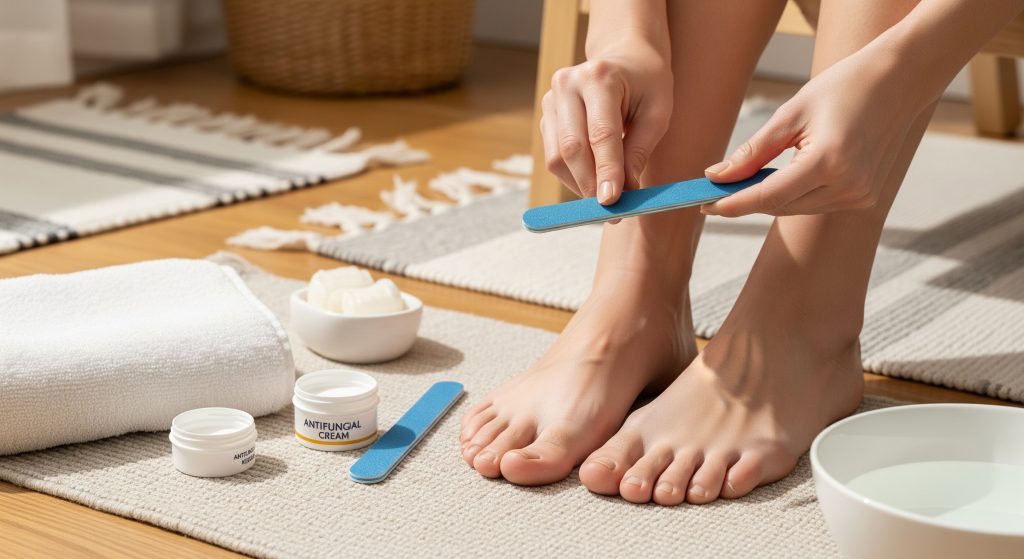
File the surface to reduce thickness. Focus on discoloured or crumbly zones.
-
Wash feet with warm water and a mild cleanser.
-
Dry thoroughly, including between toes.
-
Disinfect clippers and files after use to limit reinfection.
Preparation enhances penetration. It also reduces fungal biomass. That matters for any nail fungus cream.
Correct Application Techniques
Apply a thin, even layer to the entire nail, the nail folds, and the front edge. Work a small amount under the distal edge if possible. Wipe off excess to avoid maceration.
-
Cover 5 to 7 millimetres of adjacent skin.
-
Allow full drying before socks or shoes.
-
For lacquers, follow the manufacturer’s removal schedule precisely.
Frequency and Duration Guidelines
Frequency varies by product. Lacquers may be weekly or several times weekly. Duration is lengthy. Nails grow slowly. Expect months, not weeks.
Maintain use for at least two to three months before judging progress. Continue a nail fungus cream for several weeks after visible clearance to reduce relapse. This aftercare phase is often skipped. It should not be.
Common Application Mistakes
-
Applying only to the visible discolouration, not the whole nail.
-
Stopping early once symptoms ease.
-
Ignoring the skin between toes, where fungi persist.
-
Leaving feet damp before application.
-
Reusing unclean files and clippers.
Correcting these errors often improves response without changing the nail fungus cream.
Enhancing efficacy
-
Use a 20 to 40 percent urea cream at night for thick nails.
-
Warm the feet before application to increase local blood flow.
-
Thin the nail surface gently every few days.
Do not over-thin. Overzealous filing causes soreness and paradoxically reduces adherence. Balance is key.
When to Expect Results
Skin around the nail can improve within weeks. The nail plate takes longer. A toenail may need 6 to 12 months for full regrowth. Fingernails are faster. Look for a clear band growing from the cuticle. That is your true progress marker.
Home Remedies for Toenail Fungus
Many ask about home strategies. Some help as adjuncts. None replace a proven nail fungus cream for established infection. That is the honest view.
Tea Tree Oil Applications
Tea tree oil has antifungal properties in vitro. In practice, it can support hygiene around the nail. It is diluted with a carrier oil to reduce irritation. Apply to clean, dry skin near the nail folds. Do not expect rapid nail clearance. It functions as a supportive measure.
If sensitivity develops, stop immediately. Natural does not guarantee gentle.
Apple Cider Vinegar Soaks
Vinegar changes local pH, which fungi dislike. A soak may help the surrounding skin and reduce odour. It is not a curative therapy for a thickened nail. Use a 1:1 vinegar to water dilution for 10 to 15 minutes.
Baking Soda Treatments
Baking soda may absorb moisture and reduce odour in footwear. As a paste on nails, the benefits are limited. I use it in shoes and socks management rather than as a primary topical. Prevention, not cure.
Essential Oil Combinations
Blends that include oregano, eucalyptus, or thyme oils are sometimes proposed. Some have antifungal activity in lab settings. Skin tolerability varies. Use sparingly and avoid broken skin. Pair with a clinician-approved nail fungus cream if choosing to experiment. Monitor closely for irritation.
Garlic-Based Solutions
Garlic contains allicin, which shows antifungal activity in studies. Direct application can irritate skin. I do not recommend occlusive garlic pastes due to burn risk. Dietary garlic is safe for most people, but it will not replace targeted topical therapy.
In short, home remedies for toenail fungus can support comfort and hygiene. They rarely clear a marked infection on their own.
Prevention Tips
Treatment is half the task. The other half is preventing reinfection. A disciplined routine reduces relapse. It also makes any nail fungus cream more efficient.
Hygiene Practices to Prevent Recurrence
-
Wash and dry feet thoroughly at least once daily.
-
Use separate towels for feet and body.
-
Apply an antifungal powder to shoes during treatment.
-
Disinfect shower floors if shared with others.
-
Rotate footwear to allow full drying between wears.
Simple habits prevent reinoculation. Consistency beats intensity here.
Footwear and Sock Selection
Nails recover best in a dry, ventilated environment. Choose breathable materials. Avoid tight toe shoes that traumaise the nail. Trauma invites fungi to exploit damaged keratin.
|
Choice |
Reason |
|
Merino or technical socks |
Wick moisture and reduce friction |
|
Leather or mesh shoes |
Allow airflow compared to plastic-based uppers |
|
Proper fit with toe room |
Prevents repetitive nail microtrauma |
Environmental Modifications
-
Use shower sandals in gyms and pools.
-
Alternate pairs of shoes to reduce humidity build-up.
-
Store shoes in a dry, ventilated space.
-
Consider UV or ozone shoe sanitisers if recurrences persist.
These changes reduce exposure and create conditions where your nail fungus cream can succeed.
Supplementary Natural Treatments
Some consider topical urea, lactic acid, or mild keratolytics derived from natural sources. These are best used to soften nails before applying an antifungal. They are not stand-alone cures. Choose products with clear concentrations and instructions.
Frequently Asked Questions
How long does nail fungus cream take to work?
Expect visible improvement within 8 to 12 weeks for mild cases. Full toenail regrowth can require up to 12 months. A nail fungus cream acts locally. The new, healthy nail must grow out from the base. Continue for several weeks after apparent clearance to reduce relapse.
Can I use nail fungus cream with nail polish?
Conventional polish blocks penetration. Avoid it during active treatment. Some medicated lacquers are designed for nails and can sit under a breathable cosmetic polish in specific cases. I prefer no cosmetic polish until a healthy clear band is established. The nail fungus cream needs access to the plate and folds.
Which nail fungus cream works fastest?
Speed depends on severity and delivery, not just the active ingredient. Lacquers like amorolfine or ciclopirox adhere and penetrate the plate. Creams treat the folds and surrounding skin. The fastest results come from combining proper debridement with a suitable product and disciplined use. A well-matched nail fungus cream beats a potent one used poorly.
Are home remedies as effective as antifungal creams?
No. Home methods can assist hygiene and comfort, but they rarely clear a thickened, infected nail. A dedicated nail fungus cream or lacquer remains the core therapy for local disease. Use home measures as adjuncts, not replacements. Especially for established infections.
Can nail fungus cream be used on fingernails?
Yes. The same principles apply, though fingernails grow faster. This can shorten the visible recovery timeline. Clean preparation, careful application, and consistent use remain essential. Choose a nail fungus cream appropriate for the organism and location.
Should I continue using cream after symptoms disappear?
Yes, for a short consolidation phase. Continue for two to four weeks after the nail looks clear. This reduces the reservoir of residual fungi. Ending a nail fungus cream immediately after symptoms fade is a common reason for early relapse.

