






 We do what's right for you...


Kidney Stones: Causes, Symptoms, and Latest Treatment Options
Introduction
Kidney stones are a common urinary problem affecting people of different ages. They can cause sudden and severe pain. Some stones may pass naturally without major treatment. Larger stones may need medical or surgical intervention.
Kidney stones form when certain minerals become concentrated inside the urine. These minerals can form crystals inside the kidneys. Over time, the crystals may join together and develop into stones.
The size of a kidney stone can vary greatly. Some stones are as small as grains of sand. Others can become large enough to block urine flow. The location of the stone also affects the symptoms and treatment.
At Moolchand, superb physicians use advanced diagnostic technology for stone evaluation. The treatment plan depends on stone size, location, symptoms, and patient health. The team focuses on compassionate care, safety, and appropriate recovery.
People looking for the best kidney hospital in delhi should consider comprehensive kidney and urinary care. Patients should also consult an experienced urology doctor in Delhi when symptoms suggest a urinary stone.
What Are Kidney Stones?
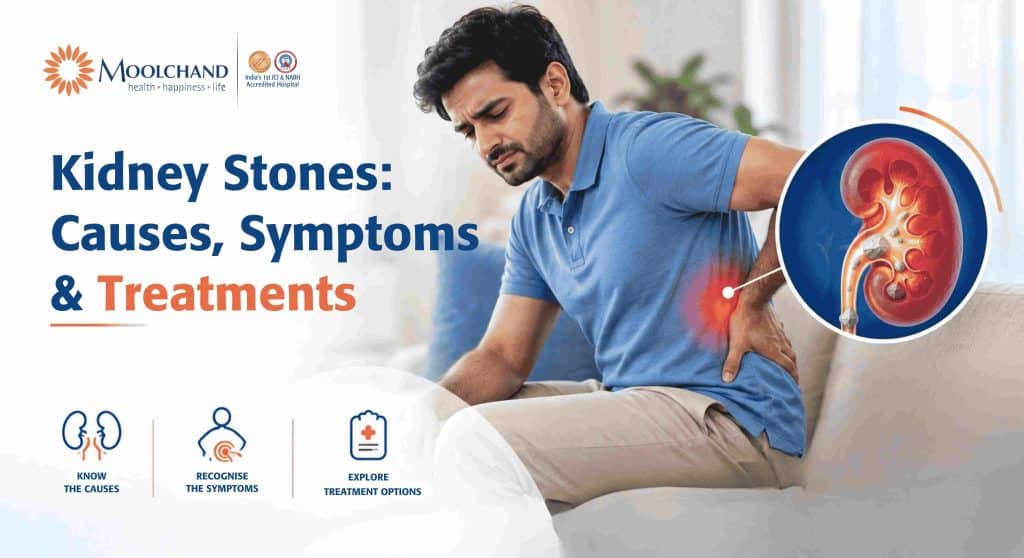
Kidney stones are hard deposits that develop inside the kidneys. They form when certain substances become concentrated in urine. These substances can include calcium, oxalate, uric acid, and other minerals.
Normally, these substances remain dissolved in urine. When their concentration becomes too high, crystals can develop. These crystals may gradually grow into stones.
A small stone may remain inside the kidney without causing symptoms. Some stones eventually move into the ureter. The ureter is the narrow tube connecting the kidney to the bladder.
When a stone blocks the ureter, urine flow can become restricted. This can cause intense pain and other symptoms. A blockage can sometimes lead to infection or kidney-related complications.
Common Causes of Kidney Stones
Several factors can increase the likelihood of developing kidney stones. Understanding these factors can help people take preventive measures.
Dehydration and Low Water Intake
Not drinking enough water is one of the important risk factors. When urine becomes concentrated, minerals can form crystals more easily.
People who sweat heavily may lose more fluid. Hot weather can also increase fluid requirements. Regular water intake helps keep urine diluted.
People with previous kidney stones should discuss suitable fluid intake with their doctor. Individual requirements can vary based on health conditions.
Diet and Eating Habits
Diet can influence the risk of kidney stone formation. A diet high in salt may increase urinary calcium levels. Excessive intake of certain animal proteins may also contribute.
High sugar intake can affect stone risk in some people. Highly processed foods may also contain significant amounts of salt.
A balanced diet can support better urinary and overall health. Dietary recommendations should be personalised when someone has recurring stones.
Family History
Some people have a higher tendency to develop kidney stones. Family history can increase this risk.
People with close relatives who have experienced kidney stones should remain aware of symptoms. Preventive measures can become especially important after a previous stone episode.
Obesity and Metabolic Conditions
Obesity can increase the risk of certain types of kidney stones. Some metabolic conditions may also influence stone formation.
People with diabetes or other health conditions may require personalised dietary guidance. Managing overall health can support kidney stone prevention.
Previous Kidney Stones
A person who has had one kidney stone may develop another. Recurrence is relatively common without appropriate preventive measures.
Identifying the type of stone can help guide prevention. Doctors may recommend urine or blood tests in selected patients.
Symptoms of Kidney Stones
Kidney stone symptoms depend on the stone’s size and location. A stone may cause no symptoms while it remains inside the kidney.
Symptoms can become severe when the stone moves into the ureter.
Severe Back or Side Pain
Severe pain is one of the most recognised kidney stone symptoms. The pain may begin around the back or side. It can sometimes spread toward the lower abdomen or groin.
The pain may come in waves. It can become stronger as the stone moves through the urinary tract.
Some patients describe the pain as extremely intense. If severe unexplained pain develops, medical evaluation is important.
Blood in Urine
Kidney stones can irritate the urinary tract. This irritation may cause blood to appear in the urine.
The urine may look pink, red, or brown. Sometimes blood can only be detected through laboratory testing.
Blood in urine should not automatically be attributed to kidney stones. Other urinary conditions can cause similar symptoms.
Nausea and Vomiting
Severe kidney stone pain can cause nausea. Some patients may also experience vomiting.
Repeated vomiting can increase the risk of dehydration. Medical attention may be necessary if fluids cannot be kept down.
Frequent Urge to Urinate
A stone close to the bladder can cause urinary symptoms. Patients may feel the need to urinate more frequently.
Some people may experience discomfort during urination. Urinary symptoms can also indicate infection.
Fever and Chills
Fever with suspected kidney stones requires urgent medical attention. A blocked urinary tract combined with infection can become serious.
Patients should not delay medical care when fever or chills accompany severe urinary symptoms.
How Kidney Stones Are Diagnosed
Doctors begin by understanding the patient’s symptoms and medical history. A physical examination may also be performed.
Urine testing can help identify blood or signs of infection. Blood tests may provide information about kidney function and other factors.
Imaging can help locate the stone and determine its size. Ultrasound may be used in selected cases. CT scans can provide detailed information when required.
The choice of investigation depends on the patient’s condition. Doctors select tests based on symptoms and clinical needs.
Latest Treatment Options for Kidney Stones
Treatment depends on several factors. These include stone size, location, composition, symptoms, and urinary blockage.
Not every kidney stone requires surgery. Small stones may pass naturally with appropriate medical management.
Medication
Some small stones can pass through the urinary tract naturally. Doctors may prescribe medicines to control pain and other symptoms.
Certain medicines can help relax the ureter in selected patients. This may help some stones pass more easily.
Patients should only use medicines according to medical advice. The treatment depends on individual circumstances.
Shock Wave Lithotripsy
Shock Wave Lithotripsy, or SWL, uses focused shock waves to break stones. The stone is divided into smaller fragments.
These fragments can then pass through the urinary tract. SWL may be suitable for selected stones based on their size and location.
The doctor evaluates the stone before recommending this procedure. Several factors can influence the success of SWL.
Ureteroscopy
Ureteroscopy is a minimally invasive procedure. A thin instrument called a ureteroscope is passed through the urinary tract.
The doctor can locate the stone and remove it. Larger stones may first be broken into smaller pieces using suitable energy.
Ureteroscopy can treat stones located in different parts of the urinary tract. The approach depends on the individual patient’s condition.
Percutaneous Nephrolithotomy
Percutaneous Nephrolithotomy, commonly called PCNL, is generally used for larger kidney stones. It involves accessing the kidney through a small opening in the skin.
The stone can then be broken and removed. PCNL can be particularly useful for large or complex stones.
The doctor determines whether this approach is appropriate after detailed evaluation.
Laparoscopic and Robotic Surgery
Some complex urinary conditions may require surgical treatment. Laparoscopic and robotic approaches can be considered in selected cases.
These techniques use small surgical openings and specialised instruments. Their suitability depends on the patient’s condition.
An experienced urology doctor in Delhi can explain which treatment is appropriate. Surgery should always be recommended according to medical need.
When Should You See a Urologist?
Do not ignore severe or persistent urinary symptoms. Early evaluation can help identify the underlying problem.
You should seek medical advice for severe side or back pain. Blood in urine also requires proper evaluation.
Seek urgent care when fever accompanies suspected kidney stones. Difficulty passing urine can also require prompt assessment.
Repeated kidney stones deserve further evaluation. Your doctor may investigate why stones continue forming.
People searching for the best urologist in delhi should focus on experience and appropriate specialist care. The right doctor can evaluate symptoms and discuss suitable treatment options.
How Can Kidney Stones Be Prevented?
Prevention depends partly on the type of kidney stone. However, adequate hydration is generally important for many patients.
Drink enough fluids throughout the day unless your doctor has advised fluid restriction. Urine that remains pale is often a useful hydration indicator.
Reducing excessive salt intake can also support prevention. Avoiding excessive processed foods may be helpful.
Dietary changes should be based on the type of stone when known. Some patients may need specific dietary restrictions.
Maintaining a healthy body weight can also support overall health. Regular physical activity and balanced nutrition can help.
People with recurrent stones should discuss preventive testing with their doctor. Understanding the reason behind recurring stones can guide future care.
Why Choosing the Right Hospital Matters
Kidney stone treatment requires accurate diagnosis and appropriate treatment planning. Different stones may require completely different approaches.
A comprehensive hospital can provide diagnostic services and specialist consultations. It can also support patients who require minimally invasive procedures.
Patients searching for the best kidney hospital in delhi should consider the availability of experienced specialists. They should also look at diagnostic and treatment facilities.
People may also search for the best Hospital in Delhi when dealing with complex medical concerns. However, the hospital should be selected according to the patient’s specific medical needs.
For urinary and stone-related conditions, specialist urological care is particularly important. Patients should discuss their symptoms with a qualified specialist before choosing treatment.
What Makes Moolchand’s Approach Patient-Focused?
At Moolchand Hospital, kidney stone care focuses on appropriate diagnosis and individual treatment planning.
The medical team uses modern diagnostic methods when required. Treatment options are discussed according to the patient’s condition.
The aim is to avoid unnecessary procedures whenever safe. At the same time, timely intervention is recommended when a stone creates significant problems.
Patients receive guidance about recovery and prevention. Follow-up care can also help reduce the chances of recurrent problems.
Moolchand combines medical expertise with compassionate patient care. The focus remains on providing appropriate treatment while keeping patient needs central.
Final Thoughts
Kidney stones can cause sudden and severe discomfort. However, modern medical treatments can manage many types of stones effectively.
Small stones may pass naturally with appropriate medical support. Larger stones may require procedures such as SWL, ureteroscopy, or PCNL.
The correct treatment depends on individual medical factors. Early diagnosis can help prevent complications from untreated obstruction or infection.
If you experience severe pain, blood in urine, fever, vomiting, or difficulty urinating, seek medical advice promptly.
An experienced kidney specialist in Delhi can help evaluate related kidney concerns. A qualified urology doctor in Delhi can assess urinary symptoms and recommend appropriate treatment.
Moolchand Hospital provides specialist evaluation and modern treatment options for kidney stones. Patients can discuss their symptoms with Dr. Manoj Aggarwal, Director– Urology and Andrology, for appropriate medical guidance.
The goal is simple: accurate diagnosis, suitable treatment, safe recovery, and better prevention.
Frequently Asked Questions About Kidney Stones
1. What are kidney stones?
Kidney stones are hard deposits formed from minerals in the urine.
They can remain in the kidney or move into the ureter.
Their size and location can affect the symptoms they cause.
2. What are the common symptoms of kidney stones?
Severe back or side pain is a common symptom.
Some people may notice blood in their urine.
Nausea, vomiting, and frequent urination can also occur.
3. Can kidney stones pass naturally?
Yes, some small stones can pass naturally through the urinary tract.
The chances depend on their size and location.
Your doctor can assess whether natural passage is likely.
4. How much water should I drink to prevent kidney stones?
Adequate hydration can help reduce the risk of stone formation.
Your individual fluid requirement depends on your health and activity.
Ask your doctor about the right fluid intake for you.
5. When should I see a urologist for kidney stones?
Consult a urologist when you have severe or recurring symptoms.
Blood in urine should also receive proper medical evaluation.
Fever with suspected stones requires prompt medical attention.
6. Can kidney stones cause fever?
Kidney stones themselves do not always cause fever.
Fever may indicate an infection, especially with urinary blockage.
Seek urgent medical care if fever occurs with severe stone symptoms.
7. What is Shock Wave Lithotripsy?
Shock Wave Lithotripsy uses focused shock waves to break kidney stones.
The smaller fragments can then pass through the urinary tract.
It may be suitable for selected stones.
8. What is ureteroscopy for kidney stones?
Ureteroscopy uses a thin instrument to reach the stone.
The doctor can remove or break the stone during the procedure.
It is a minimally invasive treatment option.
9. Are large kidney stones treated without surgery?
Some large stones may require a procedure for safe removal.
Treatment depends on their size, location, and other factors.
PCNL may be recommended for certain larger stones.
10. Can kidney stones come back after treatment?
Yes, kidney stones can recur after successful treatment.
Drinking enough fluids and making suitable dietary changes can help.
Patients with repeated stones may need additional preventive evaluation.

