






 We do what's right for you...


Hyperpigmentation Treatment for Dark Spots, Melasma and Sun Damage
Dr. Payal Gupta
Many guides treat every dark patch the same. That is why results stall and frustration builds. Hyperpigmentation presents in distinct patterns, driven by UV, inflammation, or hormones. Your best results come from matching the Hyperpigmentation Treatment to the exact cause and your skin tone and type. This explainer clarifies options, sets expectations, and maps a practical route from first-line skincare to specialist procedures.
Top Hyperpigmentation Treatments for Different Skin Concerns
1. Hydroquinone-Based Triple Combination Therapy
When you need speed and depth, a triple combination with tretinoin and a mild steroid remains highly effective for melasma and stubborn patches. Use matters more than hype. Apply to affected areas only, limit the course, and commit to high-SPF sunscreen daily. As Cleveland Clinic notes, hydroquinone reduces melanin production but can irritate. Professional supervision is advised to reduce risks like exogenous ochronosis.
-
Best for: melasma treatment, dense sun-induced patches, and post-inflammatory marks.
-
Course: typically 8 to 16 weeks, then switch to other maintenance therapies
-
Do not spot-and-forget. Build a maintenance plan to hold gains.
2. Vitamin C Serums with Stabilised Formulations
Vitamin C is prevention-first. It protects, brightens, and supports collagen. As PubMed Central explains, L-ascorbic acid is the most studied form, performing best at pH below 3.5, while newer derivatives can be gentler with decent efficacy. Consumer evidence reviews reinforce that absorption and stability vary by formula, with gold-standard blends pairing vitamin C with vitamin E and ferulic acid for synergy.Does not suit every skin type so be cautious
The practical takeaway: focus on formulation, not just percentage. Use daily under sunscreen for cumulative gains. In short, this is your daily guardrail within an overall Hyperpigmentation Treatment plan.
-
Look for opaque or airless packaging to minimise oxidation.
-
Start 2 to 4 mornings each week, then build to daily use.
-
Expect prevention and brightening more than complete reversal.
3. Tranexamic Acid (Oral and Topical)
Tranexamic acid (TXA) is a rising option for persistent melasma. As PubMed reports, low-dose oral TXA can improve melasma within 8 to 12 weeks when appropriately screened for contraindications. It reduces melanogenesis through multiple pathways and shows a favourable safety profile in the literature, though medical oversight is essential.
There is also a role as an adjunct. Combining TXA with laser improves outcomes compared with laser alone, based on clinical indices in published research. Topical TXA is useful for maintenance or for those who cannot take oral TXA.
-
Topical TXA suits maintenance and sensitive skin routines.
-
Always pair with strict photoprotection to sustain results.
4. Retinoids
Retinoids improve cell turnover, fade uneven tone, and reduce acne that triggers PIH. As . Tretinoin remains a cornerstone for texture, fine lines, and tone, though modern formulations aim to reduce irritation.
In practice, a pea-sized amount at night, two or three times a week, is a sound start. Your barrier must stay intact. Moisturiser, photoprotection, and patient titration improve adherence and outcomes in any Hyperpigmentation Treatment routine.
-
Start low frequency and increase gradually to tolerance.
-
Combine with pigment inhibitors for faster gains.
-
Pause during irritation, then re-introduce slowly.
5. Azelaic Acid and Niacinamide Combinations
Azelaic acid reduces abnormal pigment and supports clearer pores. Niacinamide calms redness and regulates oil. As PubMed Central notes, pairing these agents targets multiple pigmentation pathways with good tolerability. This combination suits melasma maintenance and skin of colour, where irritation risk must stay low.
-
Morning or evening use, depending on routine complexity.
-
Useful alongside retinoids or vitamin C if skin tolerates.
-
Expect steady improvement over several months.
6. Kojic Acid and Arbutin Products
Kojic acid and arbutin inhibit tyrosinase to reduce melanin synthesis. As PubMed Central indicates, both are effective for melasma and PIH, with kojic acid sometimes causing irritation at higher strengths. These agents are solid choices when hydroquinone is unsuitable or during off-cycles.
Use in serums or spot treatments, then monitor skin comfort. Combine with sunscreen and a barrier-friendly moisturiser for consistency.
7. Thiamidol (Isobutylamido-thiazolyl-resorcinol)
Thiamidol is a newer, potent tyrosinase inhibitor. As PubMed Central reports, it has shown significant improvement in facial hyperpigmentation, with early changes visible within two weeks in some studies. It suits PIH and melasma, and offers a pragmatic alternative to hydroquinone cycles.
-
Use once to twice daily on clean, dry skin.
-
Pair with photoprotection and gentle exfoliation.
-
Consider it for long-term maintenance cycles.
Professional Treatments for Stubborn Pigmentation
Chemical Peels for Different Skin Types
Superficial peels such as glycolic, lactic, or mandelic can accelerate turnover and enhance topical penetration. Medium peels treat deeper pigment but need careful selection for darker skin tones. A series approach works best, spaced every 3 to 6 weeks, with robust daily sunscreen.
-
Choose mandelic or lactic peels for sensitive or darker skin.
-
Build pre-peel routines that strengthen the barrier.
-
Plan for maintenance peels rather than one-off fixes.
Q-Switched Nd:YAG Laser Therapy
For resistant pigment, QS Nd:YAG at 1064 nm is a workhorse. As PubMed Central notes, it shows Safety improves with conservative fluence and strict sun avoidance post-procedure.
Expect a series spaced weeks apart, aligned with topical support. This is not a stand-alone Hyperpigmentation Treatment; it is a catalyst within a comprehensive plan.
Intense Pulsed Light (IPL) Treatment
IPL targets sun-induced lentigines and diffuse mottling. It can be very effective on fair to medium skin tones. For darker skin, parameter control and practitioner experience are crucial to reduce risk of PIH.
-
Best for photoaging and discrete sun spots.
-
Avoid during active melasma flares.
-
Always continue sunscreen and pigment inhibitors.
Picosecond Laser Technology
Picosecond devices deliver ultra-short pulses that generate photoacoustic effects with less heat. As PubMed Central details, this can reduce thermal injury and improve outcomes for dermal pigment, including in darker skin tones. Sequential protocols show promising reductions across conditions.
Candidate selection remains vital. Expect a measured, staged approach, not an instant fix.
Fractional Laser Resurfacing
Fractional non-ablative lasers can remodel texture and support pigment clearance in trained hands. They are best used judiciously in skin of colour due to PIH risk. Pre-treatment priming and post-care reduce complications and improve consistency.
-
Useful when texture and tone issues coexist.
-
Plan downtime and strict photoprotection.
Microneedling Combined with Topical Agents
Microneedling creates micro-channels that enhance penetration of pigment inhibitors. As PubMed Central indicates, combining microneedling with topical actives can improve melasma outcomes with an attractive safety profile. This suits many skin types, including skin of colour, when performed by experienced clinicians.
Sessions are often monthly for several months, paired with at-home maintenance. Results accumulate gradually.
Cryotherapy for Targeted Dark Spots
Liquid nitrogen can lighten discrete lentigines efficiently.treatment is quick with minimal downtime, though pigmentary shifts must be monitored in darker skin. It is ideal for spot-level correction, not diffuse melasma.
-
Expect temporary darkening before clearance.
-
Follow with sunscreen to prevent recurrence.
Targeted Solutions for Melasma Treatment
Iron Oxide Sunscreens for Visible Light Protection
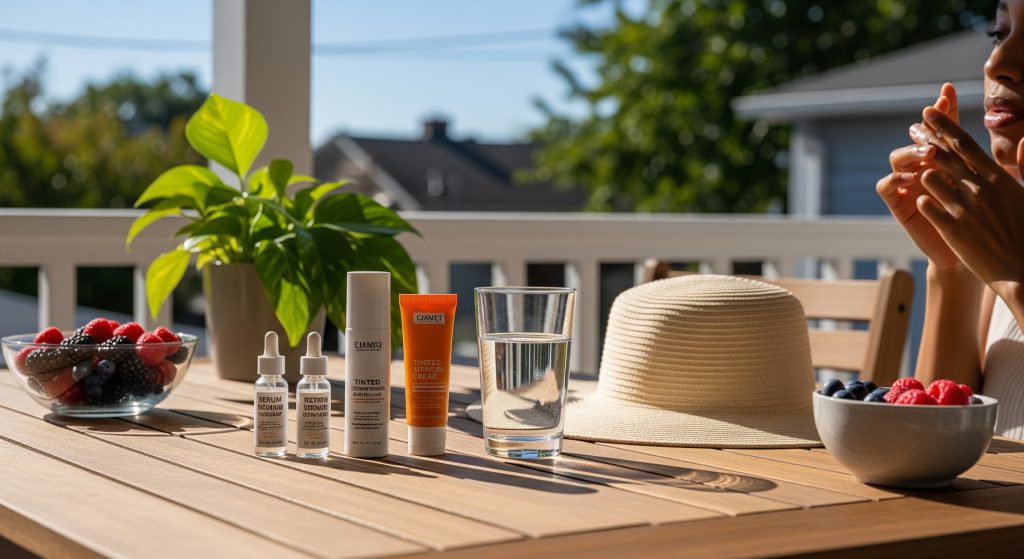
Melasma is highly sensitive to visible light, not just UV. As PubMed Central highlights, tinted sunscreens with iron oxides help block high-energy visible light and reduce VL-induced pigmentation. This is a crucial upgrade for daily protection and a non-negotiable in any melasma treatment plan.
-
Use a tinted, iron oxide formula every morning, all year.
-
Reapply during extended daylight exposure.
-
Combine with hats and shade seeking for better control.
Maintenance Protocols After Initial Treatment
The melasma challenge is not only clearing pigment but keeping it clear. As PubMed Central advises, non-hydroquinone agents such as cysteamine and tranexamic acid serve well in maintenance to limit rebound. Daily photoprotection remains the highest leverage habit.
-
Cycle hydroquinone judiciously, then hold gains with alternatives.
-
Retinoids and azelaic acid help sustain even tone.
-
Schedule follow-ups to adjust before relapse.
Hormonal Considerations and Management
Hormonal signals often drive melasma, especially oestrogen and progesterone influences. As PubMed Central explains, contraceptives and pregnancy can amplify melanogenesis through multiple pathways. Discuss contraceptive options with your clinician if flares track hormonal cycles.
Photoprotection, topical inhibitors, and, where appropriate, TXA can control expression even when hormones fluctuate. Perfection is unlikely. Control is realistic.
Managing Sun Damage and Age Spots
Prevention Strategies and Daily Protection
UV exposure is the chief accelerator of photoageing and pigment formation. As PubMed Central notes, broad-spectrum sunscreen and sun avoidance markedly reduce photoaging and cancer risk. Daily SPF 30 or higher, hats, and shade form the base of any Hyperpigmentation Treatment approach.
-
Apply two finger-lengths of sunscreen to face and neck.
-
Reapply every two hours outdoors or with prolonged window exposure.
-
Add antioxidants such as vitamin C for extra defence.
Over-the-Counter Brightening Options
Effective OTCs include vitamin C, retinol, niacinamide, arbutin, and azelaic acid. As Mayo Clinic outlines, these support gradual lightening and prevent darkening when paired with sun protection. Choose fragrance-free formulas to minimise irritation risk.
Consistency beats intensity. A calm routine trumps an aggressive stack that inflames skin and worsens pigment.
Professional-Grade Vitamin C Benefits
Professional vitamin C serums offer stable delivery and measurable antioxidant support. As PubMed Central explains, vitamin C boosts collagen synthesis and mitigates UV-induced damage, improving tone and texture. It also enhances sunscreen performance, which matters for long-term pigment control.
-
Apply in the morning under sunscreen for best synergy.
-
Store away from heat and light to preserve potency.
-
Pair with ferulic acid and vitamin E where tolerated.
Lifestyle Modifications for Long-term Results
Skin reflects daily habits. As PubMed Central suggests, diets rich in antioxidants and omega fatty acids support barrier function and reduce inflammation. Sleep, stress management, and hydration all contribute to steadier pigment control.
-
Prioritise a Mediterranean-style plate with colourful plants.
-
Keep retinoid and sunscreen routines consistent year-round.
-
Consider seasonal adjustments as UV index shifts.
course, then maintains with azelaic acid. A 55-year-old with sun-exposed lentigines chooses IPL in winter, continues professional vitamin C, and uses thiamidol for maintenance. Different drivers. Different playbooks.
If your key goal is how to get rid of sun spots on face, pair targeted procedures with daily prevention to avoid new lesions. If your goal is broad brightening, focus on vitamin c serum benefits for skin and long-term retinoid use. Discipline turns marginal gains into durable results.
Frequently Asked Questions
How long does it take to see results from hyperpigmentation treatments?
Most topical routines show early change in 6 to 8 weeks, with clearer improvement by 12 weeks. Procedures such as QS Nd:YAG or IPL can act faster on discrete lesions, but still benefit from a multi-session plan. Your baseline pigment depth and skin tone influence timelines to a large extent.
Can vitamin C serum completely remove dark spots?
Vitamin C helps prevent and gradually fade uneven tone. It rarely erases well-established spots on its own. Use it as a daily foundation within a broader Hyperpigmentation Treatment alongside sunscreen, retinoids, and targeted inhibitors. Procedures may still be required for entrenched lesions.
What’s the difference between melasma and regular dark spots?
Melasma presents as symmetric patches driven by hormones and light, often on cheeks, forehead, or upper lip. Regular dark spots, or lentigines, are discrete sun-induced lesions. Melasma demands strict visible light protection and long-term maintenance. Lentigines respond well to device-based spot correction.
Are laser treatments safe for darker skin tones?
Yes, with careful selection and conservative settings. QS Nd:YAG at 1064 nm and picosecond protocols are often preferred. Pre- and post-care, including pigment inhibitors and diligent photoprotection, lowers the risk of post-inflammatory hyperpigmentation. Practitioner experience is decisive here.
Which ingredients should I avoid mixing with vitamin C serum?
Do not layer direct acids or strong benzoyl peroxide immediately over low pH L-ascorbic acid. Stagger actives by time of day to reduce irritation. Vitamin C pairs well with sunscreen and can combine with ferulic acid and vitamin E for stability and synergy.
How can I prevent hyperpigmentation from returning after treatment?
Make photoprotection non-negotiable. Maintain a simple routine with retinoids, azelaic acid or niacinamide, and a tinted iron oxide sunscreen.with non-HQ agents. Plan seasonal reviews to adjust before relapse occurs.

