






 We do what's right for you...


Hunchback Exercises: A Step-by-Step Guide to Postural Correction
Dr. Neetan Sachdeva
The common advice to simply sit up straight sounds neat. It rarely works on its own. I use structured hunchback exercises to change the tissues that hold posture, not just the shape of a sitting position. The process is systematic, measurable, and surprisingly efficient with consistent practice.
Essential Hunchback Exercises for Postural Correction
I group hunchback exercises into mobility, activation, and strength. Mobility unlocks movement. Activation restores control. Strength keeps alignment under load. This section shows how to execute each drill with precision.
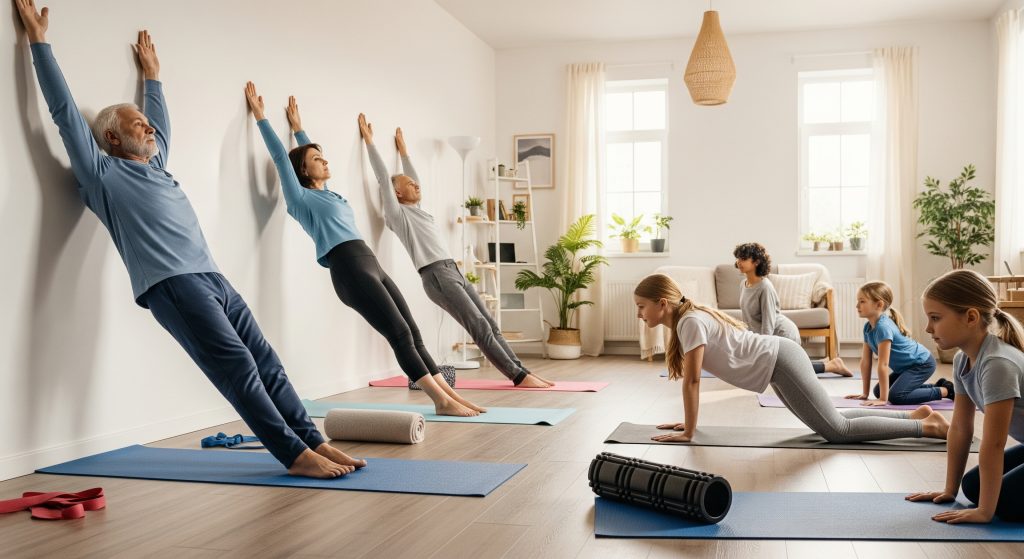
1. Wall Angels
Wall Angels strengthen the upper back and improve shoulder mechanics. They also expose compensations quickly. I position heels, hips, ribs, and head on the wall where possible.
-
Set up: Stand with a slight knee bend. Posteriorly tilt the pelvis gently to avoid rib flare.
-
Movement: Place forearms and hands on the wall in a goalpost shape. Slide up slowly, then down.
-
Cues: Keep chin tucked lightly. Maintain contact without forcing the low back flat.
-
Dosage: 2 to 3 sets of 6 to 10 slow reps.
These hunchback exercises work best when the ribs stay stacked over the pelvis. If the wrists cannot stay on the wall, I reduce range rather than force it.
2. Cat-Cow Stretch
Cat-Cow builds segmental control of the spine. It links breath with motion, which helps the nervous system downshift and release guarding.
-
Set up: Hands under shoulders. Knees under hips. Long neck.
-
Movement: Exhale as I round from tailbone to head. Inhale as I extend one vertebra at a time.
-
Cues: Spread shoulder blades in flexion. Lift sternum in extension without dumping the neck.
-
Dosage: 45 to 90 seconds, smooth tempo.
These hunchback exercises improve spine flexibility and core engagement. They also reduce upper back and neck tension for many people. I often start beginners here.
3. Doorway Chest Stretch
Tight pectorals pull the shoulders forward. This simple doorway setup lengthens the front while sparing the shoulder joint.
-
Set up: Split stance. Elbows and forearms on the frame at shoulder height.
-
Movement: I shift weight forward until a mild stretch appears across the chest.
-
Cues: Keep ribs down and neck long. No pinching at the front of the shoulder.
-
Dosage: Hold for 20 to 30 seconds. Repeat 2 to 3 times per side.
As Explore our November Stretch of the Month: The Doorway Chest Stretch details, this stretch targets pectoralis major and minor and suits patterns like text neck. I include it in many hunchback exercises programmes because it pairs well with mid back strengthening.
4. Chin Tucks for Forward Head Posture
Chin tucks train deep neck flexors and align the head over the spine. I use them to address how to fix forward head posture without bracing or forcing the chin down.
-
Set up: Sit tall or lie supine. Eyes level, face slightly upward to preserve the neck curve.
-
Movement: Glide the chin straight back. Hold briefly. Release slowly.
-
Cues: Imagine a drawer sliding in. Do not nod excessively. Keep jaw relaxed.
-
Progression: Light band pull or wall pressure for endurance.
These hunchback exercises reduce neck tension and often ease headaches over time. I sometimes pair them with a gentle chest stretch and mid back activation for an efficient circuit.
5. Thoracic Extension
Thoracic extension restores mobility to the mid back, which tends to stiffen with sitting. I prefer variations that avoid cranking the lower back.
-
On foam roller: Place the roller across the mid back. Support the head with hands.
-
Movement: Extend gently over the roller. Move the roller one segment at a time.
-
Cues: Keep abs engaged. Move slowly. Breathe into the ribs.
-
Alternative: Tall-kneeling wall slides with lift-off for an active extension bias.
These hunchback exercises improve shoulder range indirectly by improving thoracic motion. I watch for neck hinging and reduce range if needed.
6. Upper Back Foam Rolling
Foam rolling helps release trigger points and prepares tissues for loading. I treat it as a brief warm up, not a workout replacement.
-
Set up: Lie with the roller under the thoracic spine. Hips down or hovering for more load.
-
Movement: Roll slowly from mid back to upper back. Pause on tender spots.
-
Cues: Keep ribs in. Support the head. Avoid rolling the neck bones directly.
-
Dosage: 60 to 120 seconds before strength work.
Used well, these hunchback exercises reduce stiffness and improve movement quality. I then shift into active drills to retain the gain.
7. Prone Y-T-W Raises
Y-T-W raises strengthen scapular retractors and depressors. They also improve shoulder coordination, which is crucial for stable posture.
-
Set up: Lie prone. Forehead on a towel. Core engaged.
-
Y: Arms overhead in a Y. Lift with thumbs up. Pull shoulder blades down.
-
T: Arms out at 9 and 3. Squeeze shoulder blades together.
-
W: Elbows bent. Draw blades down and back. Gentle hold.
-
Dosage: 2 to 3 sets of 6 to 10 reps each shape.
I treat these as precision hunchback exercises with slow tempo and clean scapular motion. If neck tension appears, I reduce range and reset the chin tuck.
Age-Specific Modifications and Progressions
I tailor hunchback exercises to the person in front of me. Capacity, history, and daily load decide the entry point and the pace of change.
Gentle Exercises for Seniors
For older adults, comfort and safety take priority. I use low load drills that build confidence and joint motion.
-
Chair Cat-Cow with supported arms.
-
Wall Angels with a folded towel behind the head.
-
Band pull-aparts at chest height for light activation.
-
Doorway Chest Stretch at a mild angle only.
These hunchback exercises focus on breathing, balance, and painless range. I keep intensity at a moderate RPE (rate of perceived exertion) of 4 to 6.
Teen-Friendly Posture Corrections
Teenagers respond well to short, engaging sets. I link posture to performance, such as better sprint form or stronger serves.
-
Prone Y-T-W as a mini circuit between homework blocks.
-
Quadruped reach-through for rotation plus Cat-Cow.
-
Light suitcase carries to build anti-tilt core strength.
These hunchback exercises deliver quick wins and reduce screen slump habits. Consistency beats volume here.
Office Worker Solutions
Desk work loads the neck and mid back. I select drills that fit five minute windows and demand no special kit.
-
Seated chin tucks with light wall pressure holds.
-
Bruegger’s relief position with band external rotations.
-
Upper Back Foam Rolling on a yoga mat during breaks.
These hunchback exercises help unwind the day’s sitting strain. I also address workstation height, keyboard reach, and chair support.
Child-Safe Postural Activities
For children, I prioritise playful movement. Drills become games while teaching body awareness.
-
Superman holds as a timed challenge with soft landings.
-
Wall slides with sticker targets to encourage reach.
-
Bear crawls to train shoulder stability and core control.
These hunchback exercises remain short and fun. If a device is proposed, I defer to education and active play first.
Supporting Tools and Posture Corrector Devices
Tools help when used wisely. They should reinforce alignment and capacity built by hunchback exercises, not replace them.
Resistance Band Exercises
Light bands are portable and effective. I use them to teach scapular mechanics and endurance.
-
Band pull-aparts: Keep ribs down and neck long.
-
Face pulls: Aim elbows slightly high. Squeeze between the shoulder blades.
-
Band W external rotations: Elbows pinned. Slow tempo.
These hunchback exercises with bands scale easily by stepping closer or further. A simple anchor point is enough.
Posture Braces and Supports
Posture braces can provide feedback. They can also create dependence if overused. I treat them like training wheels.
Pros
-
Immediate tactile cueing to reduce slouching.
-
Useful during painful flare ups for brief periods.
Cons
-
Risk of passive support replacing muscle work.
-
Potential skin irritation or breathing restriction when overtightened.
If posture corrector devices are used, I limit wear to short windows and pair them with activation sets. Muscles must do the long term job.
Ergonomic Accessories
Ergonomics reduces friction. I adjust environment first, then reinforce with hunchback exercises.
-
Laptop stand or external monitor to eye level.
-
Keyboard and mouse close to reduce shoulder protraction.
-
Chair with lumbar support and adjustable seat pan depth.
-
Footrest when feet do not contact the floor.
Small upgrades accumulate. Better setup means fewer daily triggers and more energy for training.
Mobile Apps for Posture Tracking
Apps nudge behaviour. I use timers, gentle vibration reminders, and photo logs to track change over weeks.
-
Microbreak timers every 20 to 45 minutes.
-
Daily checklist for three priority drills.
-
Weekly photos for alignment snapshots.
Digital accountability supports hunchback exercises by keeping the sequence visible and achievable.
Creating a Daily Routine for Long-Term Results
Habits move the needle. I organise hunchback exercises into short blocks that fit mornings, work breaks, and evenings.
Morning Activation Sequence
Morning practice sets spinal tone for the day. I focus on breath, extension, and light pulling.
-
Cat-Cow for 60 seconds, smooth breathing.
-
Wall Angels, 2 sets of 8 controlled reps.
-
Chin tucks, 2 sets of 6 with 5 second holds.
-
Band pull-aparts, 2 sets of 12 at easy effort.
I keep this sequence under eight minutes. These hunchback exercises raise body awareness and reduce stiffness before sitting begins.
Midday Desk Breaks
Short, regular movement breaks protect the spine and sharpen attention. Frequency beats duration in this block.
-
Every 20 to 30 minutes: stand, shrug, two chin tucks, two deep breaths.
-
Twice daily: seated Bruegger’s relief for 60 seconds.
-
Once daily: 3 minutes of Upper Back Foam Rolling if space allows.
As We Are Spine explains, frequent pauses reduce spinal load and improve circulation, which supports comfort and focus. I see better adherence when the timer is automated.
Evening Restoration Programme
Evening work is quiet, slow, and restorative. I prefer positions that invite the ribs to move and the neck to soften.
-
Doorway Chest Stretch, 2 to 3 relaxed holds.
-
Child’s Pose with side reach for rib mobility.
-
Lying T rotation, 6 slow breaths per side.
-
Supine chin tucks, 2 sets of 6 light holds.
As Healthline notes, stretching roughly 30 minutes before bed can calm the system and improve sleep quality. These hunchback exercises also reduce morning stiffness.
Weekly Progress Tracking
Progress can be subtle. I measure what matters and adjust dosage deliberately.
|
Measure |
Method |
|---|---|
|
Daily minutes |
Log total time on hunchback exercises per day. |
|
Neck alignment |
Side photo at the same spot and time weekly. |
|
Shoulder position |
Wall Angel range without rib flare. |
|
Symptom change |
Simple 0 to 10 scale for stiffness and fatigue. |
I update one variable at a time. Then I reassess after two weeks. Slow tweaks win.
Achieving Lasting Postural Correction
Lasting change comes from the blend of mobility, activation, and strength plus daily context. I use hunchback exercises to remodel how tissues behave under load, not to chase perfect shape. The goal is robust posture that holds during work, training, and real life challenges.
-
Keep the morning sequence short and automatic.
-
Use microbreaks to interrupt sitting, not to compensate for it.
-
Strengthen the mid back and deep neck flexors gradually.
-
Reserve braces as brief feedback tools, not long term supports.
Strong posture is a capacity. Build it, test it, and maintain it.
If a device is considered, I evaluate need first. Education and movement come before posture corrector devices. The system works when it is simple enough to follow on busy days. And crucially, when it still happens after tired days.
Frequently Asked Questions
How long does it take to correct a hunchback posture?
Timelines vary. Roughly speaking, early changes in awareness appear within two to four weeks. Structural improvements may take three to six months depending on adherence, training age, and workload. I reassess every four weeks and adjust hunchback exercises based on response.
Can rounded shoulders be permanently fixed?
Rounded shoulders reflect strength imbalances, mobility limits, and habits. They can be corrected to a significant extent with consistent training. I focus on how to correct rounded shoulders using chest mobility, scapular strength, and ergonomic adjustments. Maintenance work keeps gains stable over time.
Which exercises work fastest for forward head posture?
Chin tucks with light holds, Wall Angels, and doorway stretches offer fast feedback. I also coach breathing to reduce neck overuse. The combination addresses how to fix forward head posture while improving mid back support. Speed depends on consistency across the day, not one long session.
Are posture correctors safe for daily wear?
Generally, yes when used briefly and comfortably. I limit wear to short bouts alongside activation drills. Overuse can reduce muscular engagement. Posture corrector devices are best treated as cues, not crutches.
What causes hunchback posture in young adults?
Common drivers include long screen time, low upper back strength, poor sleep setups, and high stress. Sports patterns can also bias the front chain. Hunchback exercises that combine extension, scapular control, and deep neck work address these factors effectively.
Should children use posture correction devices?
Rarely. Education, active play, and light strength work deliver better outcomes. I choose fun, short sessions and teacher or parent coaching. If a device is considered, I use it sparingly and monitor comfort closely.
Can yoga help with hunchback correction?
Yes, especially flows that emphasise thoracic mobility and scapular control. Cat-Cow, Child’s Pose variations, and low load backbends integrate well with hunchback exercises. I avoid extreme ranges that stress the low back or neck.

