






 We do what's right for you...


How to Confirm Pregnancy at Home: Complete Guide to DIY Tests
Waiting for certainty is often presented as the sensible path. Delay the test. See what happens. I disagree. When the stakes are high and the questions are practical, clarity helps. In this guide, I explain how to confirm pregnancy at home with methods that respect evidence, timing, and context. I cover reliable tests, common pitfalls, and what to do next. The aim is simple: give clear steps and balanced judgement, without myths.
Top Methods to Confirm Pregnancy at Home
1. Commercial Home Pregnancy Test Kits
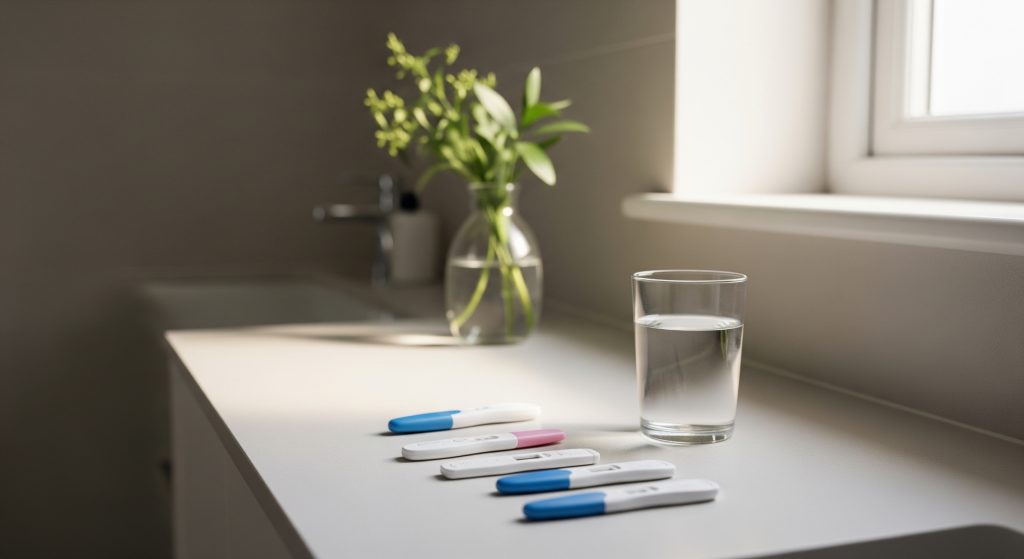
When deciding how to confirm pregnancy at home, I prioritise over-the-counter urine tests. They detect human chorionic gonadotrophin in urine. Most are simple strip or cassette designs with clear control and test lines.
-
Strengths: widely available, affordable, fast results in under five minutes.
-
Limitations: sensitivity varies, particularly in very early testing.
-
Best practice: test on or after the first missed period for higher certainty.
I treat line darkness as secondary. Presence matters more than intensity, provided timing and technique are sound.
2. Digital Pregnancy Tests with Smart Features
Digital devices offer plain-text outputs. Some show weeks estimates or connect to apps. If I am explaining how to confirm pregnancy at home for someone who dislikes interpreting faint lines, digital tests reduce ambiguity.
-
Strengths: unambiguous display and often a built-in timer.
-
Limitations: higher cost, and the weeks estimate is an approximation.
-
Use case: useful for confirmation after an initial positive strip test.
They do not change the biology. They simply present it more clearly.
3. Early Detection Pregnancy Tests
Some tests claim detection up to six days before a missed period. I view these as situational tools. They help if early knowledge changes decisions, but they increase the chance of a negative that later turns positive.
-
Strengths: higher analytical sensitivity to lower hCG levels.
-
Limitations: greater risk of false negatives due to timing, and biochemical pregnancies that would not have been noticed otherwise.
-
Advice: if testing early, plan a repeat on or after the missed period.
For many, patience lifts accuracy. For others, early signal guides planning. Both positions are reasonable.
4. Basal Body Temperature Tracking
Basal body temperature, or BBT, can support interpretation. After ovulation, progesterone raises resting temperature. If the elevated phase persists for more than 16 days, pregnancy becomes more likely.
-
Strengths: helpful context when combined with urine testing.
-
Limitations: illness, sleep disruption, and alcohol alter readings.
-
Method: measure at the same time each morning, before rising, with a BBT thermometer.
BBT does not confirm pregnancy alone. It contextualises timing and informs when to test.
5. Traditional Home Methods: Salt and Sugar Tests
These methods are common online. The pregnancy test with salt and the pregnancy test with sugar are cited as DIY checks. I am direct about this. They are not evidence based. The crystallisation or clumping patterns are inconsistent.
-
Strengths: none, apart from low cost and curiosity value.
-
Limitations: no validated mechanism, high risk of misleading results.
-
Recommendation: do not use these to decide medical next steps.
If someone asks how to confirm pregnancy at home with household items, I advise against it. Use a regulated test and then confirm clinically.
6. Observing Early Pregnancy Symptoms
Symptoms help triage but do not confirm. Common early signs of pregnancy include missed periods, breast tenderness, nausea, fatigue, and increased urination. Some notice light spotting around implantation.
-
Strengths: early signal that prompts testing.
-
Limitations: overlap with PMS, stress, illness, or changes in routine.
-
Action: combine symptoms with a properly timed urine test.
When considering how to confirm pregnancy at home, I treat symptoms as prompts for testing, not proof.
Understanding Home Pregnancy Test Accuracy and Timing
When to Take a Home Pregnancy Test for Best Results
Timing drives certainty. For most people, testing on the day of the missed period or after gives reliable clarity. Morning urine can improve detection due to concentration, especially in early testing.
-
Optimal window: from the first missed period onward.
-
If testing early: expect to repeat after 48 hours.
-
If cycles are irregular: count at least 21 days from the last unprotected intercourse before testing.
This is the practical backbone of how to confirm pregnancy at home with confidence. Good timing reduces retesting and anxiety.
Factors Affecting Test Accuracy
-
Urine concentration: diluted samples reduce sensitivity.
-
Test sensitivity: different brands detect different hCG thresholds.
-
Technique: dipping time, reading window, and contamination matter.
-
Medications: fertility treatments containing hCG can cause positives.
-
Biology: ovulation day varies, implantation timing varies.
When discussing home pregnancy test accuracy, I emphasise technique and timing first. Quality matters, but user steps often decide outcomes.
False Positive and False Negative Results
False negatives are more common than false positives. They typically arise from testing too early, diluted urine, or reading outside the prescribed window.
-
False positive sources: recent hCG injections, rare medical conditions, or chemical pregnancy.
-
Evaporation lines: reading after the window can mislead.
-
Repeat testing: use a new test in 48 hours if results are unclear.
It is basically this. Timing, a fresh test, and disciplined reading reduce error substantially.
Comparing Different Test Sensitivities
|
Test Type |
Typical Sensitivity |
|---|---|
|
Standard strip |
Moderate – suited to testing from missed period |
|
Early detection |
Higher – can detect lower hCG earlier |
|
Digital |
Varies – clarity improves interpretation, not sensitivity itself |
Different sensitivity does not guarantee earlier accuracy for everyone. Ovulation and implantation vary, which affects when hCG rises. That nuance matters to how to confirm pregnancy at home without repeated false negatives.
Step-by-Step Guide to Using Different Test Methods
How to Use Standard Urine Test Strips
-
Check the expiry date and read the leaflet. Set a timer for the reading window.
-
Collect a clean urine sample in a dry container, ideally first morning urine.
-
Dip the strip to the marked line for the specified seconds. Do not over-submerge.
-
Lay the strip flat on a clean surface. Start timing immediately.
-
Read the result within the window, usually 3 to 5 minutes. Ignore changes after that.
-
Record the result, time, and cycle day. This helps if retesting is needed.
For how to confirm pregnancy at home with minimal ambiguity, I keep to the leaflet timing and avoid line interpretation beyond the window.
Proper Technique for Digital Tests
-
Confirm battery status if indicated and ensure the test is in-date.
-
Hold the absorbent tip in the urine stream or dip for the specified time.
-
Place the cap on and lay the device flat. Wait for the progress symbol.
-
Read the plain-text result within the indicated window.
-
Do not dismantle the device to check for lines. The digital algorithm interprets them.
Digital devices simplify how to confirm pregnancy at home for users who find lines stressful. Clarity beats guesswork here.
BBT Charting for Pregnancy Detection
-
Measure at the same time daily before getting out of bed, using a BBT thermometer.
-
Log readings on paper or an app. Mark ovulation when the sustained rise appears.
-
Watch for a luteal phase at or beyond 16 days with elevated temperatures.
-
If the elevated phase persists, perform a urine test to confirm.
BBT is a supportive method. For how to confirm pregnancy at home definitively, I still rely on biochemical testing.
Performing Traditional Salt and Sugar Tests
-
Collect urine in a clean container.
-
Add table salt or granulated sugar and observe for changes.
My formal view is straightforward. The pregnancy test with salt and the pregnancy test with sugar are unreliable. Use them only as examples of why folklore persists, not as decision tools. If the question is how to confirm pregnancy at home with credibility, use regulated kits and medical confirmation.
Interpreting Results and Next Steps
Reading Test Lines and Digital Displays
-
Lines: a control line must appear. A test line of any visible intensity within the window indicates a positive.
-
Digital: the on-screen message is definitive for that device. Do not open the casing.
-
Invalid: no control line or error icon means retest with a new device.
For those asking how to confirm pregnancy at home with faint lines, I emphasise replication. Test again after 48 hours. hCG should rise.
When to Repeat Testing
-
Negative but period absent: repeat in 48 to 72 hours.
-
Equivocal result: repeat with a first morning sample, preferably a different brand.
-
Persistent uncertainty: seek a quantitative blood test for confirmation.
Two consistent results, timed correctly, are usually conclusive. That is the disciplined path for how to confirm pregnancy at home.
Medical Confirmation Requirements
-
Positive home test: arrange a GP or midwife appointment for confirmation and baseline guidance.
-
Symptoms of pain or heavy bleeding: seek urgent assessment to exclude complications.
-
Fertility treatment or medical history: request a blood hCG and follow-up ultrasound when appropriate.
Home testing is the first signal. Clinical confirmation provides safety, dating, and care planning. Both matter, and they work together.
Early Prenatal Care Planning
-
Start folic acid if not already taking it, as recommended in national guidance.
-
Review medications with a clinician, including over-the-counter supplements.
-
Note last menstrual period and any early symptoms for the appointment.
-
Adopt basic health measures: rest, hydration, and balanced nutrition.
I keep this practical. The goal is simple: turn a positive test into a structured plan. That is responsible care.
Making Informed Decisions About Home Pregnancy Testing
The central question is not only how to confirm pregnancy at home. It is how to do it responsibly, without noise or delay. My framework is direct. Pick a reliable test, use it at the right time, follow the instructions exactly, and repeat when biology demands it. Recognise that early signs of pregnancy are useful prompts, not proof. Treat folklore methods as folklore and move on.
Here is a concise decision path:
-
If the period is late, use a regulated urine test with first morning urine.
-
If the result is negative but suspicion remains, repeat after 48 hours.
-
If the result is positive, contact a GP or midwife to begin prenatal care.
-
If symptoms are severe or unusual, seek urgent care regardless of test timing.
This is how to confirm pregnancy at home while staying grounded. It is also how to minimise confusion and protect health. And yet, there is room for judgement. Cycles vary, stress happens, and tests differ. Make the best call with the information at hand, then validate it promptly.
Frequently Asked Questions
How soon after conception can home pregnancy tests detect pregnancy?
Detection is possible roughly 10 to 12 days after ovulation with high sensitivity tests. Many will still test negative at that point. Most people obtain clearer results from the first missed period onward. For how to confirm pregnancy at home with fewer repeats, wait until the period is due.
Are digital pregnancy tests more accurate than traditional strip tests?
Digital tests are not inherently more accurate. They interpret lines algorithmically and present a clear message. Accuracy depends on timing, sensitivity, and technique. If line interpretation causes uncertainty, digital displays reduce user error. That indirectly supports how to confirm pregnancy at home more confidently.
Can medications affect home pregnancy test results?
Yes. Medications containing hCG, often used in fertility treatment, can cause false positives. Common medicines, including antibiotics or pain relief, do not typically affect results. If in doubt, pair the test with clinical advice and consider a blood hCG. It is a prudent step in how to confirm pregnancy at home with rigour.
Why do pregnancy tests sometimes show false negatives in later pregnancy?
Two issues arise. Very diluted urine can reduce signal. Rarely, very high hCG can cause a hook effect, impairing binding in the assay. If the clinical picture suggests pregnancy, dilute the sample slightly or test again, then confirm clinically. The rule remains the same. Test, repeat, validate.
Is morning urine necessary for accurate pregnancy testing?
It is recommended for early testing because morning urine is more concentrated. After a few days into a missed period, time of day matters less. If someone asks how to confirm pregnancy at home after a missed period, I still advise morning samples for consistency.
How reliable are traditional methods like salt and sugar tests?
They are unreliable. The pregnancy test with salt and the pregnancy test with sugar have no validated scientific basis. Use regulated tests instead. If the goal is how to confirm pregnancy at home in a dependable way, skip folklore entirely.
What should I do if I get conflicting test results?
First, standardise the conditions. Test with first morning urine, follow the leaflet exactly, and use a different brand for the repeat. Perform the second test after 48 hours. If results remain conflicting, request a blood hCG through a clinician. This resolves ambiguity and supports timely care planning.

