






 We do what's right for you...


Hip Pain Causes and Treatment Options That Work
Dr. Neetan Sachdeva
Stretching more and waiting it out is often presented as the cure for hip pain. It rarely is. Effective care starts with a precise read of the underlying problem, then a targeted plan that respects biology and daily life constraints. I will map the major Hip Pain Causes to treatments that actually work, and show how to manage hip pain symptoms without guesswork. The goal is simple. Fewer flare-ups and more confident movement.
Common Hip Pain Causes and Their Effective Treatment Options
1. Arthritis and Joint Degeneration
Osteoarthritis is the commonest structural driver of hip pain. Cartilage thins, the joint capsule irritates, and motion becomes guarded. As Osteoarthritis reports, prevalence in those over 60 is about 9.61% in men and 18% in women globally, so early management matters.
Typical hip pain symptoms include deep groin ache, morning stiffness, and pain after inactivity. In practice, small lifestyle changes help. Strengthen gluteals, keep range-of-motion work steady, and use activity pacing on busy days.
-
First-line measures: load management, strength training, and short courses of NSAIDs as tolerated.
-
Adjuncts: education, heat during stiffness phases, and structured walking plans.
-
Escalation: image-guided injections for persistent synovitis and, when function collapses, arthroplasty.
It is basically a continuum. Conservative steps first. If pain still limits daily roles despite months of structured care, surgical review is reasonable.
2. Bursitis and Tendinitis
Greater trochanteric pain syndrome gathers trochanteric bursitis and gluteal tendinopathy under one label. Patients report lateral hip pain that worsens with climbing, lying on the side, or long walks. Overlapping patterns with back pain are common, so assessment must be careful.
Most cases respond to progressive loading and simple mechanics:
-
Reduce stacked-adduction postures like crossing legs.
-
Build hip abductor strength with controlled tempo and low pain response.
-
Consider short courses of NSAIDs. Reserve corticosteroid injections for stubborn night pain or sleep disruption.
Imaging can exclude tears in unclear cases. Still, the treatment engine is rehab. Dose strength, test tolerance, then progress.
3. Hip Fractures and Injuries
In older adults, a fall with acute groin pain and inability to bear weight is a red flag. As OrthoInfo – AAOS notes, the United States sees over 300,000 hip fractures annually, mainly in those aged 65 and older.
Immediate hospital assessment is mandatory. Surgery is usually required to restore mobility and reduce complications. Postoperative success depends on early mobilisation, nutrition, and targeted physiotherapy. And yet, prevention remains the strongest play. Fall-proof the home, check vision, review osteoporosis risk, and prioritise strength and balance work.
4. Hip Labral Tears
Labral tears often present with deep groin pain, catching, or clicks. Femoroacetabular impingement is a frequent culprit. Diagnosis rests on clinical testing plus imaging when needed. I prioritise a conservative run-in first: hip control drills, rotational mobility, and pain-calibrated loading.
When mechanical symptoms persist or sport demands are high, arthroscopy may repair or debride the labrum. Postoperative rehab focuses on flexor control, abductor strength, and graded return to change-of-direction tasks. The principle is stable mechanics first, then sport speed.
5. Muscle Strains and Overuse
Adductor, hip flexor, and gluteal strains follow overload or rapid change in training. The familiar pattern is a discrete event followed by local tenderness and weakness. Early care uses the PEACE – LOVE framing: protect briefly, educate, avoid anti-inflammatories very early if bruising is extensive, compress, elevate – then load, optimism, vascularisation, and exercise.
-
Phase 1: relative rest, isometrics for analgesia, gentle range.
-
Phase 2: progressive strengthening in lengthened positions and balance work.
-
Phase 3: return-to-run criteria with hop testing and change-of-direction drills.
Reinjury risk drops with eccentric strength and sprint mechanics practice. Small details decide outcomes.
6. Sciatica and Nerve Compression
Radicular pain from L4-S1 roots can be felt in the lateral hip and down the leg. As Cleveland Clinic observes, sciatica affects up to 40% of people at some point, usually from disc herniation or stenosis.
Management is graded. Begin with education, directional preference movements when relevant, and anti-inflammatories if appropriate. Consider nerve sliders and graded walking. If severe neurologic deficits appear, escalate to urgent imaging and surgical opinion. Most episodes settle with time and active rehab, though not without exceptions.
7. Hip Impingement Syndrome
Femoroacetabular impingement reflects shape mismatch between femoral head and acetabulum. Cam and pincer types are most cited. The result is repetitive pinch at end range and labral stress. I start with movement re-education, stance width changes, and rotational strength. Athletes may need explicit capsular mobility and posterior chain loading.
When pain blocks progress, arthroscopic reshaping and labral work are options. Return-to-sport hinges on hip strength symmetry, single-leg control, and tolerance of deep flexion tasks.
8. Childhood Hip Conditions
In children, think development first. Developmental dysplasia of the hip may present as instability, asymmetry, or a limp. Early ultrasound screening in high-risk infants helps prevent long-term sequelae. Where structural change persists, bracing and, later, corrective surgery restore alignment.
Do not miss septic arthritis or slipped capital femoral epiphysis in acute presentations. Rapid referral is essential. Paediatric hips demand timely decisions.
Comprehensive Hip Pain Treatment Methods
Conservative Treatment Approaches
I use a multimodal template for most Hip Pain Causes. The sequence is assess, calm, strengthen, and then integrate into daily demands. It is systematic and measurable.
-
Lifestyle: weight management, activity pacing, and sleep regularity.
-
Exercise therapy: strength plus mobility tailored to irritability and goals.
-
Analgesia: short NSAID courses where appropriate, with clear stop rules.
-
Injections: reserved for flares that block rehab progression.
Some therapies look appealing but underperform in trials. I avoid routine opioids and do not rely on supplements with mixed evidence. The priority is restoring capacity with well-dosed loading.
Physical Therapy Exercises
Exercise is the anchor of hip pain treatment across diagnoses. A structured 12-week block improves pain, strength, and function in osteoarthritis and tendinopathy alike. The details matter: tempo, range, and progression.
A sample week for general hip rehabilitation:
-
Mobility: hip flexor shift lunge, prone hip extension, and 90-90 rotations.
-
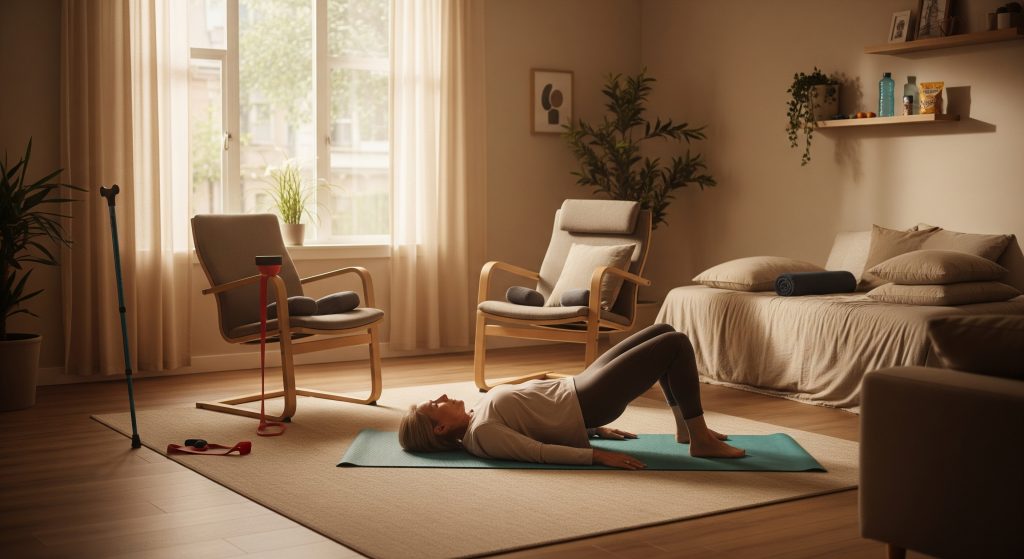
Strength: bridge progressions, step-downs, Copenhagen side planks, and hip abductions.
-
Capacity: cycling or brisk walking at a talkable pace for 20-30 minutes.
Use validated outcome tools where possible. For example, HOOS scores for osteoarthritis tracking. Adjust the programme every two to four weeks based on these metrics. Progression is not linear. That is normal.
Medications for Hip Pain Relief
Medication supports rehabilitation. It does not replace it. NSAIDs reduce inflammatory pain and help patients load more effectively. Some patients respond better to one agent than another, so a short, guided trial is sensible.
|
Medication |
Typical role |
|---|---|
|
NSAIDs |
Reduce pain and swelling during flares to enable exercise adherence. |
|
Paracetamol |
Adjunct for mild pain, particularly when NSAIDs are unsuitable. |
|
Topical NSAIDs |
Local relief with lower systemic exposure. |
|
Corticosteroids |
Short-term relief via injection for synovitis or bursitis. |
Set a clear plan: target the worst one to two weeks, reassess, then taper. Avoid chronic use unless specialist-led.
Injection Therapies
Image-guided intra-articular injections can break a flare that blocks progress. Corticosteroids address synovitis. Hyaluronic acid and platelet-rich plasma have mixed data, with results varying by patient profile and technique.
-
Use ultrasound or fluoroscopy for accuracy and safety.
-
Pair injections with a scheduled rehab window to capitalise on pain relief.
-
Limit frequency to reduce risks and protect cartilage.
In paediatric postoperative stiffness, botulinum toxin can reduce spasm and aid therapy. That is specialised care and should be consultant-led.
Alternative Treatment Options
Non-invasive options like acupuncture, hydrotherapy, or yoga may assist symptom control and adherence. Evidence is mixed, depending on condition and study design. If a method improves sleep, reduces fear of movement, and supports training, it can have value.
Supplements receive much attention. Glucosamine and chondroitin show inconsistent effects. Fish oil has plausible anti-inflammatory action, though outcomes vary. I emphasise nutrition basics first: sufficient protein, whole foods, and steady energy intake to support training and weight goals.
Surgical Interventions
Surgery is appropriate when pain and disability persist despite exhaustive conservative care, or when structural urgency exists. Decision quality rises with precise imaging, objective function testing, and a clear patient priority list.
-
Arthroscopy: labral repair, FAI reshaping, and selective debridement for mechanical symptoms.
-
Hip resurfacing: a niche option for younger, active patients with strict selection criteria.
-
Total hip arthroplasty: the definitive option for end-stage arthritis with life-limiting pain.
Postoperative pathways matter. Regional anaesthesia, early mobilisation, and progressive loading shorten recovery and improve outcomes. Maybe that is the takeaway. Technique counts, but rehabilitation consistency wins.
Hip Pain Treatment for Different Age Groups
Treatment priorities shift with age and tissue biology. I adjust goals and timelines accordingly.
-
Children: rule out infection, fracture, and dysplasia early. Bracing or surgery may be required. Rehab focuses on gait and strength.
-
Young adults: often labral or impingement-related. Emphasise movement skill, strength symmetry, and sport criteria before clearance.
-
Middle age: mix of tendinopathy and early OA. Load management, weight strategies, and capacity work take centre stage.
-
Older adults: osteoarthritis predominates. Hip pain treatment blends pain control, falls prevention, and progressive strength. Injections or surgery may be indicated.
Across groups, shared decision-making improves adherence and results.
Managing Hip Pain Symptoms in Daily Life
Hip Pain When Sitting Solutions
Prolonged sitting drives stiffness and sensitises soft tissue. As Healthy Ageing notes, inactivity worsens joint symptoms, so frequent movement is essential.
-
Stand or walk for two to three minutes every 30-45 minutes.
-
Keep hips slightly higher than knees to reduce flexion load.
-
Use a wedge cushion or lumbar support to maintain neutral pelvis.
-
Perform seated marches and gentle external rotation drills hourly.
These micro-breaks add up. Small inputs, repeated often, protect hip comfort through the workday.
Sleep Positions for Hip Pain Relief
Night pain usually reflects irritated bursae, tendons, or synovium. Positioning can help meaningfully.
-
Side sleepers: place a pillow between knees and another under the waist to keep neutral alignment.
-
Back sleepers: small pillow under knees to reduce hip flexor tone.
-
Avoid thick, soft mattresses that sink the pelvis into adduction.
Track which setup yields the least morning stiffness. Then keep it consistent.
Activity Modifications
Activity change does not mean inactivity. It means smart swaps while tissue calms.
-
Replace deep squats with box squats at pain-free depth.
-
Swap hill sprints for flat tempo runs until tolerance returns.
-
Use poles on hikes to unload steep descents.
-
Choose stable footwear to reduce excessive pronation and hip load.
Reintroduce previously painful tasks in small sets. Two reps, then five, then ten. Progress beats bravado.
Ergonomic Adjustments
Workstation fit is a direct lever on hip comfort. Make the chair do the work.
-
Seat height so feet are flat and knees around 90 degrees.
-
Hips slightly open, about 100-110 degrees, to reduce flexor strain.
-
Keyboard close, elbows at 90 degrees to avoid leaning.
-
Schedule standing calls to break sitting marathons.
Educate teams on body mechanics and build movement breaks into workflows. Culture compounds comfort.
Weight Management Strategies
Extra body mass magnifies joint load and inflammation to some extent. Weight change, even modest, improves symptoms in osteoarthritis. I set realistic targets and clear metrics.
-
Initial goal: 5 percent loss over 12-16 weeks where appropriate.
-
Protein at each meal to support lean mass and recovery.
-
Daily step target that nudges activity without flares.
-
Low-impact cardio two to four times weekly to sustain energy balance.
Depending on the source, incremental loss correlates with functional gains and lower pain ratings. Pair nutrition with strength work to preserve muscle while reducing load.
Exercise Guidelines for Hip Health
Exercise is medicine for most Hip Pain Causes. Programme design governs safety.
-
Frequency: 3-5 days weekly, mixing strength, mobility, and cardio.
-
Volume: begin with two sets per exercise, 8-12 reps, leaving 2-3 reps in reserve.
-
Tempo: controlled eccentrics to build tendon capacity.
-
Impact: favour cycling, swimming, or brisk walking during flare phases.
Sample circuit for general hip health:
-
Seated marches – 60 seconds.
-
Bridge or hip thrust – 10-12 reps.
-
Side-lying hip abductions – 12-15 reps each side.
-
Split squat to comfortable depth – 8-10 reps each side.
-
90-90 hip switches – 8 each side.
Stop before sharp pain. Gentle exertion is acceptable. Pain that lingers more than 24 hours suggests dose reduction.
Taking Control of Your Hip Health
Clarity beats guesswork. Identify the likely driver from the major Hip Pain Causes, then match it with a measured plan. Use analgesia to create training windows, not to mask poor loading decisions. Track function weekly and adjust before setbacks escalate. And yet, keep it simple. Strength, mobility, and consistent sleep do most of the work.
If symptoms derail daily roles, seek a structured assessment. A short period of precision now often prevents a long period of frustration later.
Frequently Asked Questions
What are the warning signs of serious hip pain symptoms?
Red flags include sudden inability to bear weight, visible deformity, fever with joint pain, night sweats, numbness or progressive weakness, and severe pain after a fall. Acute deep groin pain with limb shortening suggests fracture. New neurological deficits suggest nerve compression that needs urgent review.
How long should I try conservative hip pain treatment before considering surgery?
For osteoarthritis or labral pathology without red flags, I recommend a structured 12-16 week block. This includes progressive strength, mobility, and personalised activity changes. If pain and function do not improve despite high adherence, discuss interventions such as injections or a surgical consult. Timelines shorten when mechanical locking, instability, or severe functional decline is present.
Why does hip pain when sitting occur more frequently as we age?
Ageing brings lower tissue hydration, slower recovery, and higher rates of osteoarthritis and tendinopathy. Prolonged hip flexion increases pressure on anterior structures and sensitised tendons. Muscle endurance also declines, so posture sags sooner. Frequent movement breaks and better seat mechanics reduce these effects meaningfully.
Can hip pain in children resolve without treatment?
Some conditions, like transient synovitis, may resolve with rest and monitoring. Others, including developmental dysplasia or slipped capital femoral epiphysis, require prompt intervention to prevent long-term harm. If a child limps, refuses weight bearing, or has fever with hip pain, same-day medical assessment is warranted.
Which hip pain causes require immediate medical attention?
Suspected fracture, septic arthritis, dislocation, acute neurological deficit, or deep vein thrombosis signs demand urgent care. Severe pain after a fall, fever with joint pain, or sudden leg weakness should not wait. Early action protects joint integrity and overall health.
Are there specific exercises to prevent hip pain from returning?
Yes. Prioritise gluteal strength, rotational control, and posterior chain capacity. Examples include bridges, side planks with hip abduction, split squats, Romanian deadlifts, and hip rotations in 90-90. Integrate low-impact cardio for capacity and maintain a twice-weekly maintenance routine after symptoms settle. Consistency over complexity.

