





 We do what's right for you...


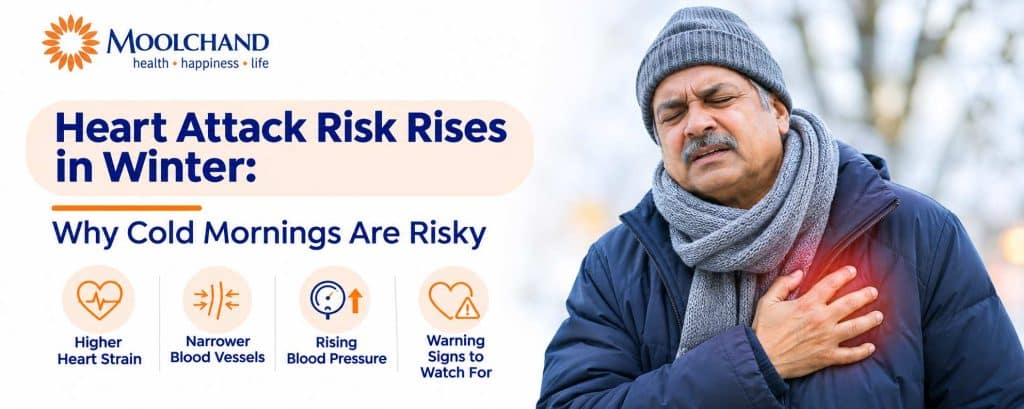
Heart Attack Risk Rises in Winter: Why Cold Mornings Are Risky
Dr. Hriday Kumar Chopra
Why Winter Needs Extra Care for Your Heart
Winter brings warm blankets, hot tea and cosy evenings. It also brings a higher risk for the heart. Many Heart Attack Risk Rises in Winter. The body reacts to cold in ways that strain the heart. Blood vessels narrow, and blood pressure often rises. The good news is that simple steps help a lot. This guide explains why cold mornings are risky. It also covers the warning signs and the steps that protect your heart. Read it calmly and share it with your family. Many people search for heart attack symptoms during winter months. Let us start with the basics.
What Is a Heart Attack?
A heart attack happens when blood flow to part of the heart stops. The heart muscle starts to starve for oxygen. Usually, a blocked coronary artery causes this problem. Fatty deposits build up inside the artery over years. Sometimes a deposit cracks and a clot forms. The clot blocks the blood flow suddenly. Heart muscle begins to die without quick treatment. Doctors treat this as a medical emergency. Fast care saves heart muscle and lives. Every minute matters during a heart attack. Knowing what is heart attack helps families react faster. Quick recognition saves precious heart muscle. Learn the signs before an emergency happens.
Why Cold Mornings Are Risky
Cold air makes blood vessels tighten. This tightening raises blood pressure. The heart then works harder to pump blood. Cold also makes blood platelets more likely to clump. Clumps can block a narrowed artery. Many people wake up with a rise in heart rate and blood pressure. This early morning surge is common. People with heart disease feel it most. Staying warm and moving slowly helps reduce this strain. Heart attack causes linked to cold include tight vessels and sudden clots. Protecting yourself each morning lowers the risk. Cold weather alone does not cause heart attacks. It does add stress to an already weak heart. People with diabetes or high pressure should be especially careful. It does add stress to an already weak heart.
Heart Attack Symptoms to Know
Heart attack symptoms can be sudden or slow to start. Chest pressure, tightness or heaviness is the most common sign. The discomfort may spread to the arm, jaw, neck or back. Shortness of breath often comes with chest discomfort. Cold sweats, nausea and dizziness are common too. Some people feel extremely tired for days before an attack. Many people think the pain is indigestion or gas. Do not wait to decide. Many people search for heart attack symptoms only after the pain grows worse. Treat chest discomfort as an emergency until a doctor says otherwise.
Heart Attack in Women: Symptoms That Are Easy to Miss
Women often have different heart attack symptoms than men. Their signs can be subtle and easy to dismiss. Fatigue, nausea and shortness of breath are common. Pain may appear in the back, jaw or upper stomach. Some women feel anxious or unwell without chest pain. Doctors sometimes miss these signs in women. Women should speak up about any unusual symptom. Many women also search for heart attack in women symptoms online after a scare. Share every change with your doctor. Do not assume that a woman’s symptoms are minor. Call for help if these signs appear suddenly.
Related: Understanding Heart Disease: Causes, Symptoms, and Prevention
Early Signs of Heart Attack You Should Not Ignore
Early signs of heart attack often appear days or weeks before a major event. Chest discomfort during walking that eases with rest is one warning. New shortness of breath during routine work is another. Unusual tiredness that lasts several days needs a check. Pain in the arm, jaw or back during exertion matters too. Stop activity and rest if these signs appear. Call a doctor the same day for a review. Early checks can prevent a serious attack. Early signs of heart attack often repeat before a major event. Note the dates and triggers of each episode.
Common Causes of Heart Attacks
Coronary artery disease is the main cause of heart attacks. Smoking damages the artery lining and speeds up plaque growth. High blood pressure strains the arteries over time. High cholesterol builds fatty deposits inside the vessels. Diabetes raises the risk sharply. Obesity and physical inactivity add to the problem. Stress and poor sleep also increase the risk. Family history plays a strong role. Knowing the heart attack causes helps you act before a crisis. Doctors also review family history, weight and daily activity. Each factor matters for your personal risk.
Smoke, Pollution and Winter Stress
Delhi often faces poor air quality in winter. Fine particles reach the bloodstream and inflame the arteries. Smoke from fires and crackers adds to this effect. Heavy meals, festivals and late nights add extra strain. Many people also reduce exercise during cold months. Keep windows closed on high pollution days. Many families search for a heart hospital in Delhi after a smoky week. Plan ahead and know your nearest cardiac centre. Wear a well-fitted mask outdoors when needed. Limit exposure to smoke and stay active indoors.
Prevention Steps for Winter
Prevention starts with simple daily habits. Check your blood pressure regularly, especially in the morning. Take prescribed medicines on time every day. Dress in layers and cover your head, hands and feet. Warm up slowly before exercise or heavy work. Avoid shovelling snow or lifting heavy loads in cold air. Eat more vegetables, fruits, whole grains and fish. Cut back on salt, sugar and fried foods. Read food labels for hidden salt and trans fats. Choose home-cooked meals most days. Quit smoking as soon as possible. A heart specialist in Delhi can help you build a safe plan. Walk daily, even indoors, to keep the heart active. Aim for at least 30 minutes of gentle movement most days. Take short breaks if you sit for long periods.
When to Call for Emergency Help
Call emergency services immediately for chest pain that lasts more than a few minutes. Dial 112 in India without delay. Do not drive yourself to hospital during a suspected attack. Sit down and stay calm while help arrives. Keep a list of medicines and allergies ready. Share the time symptoms started with the responders. Loosen tight clothing and keep the person still. Unlock the front door so responders can enter. Do not wait for symptoms to pass on their own. Look for a hospital with 24-hour cardiac emergency care. Keep its number saved in your phone. Fast action saves heart muscle.
Protect Your Heart This Winter
Winter heart risk is real, but it is manageable. Know the warning signs and act quickly. Keep your blood pressure, sugar and cholesterol in check. Choose a heart hospital in Delhi with trained specialists and fast emergency care. Many families compare a Private Hospital in Delhi before choosing care. Ask questions and seek a second opinion whenever you feel unsure. Bring your blood pressure records and medicine list to every visit. Clear information helps doctors act faster. Your heart works hard for you every day. Give it the care it needs.
What is a heart attack in simple words?
A heart attack happens when blood flow to part of the heart stops suddenly. Heart muscle starts to die without quick treatment.
What is the most common heart attack symptom?
Chest pressure, tightness or heaviness is the most common symptom. Pain may spread to the arm, jaw or back.
Why do heart attacks happen more in winter?
Cold narrows blood vessels and raises blood pressure. The heart then works harder, which can trigger an attack.
Can heart attack symptoms be different in women?
Yes. Women often feel fatigue, nausea, back pain or shortness of breath. Chest pain may be less obvious.
What are the main heart attack causes?
Coronary artery disease is the main cause. Smoking, high blood pressure, diabetes and high cholesterol raise the risk.
Should I exercise outdoors in cold weather?
Exercise indoors on very cold or polluted days. If you go outside, warm up slowly and wear layers.
Is chest pain always a heart attack?
No. Gas, muscle strain or acidity can cause chest pain. Still, never assume it is harmless. Seek medical advice quickly.
How often should I check my blood pressure in winter?
Check it regularly, especially in the morning. Keep a written record and share it with your doctor.
Can a heart attack happen without warning?
Yes, sometimes. Many people have early warning signs first. Regular checkups help catch problems sooner.
Which doctor should I see for heart problems?
Start with a general physician or cardiologist. A heart specialist can run tests and plan treatment.