






 We do what's right for you...


Healthy Diet for Cancer Patients: Sample Menu & Meal Plan
Dr. Bimlesh Thakur
Conventional wisdom says a cancer patient diet menu should be bland, boring, and built entirely around foods that won’t upset the stomach. That advice isn’t just outdated – it’s actually working against recovery. The truth is, good nutrition during cancer treatment requires more calories, more protein, and far more flavour than most generic diet sheets suggest. A beige diet of plain toast and boiled chicken might feel safe, but it often leaves patients malnourished when their bodies need fuel the most.
I’ve spent years working through cancer nutrition strategies, and here’s what I’ve learned: the meal plans that actually work aren’t about restriction. They’re about strategic abundance. More protein to rebuild tissue. More calories to maintain strength. More variety to combat taste fatigue. And yes, more enjoyment – because nobody heals well when every meal feels like punishment.
What follows is a practical, evidence-based guide to building a healthy diet for cancer patients. I’ll walk through a full week of menus, break down the essential high-protein foods for cancer patients, and tackle the foods to avoid during cancer treatment alongside strategies for managing those frustrating side effects. This isn’t theoretical nutrition advice. It’s a working framework built from real meal plans and genuine research.
Sample Weekly Menu and Meal Plans for Cancer Patients
Planning meals during treatment can feel overwhelming. The trick is to create a flexible framework rather than rigid rules. Think of these daily menus as templates – starting points you can adapt based on appetite, side effects, and what simply sounds appealing on any given day.
Monday Menu Plan
Breakfast: Greek yoghurt parfait with berries, honey, and a handful of granola. Add a tablespoon of ground flaxseed for omega-3s.
Mid-morning snack: Banana smoothie blended with almond butter and a scoop of protein powder.
Lunch: Lentil soup with crusty bread and a side of hummus. This combination delivers plant-based protein alongside easily digestible carbohydrates.
Afternoon snack: Sliced apple with cheese cubes.
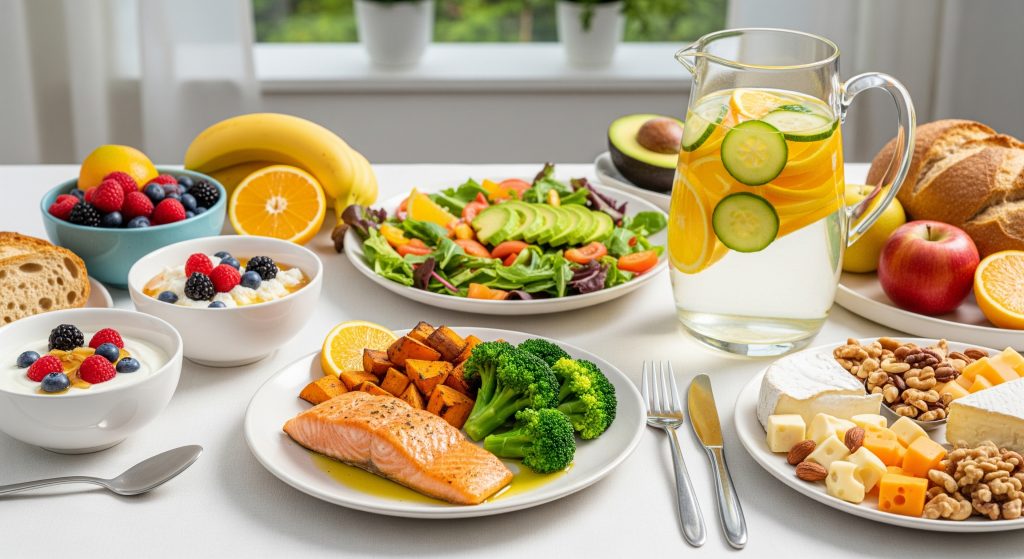
Dinner: Baked salmon with roasted sweet potato and steamed broccoli. Drizzle everything with olive oil before serving.
Evening snack: Warm milk with a small handful of almonds.
Tuesday Menu Plan
Breakfast: Scrambled eggs with avocado on wholegrain toast. Eggs provide complete protein and are gentle on most digestive systems.
Mid-morning snack: Cottage cheese with pineapple chunks.
Lunch: Chicken and vegetable stir-fry with brown rice. Use ginger generously – it’s both flavourful and helpful for nausea.
Afternoon snack: Trail mix with nuts, seeds, and dried fruit.
Dinner: Turkey meatballs in marinara sauce with pasta. Add grated parmesan for extra calories and protein.
Evening snack: Rice pudding or custard.
Wednesday Menu Plan
Breakfast: Overnight oats prepared with full-fat milk, chia seeds, and mashed banana. Prepare this the night before when energy levels might be higher.
Mid-morning snack: Protein smoothie with spinach, mango, and Greek yoghurt.
Lunch: Tuna salad sandwich on sourdough bread with a small side of coleslaw.
Afternoon snack: Crackers with cream cheese and smoked salmon.
Dinner: Slow-cooked beef stew with root vegetables. The slow cooking makes the meat incredibly tender and easy to chew.
Evening snack: Hot chocolate made with whole milk.
Thursday Menu Plan
The midweek slump is real, even without cancer treatment. By Thursday, energy reserves often run low. This day’s menu focuses on anti-inflammatory, nutrient-dense options that require minimal preparation. Forsythe Cancer Care Center emphasises that incorporating easily digestible foods supports both treatment and recovery.
Breakfast: Smoothie bowl with frozen berries, banana, protein powder, and topped with sliced almonds and coconut flakes.
Mid-morning snack: Hard-boiled eggs (prepare a batch earlier in the week).
Lunch: Butternut squash soup with a grilled cheese sandwich. The sweetness of the squash often appeals even when appetite is diminished.
Afternoon snack: Energy balls made with oats, peanut butter, and dark chocolate chips.
Dinner: Grilled chicken breast with quinoa and roasted Mediterranean vegetables. Quinoa offers complete protein – it’s basically a nutritional powerhouse disguised as a grain.
Evening snack: Yoghurt with honey.
Friday Menu Plan
End-of-week meals should feel slightly celebratory while remaining nutritionally sound. UCSF Medical Center designs meals that are gentle on the digestive system while providing essential nutrients for tissue repair.
Breakfast: French toast made with brioche bread, topped with fresh berries and a dusting of icing sugar.
Mid-morning snack: Banana with almond butter.
Lunch: Prawn and avocado salad with a citrus dressing. If prawns don’t appeal, substitute with chickpeas.
Afternoon snack: Cheese and crackers with grapes.
Dinner: Pan-seared cod with creamy mashed potatoes and green beans. Fish offers lean protein that’s easier to digest than red meat.
Evening snack: Small bowl of ice cream or frozen yoghurt.
Weekend Menu Options
Weekends offer flexibility for more elaborate meals when energy permits, or simpler options when rest takes priority. A Mediterranean-style approach works brilliantly here, emphasising fresh whole foods, olive oil, and moderate portions of fish and seafood.
Saturday brunch option: Shakshuka (eggs poached in spiced tomato sauce) with crusty bread for dipping.
Saturday dinner option: Lamb chops with roasted vegetables and tzatziki sauce.
Sunday brunch option: Pancakes with bacon and maple syrup – sometimes comfort food is exactly what’s needed.
Sunday dinner option: Roast chicken with all the trimmings – roast potatoes, Yorkshire pudding, steamed vegetables, and gravy.
The weekend also allows batch cooking. Preparing soups, stews, or casseroles in larger quantities means ready-made meals for the busier weekdays ahead. It’s basically meal prep as self-care.
Snack Ideas Between Meals
Small, frequent meals often work better than three large ones during treatment. Aim for snacks that combine protein with complex carbohydrates:
-
Nut butter on apple slices or celery
-
Cheese cubes with whole grain crackers
-
Hummus with vegetable sticks or pitta bread
-
Greek yoghurt with honey and granola
-
Boiled eggs (keep a batch in the fridge)
-
Smoothies with protein powder
-
Energy balls made with oats and dried fruit
-
Avocado on toast
-
Edamame with sea salt
-
Cottage cheese with fruit
The single most important snack rule? Have options ready. Waiting until hunger strikes and then trying to prepare something is a recipe for skipped meals.
Portion Sizes and Meal Timing
Here’s where most generic cancer diet advice falls short. Standard portion sizes don’t apply during treatment. The Oncology Dietitian indicates that calorie and protein needs increase significantly – often to 2400-2600 calories with over 100 grams of protein daily.
|
Meal Timing |
Recommendation |
|---|---|
|
Breakfast |
Within 1 hour of waking |
|
Morning snack |
2-3 hours after breakfast |
|
Lunch |
Midday, regardless of hunger |
|
Afternoon snack |
Mid-afternoon to prevent energy dips |
|
Dinner |
Early evening – not too close to bedtime |
|
Evening snack |
Optional – if appetite allows |
Smaller, more frequent meals (six small meals rather than three large ones) often work better for managing side effects. And here’s a counterintuitive tip: eat when you feel best, not when you feel hungriest. For many patients, that’s morning. Front-load calories early in the day.
Essential High-Protein Foods and Nutrients for Cancer Recovery
Protein isn’t just important during cancer treatment. It’s essential. The body needs protein to repair tissue, maintain muscle mass, and support immune function. Skimping on protein is like trying to rebuild a house without bricks.
Complete Protein Sources
Complete proteins contain all nine essential amino acids the body cannot produce itself. These should form the backbone of any cancer patient diet menu:
-
Eggs – Versatile, easy to digest, and packed with nutrients. Two eggs provide roughly 12 grams of protein.
-
Chicken and turkey – Lean, mild-flavoured, and easy to incorporate into multiple dishes.
-
Fish – Salmon, cod, and trout offer protein plus omega-3 fatty acids for inflammation reduction.
-
Beef and lamb – Higher in iron and zinc, but heavier to digest. Best in moderation.
-
Dairy – Milk, cheese, yoghurt, and cottage cheese all deliver complete protein alongside calcium.
But what does this actually mean for daily intake? A 70kg patient undergoing treatment typically needs 84-126 grams of protein daily (roughly 1.2-1.8 grams per kilogram of body weight). That’s significantly higher than the standard recommendation for healthy adults.
Plant-Based Protein Options
Animal products aren’t the only path to adequate protein. Plant-based options work well either as primary protein sources or as supplements to animal proteins:
-
Legumes – Lentils, chickpeas, black beans, and kidney beans. A cup of cooked lentils delivers about 18 grams of protein.
-
Tofu and tempeh – Soy-based complete proteins that absorb flavours from cooking.
-
Quinoa – One of the few plant sources offering complete protein.
-
Nuts and seeds – Almonds, walnuts, pumpkin seeds, and chia seeds add protein plus healthy fats.
-
Edamame – Young soybeans that work as snacks or meal additions.
Combining different plant proteins throughout the day ensures a full amino acid profile. Rice with beans, hummus with pitta, or peanut butter on wholegrain bread all create complementary protein pairings.
Immune-Boosting Nutrients
Protein matters enormously, but it’s not working alone. These nutrients support immune function during treatment:
-
Vitamin C – Found in citrus fruits, bell peppers, strawberries, and broccoli.
-
Vitamin D – Oily fish, fortified dairy, and (when possible) sunlight exposure.
-
Zinc – Present in meat, shellfish, legumes, and pumpkin seeds.
-
Selenium – Brazil nuts are exceptionally rich sources. Two nuts daily often provide adequate selenium.
-
Vitamin E – Nuts, seeds, and olive oil.
The real takeaway here isn’t about supplements (though those might be necessary – discuss with the medical team). It’s about variety. A colourful plate with diverse foods naturally delivers a broader nutrient spectrum.
Calorie-Dense Foods for Weight Maintenance
Unintentional weight loss during treatment is common and concerning. When appetite shrinks, every bite needs to count. Focus on calorie-dense options:
-
Avocados – Roughly 240 calories per fruit, plus healthy fats.
-
Nut butters – Two tablespoons of peanut butter contain about 190 calories.
-
Olive oil – Drizzle liberally on vegetables, pasta, and bread. Each tablespoon adds 120 calories.
-
Full-fat dairy – Choose whole milk, regular cheese, and full-fat yoghurt over low-fat alternatives.
-
Dried fruit – Concentrated calories and natural sugars.
Here’s a practical trick: add extras wherever possible. Butter on bread, cream in coffee, cheese melted over vegetables, olive oil stirred into soup. These additions barely change volume but significantly increase calories.
Hydration and Fluid Requirements
Water isn’t glamorous, but dehydration during treatment creates real problems. It worsens fatigue, intensifies nausea, and complicates kidney function. MD Anderson Cancer Center suggests drinking between half an ounce to an ounce of water per pound of body weight daily.
Signs of dehydration to watch for:
-
Dark yellow urine (it should be pale straw-coloured)
-
Dizziness when standing
-
Persistent dry mouth
-
Unusual fatigue beyond normal treatment tiredness
Fluids don’t have to mean plain water. Broths, herbal teas, diluted fruit juices, smoothies, and water-rich foods like watermelon, cucumber, and oranges all contribute. Aim for 8-10 cups of fluid daily, adjusting based on side effects like diarrhoea or vomiting that increase fluid needs.
Foods to Avoid and Managing Side Effects During Treatment
What drives me crazy about most “foods to avoid” lists is their absolutism. They make it sound like a single strawberry will undo months of treatment. That’s not how nutrition works. Understanding foods to avoid during cancer treatment is about risk management, not perfection.
Foods to Avoid During Chemotherapy
Chemotherapy temporarily suppresses the immune system, making food safety paramount:
|
Category |
What to Avoid |
Safer Alternative |
|---|---|---|
|
Raw eggs |
Homemade mayonnaise, raw cookie dough |
Fully cooked eggs, commercial mayonnaise |
|
Raw fish |
Sushi, sashimi, oysters |
Fully cooked fish and seafood |
|
Unpasteurised dairy |
Some soft cheeses, raw milk |
Pasteurised milk and hard cheeses |
|
Undercooked meat |
Rare steak, pink burgers |
Well-cooked meat throughout |
|
Unwashed produce |
Fruits and vegetables eaten raw without washing |
Thoroughly washed or cooked produce |
Alcohol deserves special mention. It interferes with treatment effectiveness, stresses the liver, and dehydrates. Most oncologists recommend avoiding alcohol entirely during active treatment.
Managing Nausea Through Diet
Nausea is perhaps the most common complaint during treatment, and it fundamentally changes the relationship with food. Suddenly, favourite meals become repulsive while odd combinations sound appealing. This is normal.
Strategies that actually help:
-
Eat cold or room-temperature foods – they have less aroma than hot foods
-
Avoid greasy, fried, or heavily spiced dishes
-
Try ginger – ginger tea, ginger biscuits, or even ginger sweets
-
Eat slowly and chew thoroughly
-
Don’t lie down immediately after eating
-
Keep crackers or dry toast by the bed for morning nausea
And here’s something nobody tells you: food aversions developed during treatment can persist. That favourite curry that made you nauseous during chemo might remain unappealing for months afterwards. It’s a real phenomenon called conditioned taste aversion. Consider saving beloved foods for after treatment.
Dealing with Taste Changes
Chemotherapy and radiation frequently alter taste perception. Food tastes metallic, cardboard-like, or simply wrong. This isn’t psychological – treatment genuinely affects taste bud function.
Practical workarounds:
-
Use plastic utensils if food tastes metallic
-
Marinate proteins in sweet or acidic sauces to mask off-flavours
-
Add fresh herbs and lemon juice to brighten dishes
-
Try tart foods like citrus fruits or pickles to cut through metallic tastes
-
Experiment – foods that once appealed might not, and vice versa
The single most frustrating part of taste changes is their unpredictability. What tastes acceptable on Monday might be intolerable by Wednesday. Flexibility and a willingness to experiment are essential.
Solutions for Dry Mouth
Dry mouth (xerostomia) makes eating uncomfortable and increases infection risk. It’s particularly common after head and neck radiation but can occur with various treatments.
Helpful approaches:
-
Sip water throughout meals
-
Add sauces, gravies, and dressings to moisten food
-
Choose soft, moist foods over dry or crumbly options
-
Suck on ice chips or frozen fruit between meals
-
Avoid alcohol-based mouthwashes – they worsen dryness
-
Consider artificial saliva products if symptoms are severe
Smoothies become particularly valuable here. They deliver nutrition in a form that doesn’t require much chewing or saliva production.
Controlling Diarrhoea and Constipation
Treatment can swing digestion in either direction – sometimes both within the same week. Sounds fun, right?
For diarrhoea:
-
Follow BRAT principles: bananas, rice, applesauce, toast
-
Avoid high-fibre foods temporarily
-
Stay hydrated – diarrhoea causes significant fluid loss
-
Limit caffeine and artificial sweeteners
-
Eat smaller, more frequent meals
For constipation:
-
Increase fibre gradually (sudden increases worsen symptoms)
-
Drink plenty of fluids
-
Try prune juice or dried prunes
-
Move when possible – even gentle walking helps
-
Consider fibre supplements if diet alone isn’t sufficient
Both conditions warrant medical attention if severe or persistent. Don’t suffer in silence assuming it’s “just a side effect.”
Creating Your Personalised Cancer Patient Diet Plan
Here’s where everything comes together. A healthy diet for cancer patients isn’t about following someone else’s meal plan exactly. It’s about understanding principles and adapting them to individual circumstances, preferences, and symptoms.
Start with these questions:
-
What symptoms am I currently experiencing? (Nausea, taste changes, fatigue, etc.)
-
When do I feel best during the day? (Front-load nutrition during those windows)
-
What foods still appeal to me?
-
What’s realistic given my energy levels?
-
Who can help with shopping and preparation?
Build meals around high-protein foods for cancer patients as the foundation. Add calories wherever possible. Include variety for nutritional completeness. And give yourself permission to adapt daily based on how you feel.
“Nutritional guidance emphasises the importance of personalised diets that adapt to individual symptoms and preferences, enhancing overall recovery.”
Consider working with a registered dietitian specialising in oncology nutrition. They can calculate specific calorie and protein targets based on treatment type, body composition, and individual response. Generic advice only goes so far.
Finally, remember that perfection isn’t the goal. Some days will be better than others. A day where you only manage a few crackers and some broth isn’t failure – it’s treatment being hard. The next day might be better. Focus on overall patterns rather than individual meals.
Frequently Asked Questions
What should cancer patients eat for breakfast?
Breakfast should prioritise protein and calories since morning appetite is often better than later in the day. Good options include scrambled eggs with avocado, Greek yoghurt parfaits, smoothies with protein powder, overnight oats, or French toast. Avoid overly sweet options that cause energy crashes. If nausea is problematic, keep crackers or dry toast by the bed and eat before getting up.
Can cancer patients eat eggs daily?
Yes, eggs are an excellent daily protein source for most cancer patients. They provide complete protein, are easy to digest, and can be prepared countless ways. Two eggs deliver roughly 12 grams of protein plus vitamins D, B12, and choline. The old concerns about dietary cholesterol have largely been debunked. Unless specifically advised otherwise by a medical team, daily eggs are beneficial.
Which fruits are best for cancer patients?
Berries (blueberries, strawberries, raspberries) top the list due to their antioxidant content. Citrus fruits provide vitamin C and can help with taste changes. Bananas are gentle on the stomach and provide quick energy. Watermelon and melon help with hydration. Avocados (technically a fruit) offer healthy fats and calories. The key is variety – different coloured fruits provide different phytonutrients.
How much protein do cancer patients need per day?
Most cancer patients require 1.2-1.8 grams of protein per kilogram of body weight daily. For a 70kg person, that’s 84-126 grams daily – significantly higher than standard recommendations. During intensive treatment or when combating muscle loss, requirements may be even higher. This typically means including protein at every meal and most snacks.
Should cancer patients avoid sugar completely?
No, complete sugar avoidance isn’t necessary or recommended. The idea that “sugar feeds cancer” is an oversimplification of complex biology. All cells use glucose for energy. However, excessive refined sugar provides empty calories and can contribute to inflammation. Focus on limiting added sugars while allowing natural sugars from fruits, dairy, and other whole foods. When appetite is poor, even some refined sugar helps meet calorie needs.
What foods help reduce chemotherapy side effects?
Ginger helps manage nausea – as tea, in cooking, or even as sweets. Cold or room-temperature foods reduce smell-triggered nausea. Bland foods like crackers, rice, and toast settle the stomach. For mouth sores, soft, cool foods work best. For fatigue, small frequent meals maintain energy better than large meals. For diarrhoea, the BRAT diet (bananas, rice, applesauce, toast) helps. The most effective approach varies by individual – what works brilliantly for one person may not help another.

