






 We do what's right for you...


Gastritis Meal Plan Explained: Foods to Eat, Avoid, and Plan Ahead
Dr. Urvashi Gupta


Common advice says bland food and milk fix everything. That approach often prolongs symptoms and obscures real triggers. I prefer a structured meal plan that prioritises targeted choices over vague restrictions. I will outline precise gastritis foods to eat, the specific foods to avoid with gastritis, and a practical way to plan meals so the stomach lining has the best chance to settle and heal. It is basically a disciplined routine with room for preference and culture.
Best Foods to Eat for Gastritis Relief
1. Probiotic-Rich Foods
I prioritise probiotic foods that quietly support the stomach environment. Live yoghurt, kefir, and fermented vegetables can help balance gut flora, which can influence inflammation. If dairy feels provocative, I use lactose free yoghurt or a soy based alternative with live cultures. A small daily portion works well. I rotate options across the week to avoid boredom and to keep variety high. Measured intake helps here, not a large bowl after a heavy meal.
-
Live yoghurt or kefir with low acid fruit.
-
Small portions of sauerkraut or kimchi, rinsed if spice is strong.
-
Miso soup as a light starter, not with deep fried sides.
These are core gastritis foods to eat because they support the microbial balance without excess fat or spice. They also pair well with gentle carbohydrates and lean proteins.
2. High-Fibre Foods
Fibre supports motility and satiety, and it can help stabilise gastric emptying. I use soluble fibre sources first, then add moderate insoluble fibre as tolerated. Oats, psyllium, chia, and soft cooked vegetables are straightforward. Raw salads often feel harsh in active flares. I suggest building fibre gradually and spreading it across the day. It reduces reflux provoking volume spikes.
-
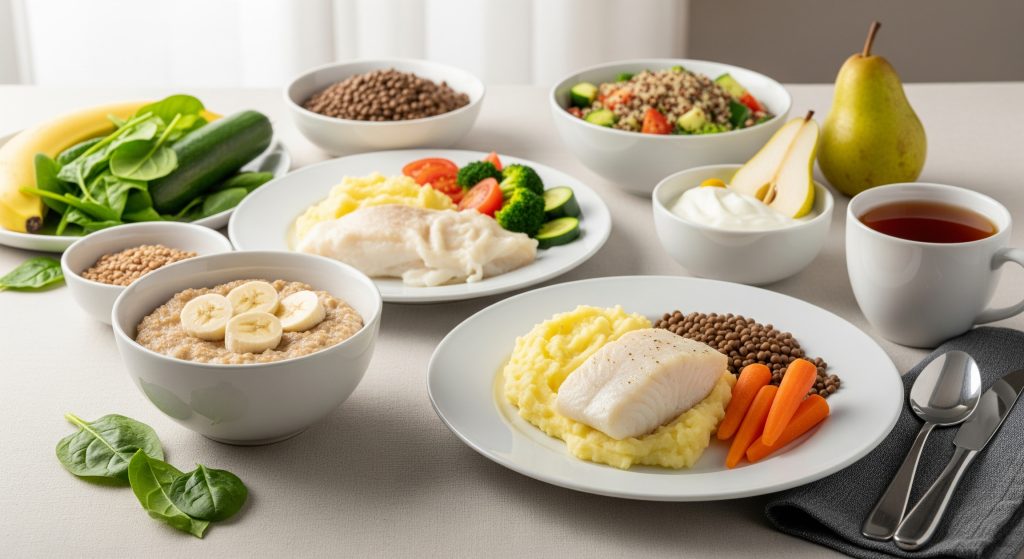
Oatmeal or oat bran porridge with banana.
-
Soft lentils or moong dal, well cooked and skimmed.
-
Cooked carrots, courgette, pumpkin, and peeled potatoes.
High fibre choices frequently rank among gastritis foods to eat because they are gentle yet filling. Over time, they support consistent energy without acid spikes.
3. Lean Proteins
I select lean proteins because fat delays gastric emptying and can aggravate symptoms. Skinless chicken, white fish, eggs, tofu, and pulses prepared with minimal oil tend to digest cleanly. As Oshi Health explains, lean proteins such as skinless chicken, fish, and tofu are easier to digest, which aligns with clinical experience in meal planning. In practice, I keep portions modest and combine them with soft carbohydrates and cooked vegetables. That pairing keeps meals balanced and non irritating.
-
Poached fish with mashed potatoes and steamed carrots.
-
Tofu stir fry with courgette, lightly sautéed in minimal olive oil.
-
Egg white omelette with spinach if whole eggs feel heavy.
These are reliable gastritis foods to eat because they deliver amino acids without the burden of high fat cooking.
4. Alkaline Foods and Vegetables
The aim is not to change stomach acid chemistry wholesale. The aim is to reduce direct irritation. I bias the plate toward cooked greens, root vegetables, and neutral options like cucumber without skin. Boiled, steamed, or pressure cooked methods work best. I avoid charred surfaces and blackened spices. A light drizzle of olive oil is enough. This set forms the backbone of gastritis foods to eat on most days.
-
Steamed spinach, green beans, and courgette with olive oil and salt.
-
Boiled potatoes, pumpkin, and beetroot in small portions.
-
Cucumber without seeds or skin if raw is tolerated.
5. Healing Herbs and Spices
I use a short list of culinary herbs with supportive evidence and long tradition. Turmeric in modest amounts may help with inflammation, and chamomile tea can soothe after meals. Garlic can be helpful for some, although it may irritate in others. Fennel seed, cumin, ajwain, and peppermint can reduce gas or cramping in small doses. I keep these gentle and do not layer many at once.
-
Half teaspoon turmeric in soups or dal, not a large supplement dose.
-
Chamomile tea after dinner to settle the stomach.
-
Light tempering with cumin and ajwain for legumes.
Used judiciously, these remain dependable gastritis foods to eat adjuncts. Overuse becomes counterproductive. Moderation matters.
6. Whole Grains
Whole grains supply fibre and a steady energy profile. Oats, quinoa, barley, and brown rice work in most plans when cooked well. As Medical News Today notes, a gastritis friendly approach often includes oatmeal and brown rice because they are high fibre and gentle on the stomach. I vary texture to avoid monotony. Thin congee on flare days. Firmer pilaf on stable days.
-
Oat porridge with banana or stewed apple.
-
Quinoa with steamed vegetables and tofu.
-
Brown rice congee with ginger and spring onions.
Grain quality and cooking method influence tolerance. Softer textures feature among reliable gastritis foods to eat, especially during recovery phases.
7. Low-Acid Fruits
I rotate fruit with care. Bananas, pears, melon, papaya, and stewed apples tend to sit well. Citrus, pineapple, and very tart berries can provoke symptoms for some. I keep portions modest and pair fruit with yoghurt or porridge to buffer acidity. Ripeness matters. Very green bananas can cause gas. Overripe options can taste cloying. Balanced choices integrate well into daily gastritis foods to eat.
-
Banana with porridge at breakfast.
-
Pear with Greek yoghurt as a snack.
-
Papaya cubes after lunch in small portions.
Foods to Avoid with Gastritis
1. Acidic Foods and Beverages
I limit tomatoes, citrus, pickles, vinegar heavy dressings, and carbonated drinks during symptoms. These amplify acid exposure and can irritate the mucosa. If a recipe uses tomatoes, I reduce the portion and cook it longer to mellow acidity. Sparkling water can be swapped for still water with cucumber. The set is straightforward and forms the baseline for foods to avoid with gastritis.
-
Orange juice, lemonade, and energy drinks.
-
Tomato based sauces and canned tomatoes.
-
Strong pickles or vinegar marinades.
2. Spicy and Fried Foods
Very spicy gravies, chilli oils, and deep fried snacks aggravate symptoms. Capsaicin and high fat cooking prolong gastric emptying. I avoid chillies during flares and reintroduce slowly once stable. Air frying is not a guaranteed fix because high heat still creates crisp surfaces that can irritate. This category sits at the top of foods to avoid with gastritis when symptoms are active.
-
Chilli laden curries, hot sauces, and chilli flakes.
-
Deep fried pakoras, chips, and battered seafood.
-
Heavily crisped meats and charred skewers.
3. Processed and Fatty Foods
Highly processed meats, creamy sauces, and buttery pastries combine fat, salt, and additives that stress the stomach. I also restrict reheated fast food because reheating oils increases oxidation. Choose simple prepared proteins and fresh sides instead. This is one of the most practical swaps, and it keeps space for core gastritis foods to eat in each meal.
-
Sausages, bacon, and deli meats with preservatives.
-
Thick cream sauces and heavy gravies.
-
Microwaved fast food and repeated oil fry ups.
4. Alcohol and Caffeine
Alcohol and caffeine often inflame symptoms, particularly in larger amounts. As Mayo Clinic reports, caffeine stimulates acid production and heavy alcohol use heightens the risk of stomach lining inflammation. If someone wishes to keep coffee, I suggest decaf or low acid versions, and a smaller cup with food. Wine, spirits, and beer are best removed during active flare ups.
-
Swap espresso for decaf or low acid coffee.
-
Replace alcohol with herbal tea or diluted juice.
-
Avoid drinking on an empty stomach at all times.
5. High-Sugar Foods
Very sugary drinks and desserts can worsen bloating and discomfort. They also displace nutrient dense choices. I replace them with fruit, yoghurt, or small portions of home baked options with reduced sugar. This reduces peaks and troughs in hunger. It also makes room for steady gastritis foods to eat across the day.
-
Sodas, energy drinks, and large milkshakes.
-
Frosted pastries and high sugar confectionery.
-
Fruit juices without fibre in large glasses.
Sample Gastritis Diet Chart and Meal Plans
7-Day Gastritis Meal Plan
I use a simple rotation with gentle breakfasts, balanced lunches, and calm dinners. This example functions as a practical gastritis diet chart. Portions are moderate and cooking methods are light.
|
Day |
Breakfast |
Lunch |
Dinner |
|---|---|---|---|
|
Mon |
Oat porridge with banana |
Poached fish, mashed potatoes, steamed carrots |
Chicken soup with rice and spinach |
|
Tue |
Egg white omelette, whole grain toast |
Tofu stir fry, courgette, quinoa |
Dal, soft rice, sautéed pumpkin |
|
Wed |
Greek yoghurt with pear |
Turkey mince stew, barley, green beans |
Brown rice congee, ginger, spring onions |
|
Thu |
Rice porridge with soft vegetables |
Grilled white fish, couscous, steamed peas |
Veggie soup, whole grain roll, olive oil |
|
Fri |
Kefir smoothie with papaya |
Chicken breast, sweet potato mash, courgette |
Chickpea stew, basmati rice, carrots |
|
Sat |
Oatmeal with stewed apple |
Paneer tofu mix, brown rice, spinach |
Poached salmon, potatoes, green beans |
|
Sun |
Semolina upma with peas, minimal oil |
Lentil soup, sourdough slice, cucumber |
Roast chicken, polenta, steamed broccoli |
This schedule is not maximalist. It is quiet and repeatable. That is the point. These selections are dependable gastritis foods to eat that reduce friction in daily planning.
Breakfast Options for Gastritis
Breakfast sets the tone for the stomach. I favour porridge, yoghurt with low acid fruit, rice based options, and simple eggs. As Oshi Health indicates in its dietary guidance, easily digestible carbohydrates such as oatmeal or mashed potatoes can help settle inflammation. An egg white omelette with spinach and whole grain toast also works well on busier mornings. I keep coffee modest or choose decaf.
-
Oatmeal with banana or stewed apple.
-
Plain Greek yoghurt with granola and pear.
-
Rice porridge with soft vegetables and spring onions.
These are practical gastritis foods to eat at the start of the day. They are gentle, balanced, and consistent.
Lunch and Dinner Ideas
Lunch and dinner need structure and simplicity. I combine lean protein, soft cooked vegetables, and a whole grain or root vegetable. Sauces are light, with minimal spice. I keep raw salads small unless tolerance is excellent. A standard pattern helps planning and it keeps room for core gastritis foods to eat without overthinking each plate.
-
Poached chicken with courgette and steamed rice.
-
Tofu and mushrooms with quinoa and carrots.
-
Fish stew with potatoes and green beans.
Safe Snacking Options
Snacks prevent long gaps between meals. I choose options that are low acid and portion controlled. I avoid grazing all day. That habit keeps the stomach in a constant digesting state. Snacks should support, not dominate, the routine of gastritis foods to eat.
-
Banana with a spoon of peanut butter.
-
Plain crackers with cottage cheese or hummus.
-
Pear with a handful of soaked almonds.
Portion Sizes and Meal Timing
Portions are steady rather than large. I rely on three meals and one or two snacks. The last meal is at least **3** hours before bed. Liquids are sipped, not chugged, during meals.
|
Breakfast |
**400 to 500 g** total food. Include carbohydrate, protein, and fruit. |
|
Lunch |
**450 to 600 g** total food. Emphasise vegetables and lean protein. |
|
Dinner |
**400 to 550 g** total food. Lighter than lunch if reflux prone. |
|
Snacks |
**150 to 250 g** each. One protein focused, one fruit or yoghurt. |
|
Fluids |
**1.5 to 2.0 litres** daily, depending on climate and activity. |
Spacing matters. Aim for **3 to 4** hours between meals. It is a simple habit that improves tolerance of gastritis foods to eat.
Tips for Managing Gastritis Through Diet
Eating Habits and Patterns
How the meal is eaten often matters as much as what is eaten. I chew thoroughly and sit upright for **20 to 30** minutes after meals. I avoid tight belts that increase intra abdominal pressure. I also reduce very late dinners, which correlates with worse reflux. These behaviours protect the benefits of carefully selected gastritis foods to eat.
-
Eat slowly and stop when comfortably satisfied.
-
Keep evening meals earlier to protect sleep quality.
-
Maintain consistent meal times through the week.
Food Preparation Methods
Gentle cooking techniques reduce irritation. Boiling, steaming, poaching, pressure cooking, and baking at moderate heat are reliable. I use minimal oil and avoid smoke or charring. Spices are light and layered late. This respects ingredient flavour and keeps gastritis foods to eat soothing, not blunt.
-
Use non stick pans to reduce oil without sticking.
-
Skim visible fat from broths and stews.
-
Batch cook base grains and proteins for quick assembly.
Hydration Guidelines
Hydration is steady across the day. Large volumes at once dilute gastric enzymes and cause discomfort. I keep water room temperature or warm. Herbal teas like chamomile, fennel, or ginger are fine if tolerated. Coffee and alcohol are limited. This rhythm protects the effect of gastritis foods to eat at each meal.
-
Start the day with **250 ml** warm water.
-
Sip **150 to 200 ml** fluids with meals, not more.
-
Stop fluids **1 hour** before sleep to reduce nocturnal reflux.
Tracking Trigger Foods
Personal triggers vary. A short food and symptom log clarifies patterns quickly. I track time, ingredients, cooking method, stress level, and symptoms in **0 to 10** scoring. After two weeks, patterns emerge. Then I adjust the set of gastritis foods to eat and the list to avoid. I repeat the process after any major change to check progress.
The foods that make a difference are often predictable. The timing and portion size are not. Tracking connects those dots.
Making Your Gastritis Diet Work Long-Term
Long term adherence depends on realism and routine. I keep the pantry stocked with core items. Oats, rice, quinoa, tinned fish, eggs, yoghurt, and frozen vegetables cover most bases. I also pre portion snacks to avoid impulse choices that derail progress. Consistency is a competitive advantage here. Small, repeatable meals deliver outsized relief.
There is room for personal flavour within constraints. Mild chutneys, herb oils, and yoghurt based sauces add interest without heavy spice. One or two restaurant meals per week can fit if portions are modest and choices stay within the plan. I see this as a durable set of gastritis foods to eat rather than a short term detox. It should feel sustainable, not punitive.
Relapse will happen occasionally. That does not invalidate the approach. Reset the next meal and return to basics. Poached fish, rice, and carrots. Or dal, soft rice, and spinach. Quiet food that works. And then rebuild variety over a few days. Progress resumes quickly when the foundation is stable.
Frequently Asked Questions
Can I eat rice with gastritis?
Yes. Rice is often well tolerated, especially when cooked soft. I use white rice during flares and switch to brown rice as symptoms settle. Congee is a useful format on sensitive days. It pairs well with lean protein and cooked vegetables. Rice therefore sits squarely within gastritis foods to eat for many people.
How long should I follow a gastritis diet?
Follow the plan until symptoms are consistently controlled for several weeks. Then reintroduce foods methodically. I suggest a **2 to 4 week** period of strict adherence, followed by staged challenges. Keep the core gastritis foods to eat in place while testing one variable at a time.
Is yoghurt good for gastritis?
Plain yoghurt with live cultures can support the gut environment. It is often well tolerated in small portions. If lactose causes symptoms, choose lactose free or a dairy free cultured option. Pair yoghurt with low acid fruit or oats. This remains a practical way to include probiotic focused gastritis foods to eat.
Can gastritis be cured through diet alone?
Diet can reduce symptoms markedly and support healing. The cause matters. If Helicobacter pylori or medication use drives inflammation, medical treatment is required. Diet is an adjunct, not a replacement, for necessary care. It still plays a large role in day to day control and in relapse prevention.
What beverages are safe for gastritis?
Still water, chamomile tea, fennel tea, weak ginger tea, and diluted non citrus juices are generally safe. I keep coffee to decaf or low acid versions and avoid alcohol during flares. Sipping small amounts with meals improves comfort. These choices support the effect of gastritis foods to eat across the day.
Should I take supplements whilst following a gastritis diet?
Only if there is a defined need. Iron, B12, or vitamin D may be indicated in specific cases. High dose herbal supplements can irritate the stomach. Food first is my rule. If supplements are necessary, take them with food and review tolerance. The base remains a consistent set of gastritis foods to eat.

