






 We do what's right for you...


Gallstones Explained: When Is Surgery Necessary?
Dr. Dr. Rahul Poddar
It often starts quietly. A dull ache under the ribs after a heavy dinner, some nausea you blame on the oily food, a quick reach for the antacid. Then one day the pain is sharper, and an ultrasound report includes a word you weren’t expecting: gallstones.
If that’s where you are, take a breath. Gallstone disease is very common, and it is well understood. The first question most people ask is “how soon do I need surgery?” The better first question is “do I need it at all?” Let’s work through that together.
In short
- Many gallstones never cause trouble and need only monitoring.
- Typical gallstones symptoms are steady pain in the upper abdomen, often after fatty meals, plus nausea.
- Jaundice, fever with pain, or severe pain lasting several hours need urgent medical attention.
- When stones keep causing problems, the usual gallbladder stones treatment is removing the gallbladder, most often by keyhole surgery.
- People live well without a gallbladder.
So what exactly is a gallstone?
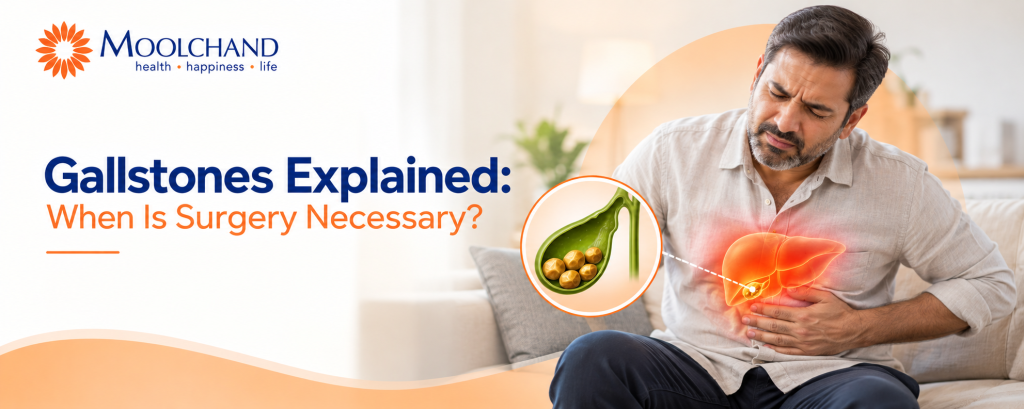
Your gallbladder is a small pouch tucked under the liver. It holds bile, the fluid that helps you digest fat. Sometimes parts of that bile, usually cholesterol or bilirubin, harden into stones. They can be as small as a grain of sand or as big as a lemon, and you might have one or many.
Why does it happen? Gallstone disease causes
There isn’t one single trigger. Gallstone disease causes tend to come from a mix of factors that change how bile is made or how well the gallbladder empties. You’re more likely to develop stones if you:
- are a woman, especially during or after pregnancy
- are over 40
- are overweight, or have lost weight very quickly
- have diabetes
- have a family history of gallstones
- eat a lot of fat and not much fibre
Having a few of these doesn’t mean you’ll need an operation. It simply helps you and your doctor understand your risk.
Many people never feel a thing
This surprises a lot of patients. Plenty of gallstones are found by accident, during a scan done for something else. These “silent” stones usually don’t need treatment, just awareness and a periodic check-in with your doctor.
When the stones start causing trouble
Symptoms appear when a stone blocks the gallbladder opening or the bile duct. The signs to watch for include:
- pain in the upper right or middle abdomen, often after a fatty meal, lasting anywhere from half an hour to several hours
- pain that spreads to the back or the right shoulder
- nausea, vomiting, bloating or indigestion
- fever and chills, if an infection has set in
- yellow skin and eyes, dark urine or pale stools, which can mean a stone is blocking the bile duct
Gallstone pain is usually steady and strong. It doesn’t come and go like gas cramps. If it has happened more than once, please don’t just wait for the next attack to see what happens.
Do you actually need treatment?
The honest answer is: it depends on you.
If your stones were found by chance and you’ve never had symptoms, watching and waiting is usually sensible. Surgery is generally recommended when:
- you’ve had repeated or severe pain attacks
- you’ve developed inflammation of the gallbladder, an infection, or pancreatitis
- a stone has blocked the bile duct and caused jaundice
- your gallbladder is diseased or full of stones, especially if you have diabetes
It helps to know what medicines and diet changes can and can’t do. They can ease discomfort for a while, but they don’t make stones disappear, and they don’t remove the risk of a serious attack later. That’s why, once symptoms start, doctors usually recommend taking out the gallbladder. The good news is that most of these operations are done keyhole, through tiny cuts, and most people go on to live completely normal lives without a gallbladder.
What about gallbladder stone laparoscopic surgery?
Keyhole gallbladder removal, called laparoscopic cholecystectomy, is the standard operation today. Instead of one large cut, the surgeon makes three or four small ones, and a camera and fine instruments do the work. It generally means less pain, smaller scars and a quicker return to normal life than open surgery.
Most people are up and walking within hours. Many go home the next day. Light activity comes back within a week or two, and you can usually return to a balanced diet, reintroducing fatty foods slowly. As with any operation, there are small risks, including bleeding, infection, and injury to the bile duct. In a few cases the surgeon may need to switch to an open operation for safety, and your surgeon will talk you through that possibility before the day.
Don’t wait if you notice these
Go to a hospital promptly if you have:
- severe abdominal pain that lasts more than a few hours
- pain together with fever or shaking chills
- yellowing of your skin or eyes
- repeated vomiting that stops you keeping fluids down
These can mean a complication that needs urgent care, so don’t try to tough it out.
Finding the right surgeon
If you’re searching for General Surgery in Delhi, a General Surgeon in delhi near me, look for a team that is comfortable explaining options, not just rushing you into theatre. It’s fair to ask how many gallbladder operations they do, whether keyhole surgery is their normal approach, and how follow-up is handled.
At Moolchand Hospital in Lajpat Nagar, our General Surgery team takes time to review your reports, go through your options in plain language, and recommend surgery only when it’s the right step for you. If you’d like to know what happens on the day, our guide to gallbladder stone laparoscopic surgery walks through the journey from admission to discharge.