






 We do what's right for you...


Food for Diarrhea: What to Eat and Avoid During Loose Motions
Dr. Prajwal S
Conventional advice insists that any bland diet will do during loose motions. I disagree. In practice, targeted food for diarrhea, timed hydration, and a short list of proven remedies shorten the course and reduce risk. My aim is to provide precise, clinically sensible guidance that you can apply immediately, including the best foods for upset stomach and the key mistakes to avoid.
Best Foods to Eat During Diarrhea
I focus on practical choices that protect the gut lining, replace losses, and stabilise stool without aggravating symptoms. The following options are straightforward to prepare and scale across age groups. They also align with safe diarrhoea treatment at home routines.
1. BRAT Diet Foods
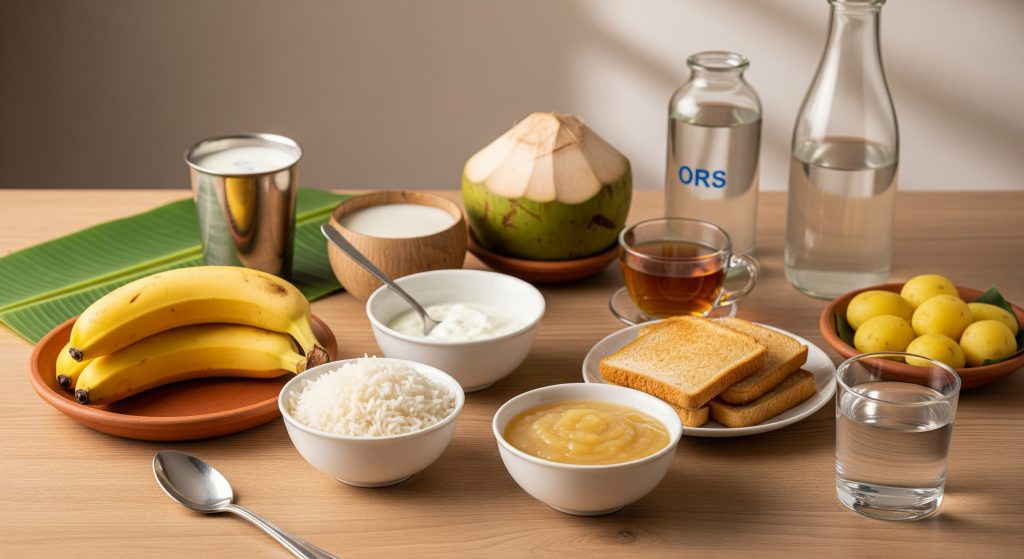
The BRAT diet stands for bananas, rice, applesauce, and toast. It is a conservative start when appetite is low. I use BRAT as a short, stabilising phase rather than a full diet. It is essentially a bridge towards broader, nutrient-dense food for diarrhea recovery.
-
Bananas: Provide potassium and pectin, which help stool formation.
-
Plain rice: Soft, low fibre, and easy to digest.
-
Applesauce: Gentle sugars plus soluble fibre without roughage.
-
Dry toast: Simple carbohydrates that do not challenge digestion.
Two cautions. Keep portions small and frequent. Add salt lightly to rice or toast to support electrolytes. I treat BRAT as a 24 to 48 hour tool, then diversify with other food for diarrhea options.
2. Clear Liquids and Broths
Clear fluids prevent the rapid slide from diarrhoea to dehydration. Light vegetable broth or chicken broth adds sodium and a small amount of protein. This balances rehydration with gentle nourishment.
-
Plain water sipped steadily, not gulped.
-
Homemade vegetable broth with a pinch of salt.
-
Weak tea without milk; add a little sugar if appetite is low.
-
Rice water (kanji): The starchy liquid from cooking rice.
In practice, small sips every 5 to 10 minutes outperform occasional large glasses. This simple pacing helps keep fluid in, which is the first priority in any food for diarrhea plan.
3. Probiotic-Rich Foods
Probiotics support the gut microbiome and may shorten the course of symptoms to an extent. I use live-culture curd or yoghurt when dairy tolerance is intact. For those sensitive to lactose, consider lactose free yoghurt or probiotic capsules.
-
Plain curd or yoghurt with live cultures.
-
Buttermilk seasoned with roasted cumin and a little salt.
-
Fermented rice porridge when culturally familiar and tolerated.
Introduce probiotics once vomiting has settled and fluids are tolerated. They fit well after the initial BRAT phase as part of diversified food for diarrhea choices.
4. Bland Carbohydrates
Bland carbohydrates restore energy without drawing excess water into the bowel. I favour softer textures and minimal oil. This approach stabilises stool and preserves comfort.
-
Plain khichdi with more rice than lentils and minimal ghee.
-
Soft idli without chutney; a little salted curd is acceptable if tolerated.
-
Mashed potatoes without butter or cream; add a pinch of salt.
-
Plain poha lightly steamed and seasoned simply.
One practical note. Split meals into 4 to 6 small portions per day. This lowers digestive load and reduces urgency. It also allows broader food for diarrhea coverage without provoking cramps.
5. Electrolyte-Rich Options
Diarrhoea and dehydration usually travel together. The body loses water, sodium, potassium, and bicarbonate. I combine oral rehydration solutions with light, salty foods to close the gap quickly.
-
Oral Rehydration Solution (ORS) as per instructions on the packet.
-
Salted rice porridge or congee to complement ORS.
-
Banana for potassium, paired with a pinch of salt on toast.
-
Coconut water in moderation for potassium and glucose.
ORS is not merely a drink. It is a treatment that pairs perfectly with targeted food for diarrhea. The combination is simple and, frankly, effective.
Foods for Different Age Groups
|
Age Group |
Recommended Items |
|---|---|
|
Infants on breastmilk |
Continue breastfeeding on demand; add ORS as advised. |
|
Infants on formula |
Continue normal formula unless advised otherwise; avoid dilution. |
|
Toddlers |
Rice water, mashed banana, plain curd if tolerated, soft khichdi. |
|
School-age children |
BRAT foods initially, then khichdi, idli, buttermilk, soft vegetables. |
|
Adults |
Broths, BRAT, soft carbs, curd, ORS, modest salted soups. |
|
Older adults |
Frequent small meals, broths, ORS, soft carbs; monitor dizziness. |
Adjust texture and portion by appetite and tolerance. For all groups, prioritise ORS and gentle food for diarrhea choices before stepping up to normal meals. The principle is conservative progression, not forced intake.
Foods to Avoid During Loose Motions
Avoiding irritants matters as much as picking the right foods. Here is why. Certain items draw water into the bowel, speed transit, or inflame mucosa. The result is more frequent stools and slower recovery, even if the food for diarrhea list is otherwise solid.
Dairy Products to Skip
-
Milk and cream, which can worsen bloating and urgency.
-
Cheese and paneer, especially rich or aged types.
-
Ice cream and milkshakes, which combine fat and lactose.
Plain curd is the one exception for many people. If lactose intolerance is likely, choose lactose free yoghurt or skip dairy temporarily.
High-Fibre Foods
-
Raw salads and cruciferous vegetables during the acute phase.
-
Whole pulses and legumes with skins, which increase gas.
-
Wholegrain breads and bran-heavy cereals initially.
Soluble fibre from banana or applesauce is helpful. Insoluble fibre is not. Reintroduce fibrous foods only after stools begin to form.
Fatty and Fried Items
-
Deep fried snacks like pakora, puri, or chips.
-
Rich gravies and heavy curries cooked with excess oil.
-
Butter loaded dishes or cream based sauces.
Fat slows gastric emptying and can trigger cramps. It also complicates a clean food for diarrhea protocol by adding nausea.
Sugary and Caffeinated Drinks
-
Colas and energy drinks with high sugar content.
-
Fruit juices in large volumes; fructose can worsen diarrhoea.
-
Strong coffee or tea, which can stimulate bowel movements.
If sugar is needed for energy, pair a small amount with salt in ORS or lightly sweetened tea. That balance supports hydration rather than disrupting it.
Spicy and Acidic Foods
-
Chilli heavy dishes and pickles.
-
Citrus fruits in large servings.
-
Tomato based sauces and very sour foods.
These items irritate an already sensitive gut. Delay them until stools are formed for 48 hours, then reintroduce gradually. Appetite often recovers quickly once irritation eases.
Home Remedies and Natural Treatments for Diarrhoea
I respect home care that is simple, safe, and effective. The following home remedies for diarrhoea are compatible with clinical advice and practical cooking. They also integrate smoothly with core food for diarrhea choices.
1. ORS and Hydration Solutions
ORS is the centrepiece of any at home plan. It contains glucose and electrolytes in ratios that promote absorption in the small intestine. This is not a generic sugary drink; the composition matters.
-
Use standard ORS sachets; follow the packet volume exactly.
-
Sip steadily, about 100 to 200 ml every 15 minutes initially.
-
Alternate with clear soups or rice water as appetite returns.
If sachets are unavailable, a basic home mix can help as an interim option: one level teaspoon of salt and six level teaspoons of sugar in one litre of safe water. Stir thoroughly. It is a practical bridge until proper ORS is obtained, and it pairs well with gentle food for diarrhea.
2. Traditional Indian Remedies
-
Roasted cumin and salt in thin buttermilk for mild relief.
-
Rice kanji with a pinch of salt to settle the stomach.
-
Steamed rice with curd if lactose tolerance is intact.
These remedies are light, saline, and familiar. They are not standalone cures, but they support rehydration and sit comfortably within cautious food for diarrhea routines.
3. Herbal Teas and Decoctions
-
Ginger tea for nausea control; keep it weak and unsweetened.
-
Chamomile tea for gentle relaxation and gut comfort.
-
Fennel or ajwain water to reduce gas and cramping.
Herbal infusions should complement, not replace, ORS. Think of them as adjuncts that improve comfort and fluid intake.
4. Kitchen Ingredients That Help
-
Banana and a little salt to support potassium balance.
-
Applesauce for pectin driven stool formation.
-
Plain curd for live cultures when appropriate.
-
Boiled potatoes for easy carbohydrates without excess fibre.
These are everyday items and they work. Use them consistently for 24 to 72 hours. The aim is steady improvement, not rapid experimentation, which can backfire in diarrhoea.
When to Seek Medical Help
Home care has limits. Seek medical review urgently if any of the following occur:
-
High fever, repeated vomiting, or blood in stool.
-
Signs of dehydration such as very dry mouth or reduced urination.
-
Severe abdominal pain or persistent symptoms beyond 72 hours.
-
Infants, older adults, or those with chronic illness affected early.
There is a common objection that most diarrhoea is self limiting. Often true. But still, delays with red flags increase risk unnecessarily. Early review prevents complications, especially in cases of diarrhoea and dehydration.
Managing Diarrhoea Through Proper Diet
I recommend a simple 3 phase model that keeps decision making clear and calm. It guides both hydration and food for diarrhea choices without guessing.
-
Stabilise (hours 0 to 24): Prioritise ORS and clear liquids. Use BRAT if hungry. Avoid fats and fibre. This phase targets diarrhoea and dehydration directly.
-
Rebuild (hours 24 to 72): Add bland carbohydrates, curd if tolerated, bananas, and simple soups. Continue ORS. Observe stool frequency and energy.
-
Transition (after 72 hours): Reintroduce lean protein and cooked vegetables. Increase fibre slowly over 2 to 3 days. Resume normal diet if stable.
For those needing a quick reference, I summarise the core rhythm below. It reads like a checklist and doubles as a fridge note.
-
Drink ORS first. Eat second.
-
Small, frequent meals. No heavy fats.
-
Prefer soluble fibre over insoluble at first.
-
Add probiotics once vomiting stops.
-
Advance diet only after stools begin to form.
This approach works because it respects physiology. It replaces losses, rests the gut, and steps up only when the bowel is ready. It also keeps food for diarrhea practical in real kitchens, not just in theory.
Frequently Asked Questions
How long should I follow a diarrhoea diet?
I advise a staged approach rather than a fixed number. Stabilise in the first 24 hours. Rebuild over the next 48. If stools are formed for 48 hours and energy is returning, transition toward a regular diet over another 2 to 3 days. Keep ORS handy if frequency increases. This staged method aligns with safe food for diarrhea routines without needless restriction.
Can I give honey water to children with diarrhoea?
Honey water is not a substitute for ORS. For children above one year, a small amount of honey in warm water may soothe the throat. However, the priority remains ORS administered regularly. For infants under one year, avoid honey entirely. Pair any soothing fluids with age appropriate food for diarrhea options such as rice water and mashed banana.
Is curd good for loose motions?
Often, yes. Plain curd with live cultures can support recovery, particularly during the rebuild phase. If lactose intolerance is suspected, use lactose free yoghurt or skip dairy for 24 to 48 hours. Introduce curd in small portions first. Combine with rice or idli for balanced food for diarrhea intake.
What fruits can I eat during diarrhoea?
Choose low fibre, gentle fruits. Bananas are ideal. Applesauce is acceptable. Avoid raw fibrous fruits initially, such as guava with seeds. Small portions of ripe papaya may suit some individuals. Trial modest servings and observe tolerance. The principle remains conservative intake within your food for diarrhea plan.
How much water should I drink during loose motions?
Hydration is strategic, not arbitrary. Use ORS as the primary fluid, sipped steadily. Aim for frequent small sips rather than large volumes, especially early on. Complement with clear soups, rice water, or weak tea. This prevents rapid losses and supports any food for diarrhea strategy you adopt at home.
Can diarrhoea cause severe dehydration?
Yes, particularly in infants, older adults, and during hot weather. The risk is higher with vomiting or very frequent stools. Early ORS and timely medical review reduce danger. Pay attention to dry mouth, dizziness, or reduced urination. If these appear, escalate care. This is where the margin between mild illness and emergency narrows quickly.
Two closing notes. First, keep best foods for upset stomach stocked at home, especially bananas, rice, curd, and ORS. Second, reliable home remedies for diarrhoea are helpful, yet do not ignore red flags. A calm plan and disciplined hydration beat improvisation. That is the essence of effective food for diarrhea management and safe diarrhoea treatment at home.

