






 We do what's right for you...


Explainer: Top Upper Back Pain Causes and Their Health Links
Dr. Vishal Nigam
Most lists of Upper Back Pain Causes stop at posture and poor ergonomics. That half-answer leaves patients cycling through temporary fixes. I take a broader view: muscular, skeletal, disc, joint, and systemic drivers often coexist, and the pattern matters. Addressing the pattern delivers durable relief, not short-term reprieve.
Primary Upper Back Pain Causes
1. Muscle Strain and Overuse
In clinical practice, muscle strain and overuse sit near the top of Upper Back Pain Causes. Repetitive lifting, sudden load spikes, and prolonged sedentary work create microtrauma that accumulates over time. I look for load-history, recent activity changes, and deconditioning. Sharp pain with movement, delayed soreness, and local tenderness suggest a strain pattern that responds to graded loading and recovery.
-
Common drivers: poor lifting mechanics, low aerobic base, and skipped rest days.
-
Early management: relative rest, heat or ice, and gentle mobility within pain-free range.
-
Return-to-load: progressive strength for thoracic extensors, scapular stabilisers, and core.
The nuance: lack of conditioning and prolonged sitting reinforce each other. I treat both. This is where I weave in ergonomics and microbreaks to offset desk-time. Small wins compound.
2. Poor Posture
Poor posture features prominently among Upper Back Pain Causes, but posture is not a moral judgement. It is load distribution over time. Forward head, rounded shoulders, and a kyphotic slouch increase demand on thoracic extensors and scapular retractors. I see fatigue first, pain second. The fix pairs habit change with strength. Simple cues help: ribs down, chin gently tucked, shoulder blades pulled slightly back and down.
-
Desk set-up: screen at eye level, elbows near 90 degrees, lumbar support in place.
-
Postural drills: wall angels, prone Y-T-W holds, and light rows.
-
Monitor posture by feeling, not just mirrors. Tension is a guide.
3. Herniated or Bulging Discs
Thoracic disc issues are less common than lumbar, but they still belong on the list of Upper Back Pain Causes. When the nucleus pushes through the annulus, pain can stay local or follow a nerve distribution. I screen for red flags such as neurological changes and unremitting night pain. Risk rises with age, genetic predisposition, and heavy repetitive work. Management starts conservatively unless there is clear nerve compromise.
-
Typical features: focal pain, pain with flexion or rotation, sometimes radiating symptoms.
-
First-line care: activity modification, anti-inflammatories if appropriate, and thoracic mobility.
-
Escalation: imaging and specialist referral if neurological signs emerge.
4. Osteoarthritis
Facet joint osteoarthritis contributes to stiffness and deep, aching pain, especially after inactivity. It is one of the structural Upper Back Pain Causes I consider in older adults or in those with prior spinal load or trauma. Morning stiffness that eases with gentle movement is a classic pattern. The playbook is not passive rest. Motion is medicine, and so is targeted strength.
-
Pace movement: short walks and controlled thoracic rotations.
-
Strength focus: posterior chain, scapular stabilisers, and trunk endurance.
-
Flare strategy: short course of anti-inflammatories if safe, heat, and lighter sessions.
5. Myofascial Pain Syndrome
Myofascial Pain Syndrome is a frequent, under-recognised entry in Upper Back Pain Causes. Taut bands and trigger points in trapezius, rhomboids, or levator scapulae can refer pain widely. I palpate for local twitch responses and reproduce familiar pain to confirm. Stress, overuse, and disuse each sustain the cycle. Breaking it requires load clarity and tissue care.
-
Interventions: manual therapy, dry needling or pressure release, and progressive loading.
-
Self-care: heat, a small ball for trigger work, and breathing drills to reduce bracing.
-
Relapse prevention: weekly strength anchors and posture breaks.
6. Vertebral Fractures
Vertebral compression fractures are a high-stakes subset of Upper Back Pain Causes in older adults. Sudden pain after a minor movement warrants attention. Osteoporosis is often the underlying driver. As StatPearls details, about 1.5 million Americans experience vertebral compression fractures annually, and a prior fracture raises the risk of another by 5 to 12 times. That scale justifies proactive bone health screening in at-risk patients.
-
Immediate priorities: pain control, bracing where appropriate, and safe activity.
-
Next steps: bone density assessment, calcium and vitamin D review, and fall-risk reduction.
-
Referral thresholds: neurological deficits, deformity progression, or refractory pain.
7. Spinal Stenosis
Canal or foraminal narrowing can compress neural structures. In thoracic regions, this remains less common but still part of Upper Back Pain Causes. Symptoms range from local pain to radiating patterns and fatigue with standing or walking. I consider age, weight, and prior degenerative changes. Management blends flexion-friendly positions, mobility, and carefully dosed conditioning.
-
Comfort positions: slight flexion, supported sitting, and neutral spine during tasks.
-
Strength bias: hip and core endurance to offload the spine.
-
Imaging when symptoms persist or neurological signs appear.
8. Scoliosis and Kyphosis
Structural curves are not inherently painful. They can, however, alter load distribution and contribute to Upper Back Pain Causes when combined with deconditioning or poor workstation habits. I distinguish fixed structural curves from flexible postural changes. Treatment is pragmatic: maintain mobility, build symmetric strength, and refine daily mechanics.
-
Mobility: thoracic rotations, extensions, and rib-cage breathing.
-
Strength: unilateral pulls and presses to balance asymmetry.
-
Monitoring: watch for curve progression or functional decline.
Upper Back Pain and Stomach Pain Connection
Referred Pain Mechanisms
Upper back pain and stomach pain often coexist, and not only by coincidence. Visceral afferents can converge with somatic pathways, producing referred pain. Central sensitisation and peripheral reflex mechanisms offer plausible explanations across cases. I keep an open diagnostic lens when symptoms seem disproportionate to musculoskeletal findings.
-
Clues suggesting referral: deep, diffuse pain, autonomic symptoms, and minimal change with movement.
-
Action: screen organs in the referral zone before escalating musculoskeletal care.
Gallbladder Disease
Right upper quadrant pain that radiates to the back, especially after fatty meals, can mimic thoracic muscle pain. In such scenarios, gallbladder pathology may be the true source. When I see recurring episodes with nausea or fever, I prioritise medical evaluation to rule out cholelithiasis or cholecystitis. Atypical patterns deserve careful attention.
Pancreatitis Links
Severe epigastric pain boring through to the back is a classic warning sign. If symptoms escalate with meals, and there is vomiting or fever, I treat it as medical until proven otherwise. Musculoskeletal care waits until medical causes are excluded. It is a safety-first rule.
Peptic Ulcers
Peptic ulcers can create epigastric discomfort that sometimes feels like upper back pain and stomach pain combined. History of NSAID use and dyspepsia raise my suspicion. Alarm symptoms such as weight loss, bleeding, or persistent vomiting call for urgent investigation. In borderline cases, I collaborate with the primary team and pause aggressive loading.
Heart-Related Causes
Cardiac pain is the archetype of referred pain. Back, jaw, and shoulder symptoms can appear without crushing chest pain, particularly in women and in people with diabetes. I maintain a low threshold for referral if back pain clusters with breathlessness, cold sweats, or unusual fatigue. It is arguably lifesaving to be cautious.
When to Seek Emergency Care
Some signals should not be ignored. I advise immediate medical care for any upper back pain after significant trauma, new neurological deficits, or pain with chest pressure or breathlessness. Sudden incontinence, leg weakness, or numbness also requires urgent assessment. Err on the side of evaluation when in doubt. One safe trip is better than one missed diagnosis.
Effective Upper Back Pain Stretches
1. Cat-Cow Stretch
As part of upper back pain stretches, Cat-Cow helps restore segmental mobility and relaxes protective guarding. I cue slow nasal inhalation into the ribs for extension, and a gentle exhale for flexion. It is accessible, low risk, and an ideal warm-up before strength work.
-
On all fours, hands under shoulders, knees under hips.
-
Inhale, lift chest and tailbone, keep neck long.
-
Exhale, round the spine, soften the neck.
-
Repeat for 60 to 90 seconds with smooth breathing.
2. Thoracic Extension
Thoracic extension counters slouching and is central to upper back pain stretches that produce durable change. I often use a foam roller under the mid-back with gentle overpressure from the hands supporting the head. The priority is control, not range. Move in small arcs and avoid pinching.
-
Dosage: 6 to 10 reps, holding each for 2 to 3 breaths.
-
Progression: add a reach overhead or a light band pull-apart.
3. Eagle Arms Stretch
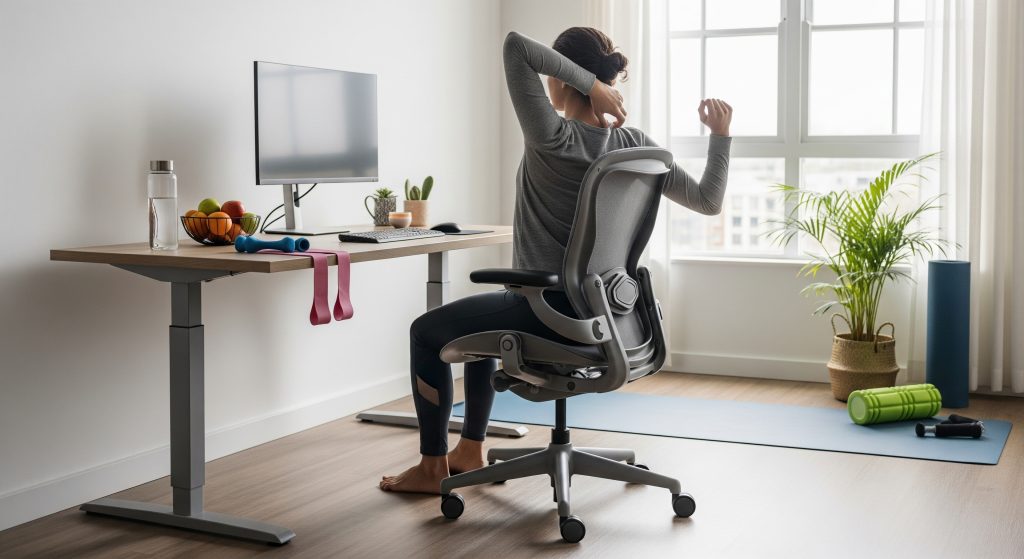
Eagle Arms targets posterior shoulder and upper thoracic tissues. For desk-based teams, it is a quick antidote to rounded shoulders. I cue shoulders down, elbows lifted, and a slow breath into the upper back. Subtle adjustments in elbow height shift the stretch dramatically.
-
Hold for 20 to 30 seconds, then switch sides.
-
Option: perform seated to reduce lower-back load.
4. Child’s Pose
Child’s Pose belongs in any plan of upper back pain stretches due to its gentle spinal decompression. I prioritise long exhales to reduce sympathetic tone. For tight hips, a cushion under the pelvis keeps the focus on the thoracic region.
-
Knees apart, big toes touching, arms forward or by sides.
-
Rest the forehead on the floor or on a block.
-
Breathe into the back of the ribs for 5 to 8 cycles.
5. Upper Trapezius Stretch
Tight upper traps drive neck and shoulder tension that feeds into thoracic discomfort. A precise set-up prevents overstretching. Sit tall, anchor one hand under the seat, and gently side-bend the head away. I refine angle and chin position to find the sweet spot.
-
Hold 20 to 30 seconds, maintain gentle intensity.
-
Repeat 2 to 3 times each side.
6. Doorway Chest Stretch
Short pectorals pull shoulders forward and load the upper back. The doorway stretch opens the front line and eases posterior overwork. Elbows at or just below shoulder height reduce nerve irritation risk. I cue rib control to prevent compensations.
-
Step through until a mild stretch is felt across the chest.
-
Hold steady breathing for 20 to 40 seconds.
7. Thread the Needle
This rotational drill targets the thoracic spine and posterior shoulder. From all fours, I reach one arm under the body and rest the shoulder on the floor. The spare hand can press lightly to enhance the twist. It is gentle and highly effective after long sitting.
-
Hold 20 to 30 seconds, then switch sides.
-
Progress: extend the top arm overhead for a bigger side-body line.
Stretching Frequency and Duration
Frequency beats intensity. Short, regular sessions change tissue behaviour and motor patterns. As MedicalNewsToday advises, holds of 15 to 30 seconds performed consistently are effective for upper back mobility. I schedule 5-minute blocks twice daily for busy professionals. It is basically frictionless and sustainable.
-
Daily minimum: one mobility set in the morning, one in the afternoon.
-
Volume: 2 to 3 rounds per stretch on tight days.
-
Integration: pair stretching with light pulling exercises for better carryover.
Upper Back Pain Treatment Options
Conservative Treatment Methods
Conservative care remains the backbone of upper back pain treatment. I start with load management, mobility, and strength. Heat can ease muscle guarding. Short walks improve circulation and mood. Education matters more than it seems. When people understand their specific Upper Back Pain Causes, adherence improves and fear subsides.
-
Acute flares: reduce aggravating loads by 25 to 50 percent for several days.
-
Resume activity as symptoms settle, not when they vanish.
-
Use a pain scale: aim for 3 to 4 out of 10 during rehab work.
Physical Therapy Approaches
I blend manual therapy with progressive exercise. The aim is not a quick release that fades by evening. It is capacity-building. For posture-driven patterns, I target thoracic extension and scapular control. For disc or stenosis features, I bias positions that calm symptoms while strength is rebuilt. Ultrasound and passive modalities take a back seat to dosing, technique, and progression.
-
Key pillars: motor control, strength endurance, and movement confidence.
-
Checks: range-of-motion gains that persist 24 hours later.
-
Outcome markers: function first, pain second. Both matter.
Medication Management
Medication supports, but does not replace, rehabilitation. Short courses of NSAIDs or paracetamol can help manage flares when safe and indicated. I avoid routine opioid use for non-specific upper back pain due to risk-benefit imbalance. For inflammatory drivers or osteoarthritis, targeted pharmacology may help, but the plan still pivots on movement.
-
Review contraindications and interactions before any medication start.
-
Set a clear stop-date for analgesics to prevent drift into long-term use.
-
Pair medication with a specific activity goal for that week.
Alternative Therapies
Acupuncture, yoga, and mindfulness-based stress reduction can relieve pain and reduce muscle guarding. I use them as adjuncts, not endpoints. The litmus test is simple: does the intervention translate into better movement and function a week later. If yes, it earns its place.
-
Breath work: long exhales to reduce sympathetic tone before mobility drills.
-
Yoga: slow flows that emphasise thoracic rotation and extension.
-
Acupuncture or dry needling: targeted sessions for myofascial drivers.
Lifestyle Modifications
Behaviour change sustains gains. Sleep, nutrition, and daily activity are non-negotiables in upper back pain treatment. I encourage 7 to 8 hours of sleep, regular walks, and protein-rich meals that support tissue repair. Anti-inflammatory foods and hydration play a modest, real role.
-
Work hygiene: alternate sit and stand every 30 to 45 minutes.
-
Movement snacks: 10 bodyweight rows or band pulls between meetings.
-
Stress hygiene: short diaphragmatic breathing sessions to reduce bracing.
Surgical Interventions
Surgery is reserved for specific patterns: progressive neurological deficit, unstable fractures, or refractory pain with clear structural correlation. When indicated, contemporary techniques reduce tissue trauma and accelerate recovery. The decision is individual and multidisciplinary.
-
Prerequisites: correlation between imaging and symptoms, and a realistic rehab plan.
-
Postoperative focus: early walking, breathing exercises, and gradual strength.
-
Long-term success: hinges on addressing original load and movement drivers.
Prevention Strategies
Prevention is practical, not idealistic. The strategy is to raise capacity and reduce needless strain. I design programmes that fit real schedules and environments. Education on individual Upper Back Pain Causes helps people catch early warning signs and self-correct.
-
Strength twice weekly: rows, deadlifts with good form, and overhead reach work.
-
Mobility daily: 5 minutes of thoracic rotations and extensions.
-
Ergonomics: screens up, keyboards close, feet grounded.
Managing Upper Back Pain Effectively
Management starts with clarity. I identify the dominant driver among Upper Back Pain Causes and build the plan around it. For posture-heavy cases, I anchor thoracic extension and scapular strength. For myofascial drivers, I combine trigger work with progressive loading. For disc or stenosis features, I bias symptom-calming positions while building strength.
Here is a simple framework I use:
-
Map the pain: what loads, what positions, what times of day.
-
Choose two levers: one mobility, one strength. Apply them daily.
-
Track function: can the key task be done with less pain this week.
-
Iterate: increase load or change drills when progress stalls.
This is how small, consistent steps convert into durable change. And yes, it works when adhered to. The body adapts to what it repeats.
Quick Reference: Putting It All Together
|
Problem |
Focused Fix |
|---|---|
|
Posture-driven pain |
Thoracic extension + doorway chest stretch + rows |
|
Myofascial trigger points |
Targeted pressure release + heat + graded loading |
|
Disc features |
Symptom-calming positions + mobility + core endurance |
|
Stenosis features |
Flexion-friendly drills + walk intervals + strength |
|
Suspected visceral referral |
Medical screen first, then musculoskeletal care |
Frequently Asked Questions
What organs can cause upper back pain?
Several organs share neural pathways that can refer pain to the upper back. The gallbladder, pancreas, oesophagus, and stomach are common sources. Cardiac issues can also produce back discomfort, especially in atypical presentations. When back pain clusters with digestive or cardiac symptoms, I screen for non-musculoskeletal causes alongside the usual Upper Back Pain Causes.
Can stress cause upper back pain?
Yes. Stress increases muscle tone and breath-holding, which heightens neck and upper thoracic tension. Over time, this amplifies trigger points and fatigue. I address stress in tandem with mechanical Upper Back Pain Causes using breath drills, short walks, and consistent sleep. It is a multiplier effect in the right direction.
How long does upper back pain typically last?
Uncomplicated strains often improve within 2 to 4 weeks with appropriate care. Posture-related discomfort can settle faster once strength and ergonomics improve. Structural drivers such as osteoarthritis or disc issues may require several months of steady work. Timelines vary with adherence, capacity, and the specific Upper Back Pain Causes at play.
When should I see a doctor for upper back pain?
Seek medical evaluation for trauma-induced pain, persistent night pain, neurological deficits, incontinence, unexplained weight loss, or pain with chest pressure or breathing difficulty. Also consult when pain fails to improve after 2 to 3 weeks of consistent self-management. Early review is sensible when Upper Back Pain Causes include suspected fracture, infection, or systemic disease.
Can upper back pain be a sign of lung problems?
It can. Pleurisy, pneumonia, or apical lung issues may refer discomfort to the upper back. If back pain coexists with cough, fever, breathlessness, or chest pain, I recommend prompt medical review. Mechanical treatment waits until medical issues are addressed. Priorities must be clear.
What sleeping positions help upper back pain?
Side-lying with a pillow between the knees and a small pillow supporting the upper arm reduces rotational strain. Supine with a pillow under the knees can also help. I advise a medium-firm mattress and a pillow height that keeps the neck neutral. Consistency matters more than perfection.

