






 We do what's right for you...


Explainer: Cholecystitis Medication, Symptoms, Causes, and More
Dr. Urvashi Gupta
Conventional wisdom says gallbladder pain will eventually pass with rest and maybe some antacids. That advice is not just outdated – it’s potentially dangerous. Cholecystitis, the inflammation of the gallbladder, is one of those conditions where waiting too long can turn a manageable problem into a surgical emergency. Understanding cholecystitis medication options, recognising cholecystitis symptoms early, and knowing what triggers cholecystitis causes can make the difference between a straightforward recovery and a complicated hospital stay. This guide breaks down everything from antibiotics and pain relief to surgical interventions and post-operative care – the practical information needed when that sharp pain under the right ribcage refuses to go away.
Cholecystitis Medication Options
Immediate Medical Treatment for Acute Cholecystitis
When acute cholecystitis strikes, the body sends out unmistakable distress signals. The initial response in any hospital follows a specific protocol: bowel rest (nothing by mouth), intravenous fluids to correct dehydration and electrolyte imbalances, and antibiotics to tackle any brewing infection. Think of it like putting out a fire – first stop adding fuel, then bring water.
The clock starts ticking the moment diagnosis is confirmed. Mayo Clinic recommends definitive treatment within 72 hours to prevent serious complications. Why the rush? An inflamed gallbladder can perforate, leak bile into the abdominal cavity, or develop gangrene. None of these outcomes are pleasant.
For patients who cannot undergo immediate surgery – perhaps due to age, heart conditions, or other health concerns – alternative drainage procedures exist. Endoscopic retrograde cholangiopancreatography (ERCP) offers a minimally invasive route to drain the gallbladder when traditional surgery poses elevated risks. This approach can successfully avert the need for surgical operations in select patients, buying time for stabilisation.
Antibiotics Commonly Prescribed for Cholecystitis
Antibiotics form the backbone of initial cholecystitis medication therapy. The choice depends on suspected organisms and patient factors. Common prescriptions include:
-
Cephalosporins (such as ceftriaxone) – broad-spectrum coverage against gut bacteria
-
Metronidazole – added when anaerobic bacteria are suspected
-
Fluoroquinolones (like ciprofloxacin) – alternative for penicillin-allergic patients
-
Piperacillin-tazobactam – reserved for severe or complicated cases
Antibiotic therapy typically begins intravenously and may transition to oral medications once improvement is evident. Duration varies from five to seven days for uncomplicated cases to longer courses when complications arise. What drives me crazy is when patients stop antibiotics early because they feel better. Incomplete courses breed resistant bacteria. Finish the course.
Pain Management Medications
The pain of cholecystitis is not subtle. It radiates from the right upper abdomen and can spread to the back and right shoulder blade. Pain management follows a stepwise approach:
|
Medication Type |
Examples |
Notes |
|---|---|---|
|
Opioid Analgesics |
Morphine, Pethidine |
Reserved for severe pain; may cause sphincter of Oddi spasm |
|
NSAIDs |
Diclofenac, Ketorolac |
Effective for biliary colic; avoid in renal impairment |
|
Paracetamol |
Acetaminophen |
Mild to moderate pain; safe combination with other agents |
The choice of pain medication depends on pain severity and individual patient factors. Some physicians hesitate to use morphine due to concerns about sphincter of Oddi spasm, though evidence on this remains debated. The priority is adequate pain control while awaiting definitive treatment.
Anti-inflammatory Drugs and Antispasmodics
Beyond pain relief, anti-inflammatory medications tackle the underlying inflammation. NSAIDs like diclofenac and ibuprofen reduce gallbladder wall swelling and provide analgesic effects. In specific situations, corticosteroids may be considered, though this remains less common for acute presentations.
Antispasmodics offer a different mechanism – they relax the smooth muscle of the biliary tract, easing the cramping sensation that accompanies gallstone movement. Cleveland Clinic notes that hyoscine butylbromide effectively relieves biliary pain but requires caution in patients with kidney problems. Dicyclomine presents an alternative for those who cannot tolerate hyoscine.
Honestly, the only medications that really matter in acute cholecystitis are antibiotics and adequate pain control. Everything else is supportive care while waiting for the real solution – usually surgery.
Surgical Treatment Options
Cholecystectomy – surgical removal of the gallbladder – remains the gold standard treatment. Two approaches exist:
Laparoscopic cholecystectomy: The preferred method for most patients. Four small incisions, a camera, specialised instruments, and the gallbladder comes out through the belly button. Patients typically go home the same day or within 24 hours. Research in the Healthcare Bulletin confirms superior postoperative outcomes compared to open surgery, including reduced blood loss and fewer complications.
Open cholecystectomy: Reserved for complicated cases – extensive inflammation, unclear anatomy, or conversion from laparoscopic approach. A single larger incision provides direct access but means longer recovery and more post-operative discomfort.
Timing matters enormously. Early laparoscopic cholecystectomy within 72 hours of symptom onset produces better outcomes than delayed surgery. Waiting allows inflammation to worsen and scar tissue to form, making the operation technically more difficult. Patients undergoing early intervention report shorter hospital stays and lower overall treatment costs.
Post-operative Medications and Recovery
The gallbladder is gone. Now what? Recovery involves both medication management and lifestyle adjustments.
Pain in the first 48 hours is typically most intense. Oral analgesics – usually paracetamol combined with a short course of mild opioids if needed – handle most post-operative discomfort. An interesting finding from research published in Gastroenterology and Hepatology from Bed to Bench shows that sodium bicarbonate irrigation during surgery significantly reduces post-operative shoulder pain compared to normal saline – a simple intervention with meaningful patient benefit.
Dietary modifications prove equally important. The first week after surgery calls for avoiding high-fat and greasy foods. Smaller, more frequent meals help digestion adjust to life without a bile reservoir. Common post-surgical issues include bloating, abdominal swelling, and diarrhoea – usually temporary nuisances that resolve with dietary care.
Cholecystitis Symptoms and Warning Signs
Early Symptoms of Cholecystitis
Early cholecystitis symptoms often mimic other digestive complaints, which explains why some patients initially dismiss them. The classic presentation begins with:
-
Mild to moderate right upper abdominal discomfort, particularly after meals
-
Bloating and indigestion that seems disproportionate to what was eaten
-
Nausea without vomiting
-
A vague sense that fatty foods no longer agree with the digestive system
These early signals represent the gallbladder struggling – perhaps with small stones or thickened bile – before full-blown inflammation takes hold. Paying attention here can prompt earlier evaluation and potentially avoid an emergency presentation.
Acute Cholecystitis Symptoms
When inflammation escalates, symptoms become impossible to ignore. Acute cholecystitis produces:
-
Severe right upper quadrant pain – often described as constant, deep, and unrelenting
-
Pain radiating to the right shoulder blade or back
-
Fever – indicating infection or significant inflammation
-
Nausea and vomiting
-
Loss of appetite
-
Tenderness when pressing the right upper abdomen
The pain typically lasts more than six hours – a key distinguishing feature from simple biliary colic, which usually resolves within a few hours. And yet – some patients with acute cholecystitis present atypically, especially elderly or diabetic individuals, who may have minimal pain despite severe disease.
Chronic Cholecystitis Symptoms
Chronic cholecystitis tells a different story. Rather than a single dramatic episode, it involves repeated bouts of milder inflammation over months or years. Symptoms include:
-
Recurrent episodes of right upper abdominal pain, often triggered by fatty meals
-
Persistent indigestion and bloating
-
Intermittent nausea
-
General abdominal discomfort that comes and goes
The gallbladder wall thickens and scars with each episode. Eventually, it may shrink and cease to function properly. Many patients describe years of vague symptoms before receiving a diagnosis – what they assumed was a sensitive stomach turns out to be a chronically inflamed gallbladder.
Murphy’s Sign and Physical Indicators
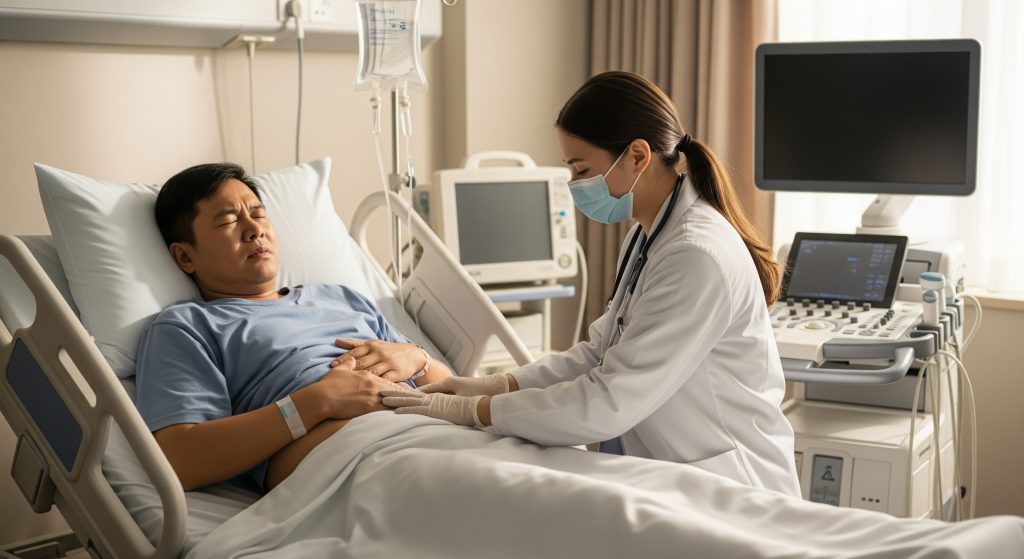
Doctors rely on specific physical examination findings when evaluating suspected cholecystitis. The most important is Murphy’s sign. Here’s how it works: the examining doctor places fingers under the right ribcage and asks the patient to breathe in deeply. As the diaphragm pushes the gallbladder down onto the examining fingers, a positive Murphy’s sign occurs when the patient abruptly stops inhaling due to sharp pain.
Other physical indicators include:
-
Guarding – involuntary tensing of abdominal muscles when the painful area is touched
-
Rebound tenderness – pain worsening when pressure is suddenly released (suggests peritoneal irritation)
-
Palpable gallbladder – occasionally, a distended gallbladder can be felt during examination
-
Jaundice – yellowing of skin and eyes if bile duct obstruction accompanies gallbladder disease
When to Seek Emergency Medical Care
Not all abdominal pain requires emergency evaluation. But cholecystitis can deteriorate rapidly. Seek immediate medical attention for:
-
Severe abdominal pain that prevents sitting still or finding a comfortable position
-
Fever above 38.5°C (101.3°F) accompanied by abdominal pain
-
Persistent vomiting with inability to keep fluids down
-
Yellowing of the skin or eyes (jaundice)
-
Signs of shock – rapid heartbeat, dizziness, confusion, or fainting
-
Pain lasting more than six hours without improvement
Delays in seeking care for acute cholecystitis risk serious complications. An untreated inflamed gallbladder can perforate within days, spilling infected bile into the abdominal cavity – a life-threatening emergency requiring immediate surgery.
Cholecystitis Causes and Risk Factors
Gallstones as Primary Cause
Gallstones cause approximately 90-95% of all cholecystitis cases. These hardened deposits form from cholesterol, bile pigments, or a mixture of both. When a stone lodges in the cystic duct – the narrow tube connecting the gallbladder to the main bile duct – bile cannot escape. Trapped bile irritates the gallbladder wall, triggering inflammation and eventually infection.
Not all gallstones cause problems. Many people carry gallstones for years without symptoms. But once a stone decides to block the exit, the clock starts ticking toward acute cholecystitis.
Acalculous Cholecystitis Causes
About 5-10% of cholecystitis cases occur without gallstones – a condition called acalculous cholecystitis. This variant typically affects critically ill patients:
-
ICU patients – prolonged illness, mechanical ventilation, and multiple organ dysfunction
-
Major surgery or trauma patients – especially those receiving parenteral nutrition
-
Severe burns
-
Sepsis
-
Prolonged fasting – bile stagnates when the gallbladder doesn’t contract regularly
Acalculous cholecystitis carries a worse prognosis than the stone-related variety. The diagnosis is often delayed because critically ill patients may not localise pain well, and symptoms overlap with their underlying conditions.
Risk Factors for Developing Cholecystitis
Several factors increase susceptibility to gallstones and subsequent cholecystitis:
|
Risk Factor |
Explanation |
|---|---|
|
Female sex |
Oestrogen increases cholesterol secretion into bile |
|
Age over 40 |
Gallstone prevalence increases with age |
|
Obesity |
Higher cholesterol saturation in bile |
|
Rapid weight loss |
Mobilised fat increases biliary cholesterol |
|
Pregnancy |
Hormonal changes affect gallbladder motility |
|
Diabetes |
Associated with reduced gallbladder contraction |
|
Family history |
Genetic predisposition to gallstone formation |
|
Certain medications |
Oestrogen therapy, fibrates, and octreotide |
The traditional mnemonic “fair, fat, fertile, forty, and female” captures the classic risk profile – though anyone with risk factors should remain alert to symptoms.
Types of Cholecystitis
Understanding the different types helps clarify treatment approaches:
Acute calculous cholecystitis: The most common form – gallstone-related inflammation with sudden onset. Requires prompt treatment.
Acute acalculous cholecystitis: Occurs without stones, typically in critically ill patients. Often more severe and carries higher mortality.
Chronic cholecystitis: Repeated episodes of low-grade inflammation leading to a scarred, poorly functioning gallbladder. May present with vague, intermittent symptoms.
Emphysematous cholecystitis: A rare but serious variant involving gas-forming bacteria. More common in diabetics and requires urgent surgery.
Gangrenous cholecystitis: Represents tissue death within the gallbladder wall – a surgical emergency with high complication rates.
Cholecystitis Diagnosis Methods
Physical Examination and Medical History
Cholecystitis diagnosis begins with a thorough history and physical examination. The doctor listens for classic patterns: right upper quadrant pain starting after a fatty meal, lasting several hours, possibly radiating to the back or right shoulder. Prior episodes suggest chronic disease. A complete medication list and assessment of risk factors rounds out the picture.
Physical examination focuses on the abdomen – feeling for tenderness, guarding, and a positive Murphy’s sign. Vital signs reveal fever and sometimes tachycardia. Jaundice, if present, suggests possible bile duct involvement.
Blood Tests and Laboratory Investigations
Laboratory tests support the clinical picture:
-
Full blood count: Elevated white blood cell count indicates inflammation or infection
-
Liver function tests: Bilirubin and liver enzymes may be mildly elevated; marked elevation suggests bile duct stones
-
C-reactive protein (CRP): A non-specific marker of inflammation, often significantly raised in acute cholecystitis
-
Lipase and amylase: Help rule out pancreatitis, which can present similarly
Blood tests alone cannot confirm cholecystitis, but they help gauge severity and rule out other diagnoses.
Imaging Tests for Cholecystitis
Imaging provides the diagnostic confirmation. Ultrasound stands as the first-line modality for suspected acute cholecystitis. It’s readily available, non-invasive, and involves no radiation. The scan identifies gallstones (highly echogenic with posterior shadowing), gallbladder wall thickening (greater than 3mm), pericholecystic fluid, and a sonographic Murphy’s sign – tenderness when the ultrasound probe presses directly over the gallbladder.
According to Medscape, ultrasonography remains the recommended first-line imaging technique for diagnosing acute cholecystitis, with CT serving as an effective alternative for inconclusive cases.
When ultrasound results are unclear, additional imaging options include:
-
CT scan: Better visualises complications like perforation, abscess, or emphysematous changes
-
HIDA scan (hepatobiliary iminodiacetic acid): A nuclear medicine study that shows gallbladder filling and emptying; non-visualisation of the gallbladder strongly suggests cystic duct obstruction
-
MRI: Particularly useful for visualising bile duct stones and inflammatory changes when other modalities are inconclusive
A systematic review published in European Radiology indicates that CT and ultrasound have comparable sensitivities and specificities in diagnosing acute cholecystitis, supporting their complementary use.
Differential Diagnosis Considerations
Not every right upper quadrant pain is cholecystitis. The differential diagnosis includes:
-
Peptic ulcer disease: May present with similar pain location but typically has different triggers
-
Acute pancreatitis: Pain often radiates to the back; lipase levels significantly elevated
-
Hepatitis: Liver tenderness and significantly abnormal liver function tests
-
Right-sided pneumonia: Can refer pain to the upper abdomen; chest X-ray reveals the cause
-
Appendicitis: Usually presents with right lower quadrant pain but occasionally starts high
-
Fitz-Hugh-Curtis syndrome: Perihepatitis associated with pelvic inflammatory disease
Getting the diagnosis right matters. The single most frustrating part of emergency abdominal pain evaluation is when patients receive treatment for the wrong condition while the actual problem worsens.
Managing Cholecystitis Effectively
Effective cholecystitis management combines timely medical intervention with informed patient participation. The key principles include:
Don’t wait too long. Early presentation allows for early surgery, which produces better outcomes. Delaying surgery hoping symptoms will resolve often backfires – inflammation worsens, operations become technically more challenging, and complication rates rise.
Complete antibiotic courses. Whether given before, after, or instead of surgery, antibiotics work best when taken as prescribed. Stopping early because symptoms improve invites recurrence and promotes resistant bacteria.
Modify diet post-surgery. Life without a gallbladder is perfectly manageable for most people, but the digestive system needs time to adjust. Start with small, low-fat meals and gradually reintroduce normal foods. Most dietary restrictions are temporary.
Know the warning signs. Even after successful treatment, be alert for symptoms suggesting recurrence or complications – new abdominal pain, fever, or jaundice warrant prompt evaluation.
Address risk factors. Maintaining a healthy weight, avoiding crash diets, and managing conditions like diabetes reduces the risk of future gallbladder problems – assuming the gallbladder is still present.
The real change in patient outcomes comes not from any single medication or procedure but from the coordination of care: recognising symptoms early and getting appropriate treatment without unnecessary delays and following through with recovery recommendations. That’s the difference between a minor health hiccup and a prolonged ordeal.
Frequently Asked Questions
Can cholecystitis be treated without surgery?
In select cases, yes. Patients who are poor surgical candidates due to serious medical conditions may be managed with antibiotics, dietary modification, and drainage procedures (percutaneous or endoscopic). However, without surgery, the risk of recurrent attacks and complications remains significant. Surgery remains the definitive treatment for most patients.
How long does cholecystitis medication take to work?
Antibiotics typically begin reducing fever and improving symptoms within 24-48 hours. Pain medications provide relief within 30-60 minutes of administration. Complete resolution of inflammation, however, requires either surgery or a longer course of conservative treatment spanning several weeks.
What foods should be avoided with cholecystitis?
High-fat and greasy foods trigger gallbladder contraction and can worsen symptoms. Avoid fried foods, full-fat dairy, fatty meats, cream-based sauces, and rich desserts. During acute episodes, complete bowel rest (nothing by mouth) is often necessary until symptoms settle.
Is cholecystitis a medical emergency?
Acute cholecystitis requires urgent medical attention. While not immediately life-threatening in early stages, it can rapidly progress to serious complications including perforation, abscess, and sepsis. Prompt evaluation and treatment within 24-72 hours of symptom onset produces the best outcomes.
Can cholecystitis recur after treatment?
After cholecystectomy, true cholecystitis cannot recur since the gallbladder has been removed. However, patients may experience post-cholecystectomy syndrome – ongoing digestive symptoms or bile duct stones. For those treated conservatively without surgery, recurrence rates are high, with many experiencing repeat episodes within two years.
What are the complications of untreated cholecystitis?
Untreated cholecystitis can lead to gangrenous cholecystitis (tissue death), perforation (gallbladder rupture), pericholecystic abscess, biliary peritonitis, sepsis, and rarely, cholecystoenteric fistula (abnormal connection between gallbladder and intestine). These complications significantly increase morbidity and mortality, underscoring the importance of timely treatment.

