






 We do what's right for you...


Early Liver Cancer Signs: When to See a Doctor
Dr. Bimlesh Thakur
Waiting for severe pain before acting on Liver Cancer Symptoms is poor advice. Early disease often speaks quietly. It shows up as subtle changes in energy, appetite, or skin before dramatic illness appears. If you recognise the early signal, you give yourself options. Better treatments and, to an extent, better outcomes. This guide explains what to watch, when to seek medical care, and how to prepare for that appointment.
Early Warning Signs and Liver Cancer Symptoms
Liver Cancer Symptoms vary widely. Some are non-specific, and a few are unmistakable. The list below focuses on real-world signs you can notice early. Use it as a reference and not as a diagnosis tool.
Abdominal Pain and Swelling
Discomfort in the upper right abdomen can reflect liver enlargement, inflammation, or pressure from a mass. Swelling or a sense of fullness often appears with fluid build-up in the abdomen. This is called ascites. If the tenderness worsens or the abdomen becomes distended, you should seek medical assessment promptly. Liver Cancer Symptoms can overlap with gallbladder or stomach problems, so timing and progression matter.
-
Pain localised to the right upper quadrant, sometimes radiating to the shoulder.
-
Tight waistband or sudden abdominal girth increase without weight gain elsewhere.
-
Discomfort after small meals due to early fullness.
Unexplained Weight Loss
Weight loss without a change in diet or activity deserves attention. In the context of Liver Cancer Symptoms, it may accompany reduced appetite, nausea, or altered metabolism. Track weekly weight for a month. If you lose more than 5 percent without trying, consult your clinician.
Jaundice and Skin Changes
Yellowing of the skin or eyes is a common late sign, but mild colour change can appear earlier. As Mayo Clinic notes, jaundice often travels with dark urine and pale stools. You may also notice spider-like blood vessels on the skin or redness of the palms. As Skin Changes in Cirrhosis highlights, pruritus, spider telangiectasia, and palmar erythema can precede formal diagnosis of liver disease.
-
Yellow sclerae or a sallow facial tone.
-
Itchy skin without a rash. Often worse at night.
-
Fine spider veins on the chest, face, or arms.
Persistent Fatigue and Weakness
Fatigue that lingers despite adequate rest is a frequent early complaint. It reflects the liver’s central role in energy metabolism. With Liver Cancer Symptoms, the tiredness may feel heavy and unrelenting. Consider the pattern. Day after day fatigue that limits routine tasks needs evaluation.
-
Reduced exercise tolerance compared with recent baseline.
-
Short naps do not restore energy.
-
Associated brain fog or slowed concentration.
Loss of Appetite and Nausea
Loss of appetite with nausea is common across liver conditions. As American Cancer Society explains, anorexia and nausea frequently reduce intake and drive weight loss in cancer, including liver cancer. In practical terms, you start leaving food on the plate and small meals feel like too much. The effect compounds over weeks and produces notable weight changes.
As Liver diseases research suggests, these symptoms may indicate more advanced hepatocellular carcinoma and can affect quality of life significantly. Early reporting helps your team manage nutrition and treat underlying causes.
Enlarged Liver or Spleen
A clinician may feel an enlarged liver under the right rib cage, or a spleen under the left. As Cleveland Clinic notes, hepatomegaly can signal liver cancer and presents with pain, fullness, or jaundice. Imaging such as ultrasound can clarify size and texture changes. As Mayo Clinic describes, splenomegaly may accompany liver disease, pointing to broader portal circulation problems.
As STANDARD TREATMENT GUIDELINES ONCOLOGY also notes, hepatomegaly can appear with jaundice, pruritus, or unexplained weight loss, prompting focused imaging.
White Chalky Stools
Clay-coloured or pale stools suggest reduced bile entering the gut. As MD Anderson Cancer Center points out, chalky stools may occur in liver cancer and often coincide with other Liver Cancer Symptoms. As Mayo Clinic advises, persistent pale stools beyond a couple of days warrant medical review to rule out bile duct obstruction.
-
Paler, grey, or putty-like stool over several days.
-
Greasy stool that floats due to fat malabsorption.
-
Accompanying dark urine or itching.
Dark Urine Changes
Dark urine can reflect elevated bilirubin. As NHS notes, dark urine may appear with jaundice, appetite loss, and weight loss. As Cancer Treatment Centers of America explains, bilirubin accumulation from impaired liver function often drives that change. In some cases, dehydration is the cause. Rehydrate and reassess. If colour remains dark, seek advice.
As Viral hepatitis guidance notes, chronic HBV or HCV infections can also produce dark urine alongside other systemic symptoms. Note the duration and associated signs to guide your clinician’s next steps.
When to See a Doctor About Liver Symptoms
Early assessment shortens the diagnostic path. It also improves your choices. If you recognise Liver Cancer Symptoms from above, consider the following decision points.
High-Risk Groups Requiring Regular Screening
Regular screening is advised for groups with elevated lifetime risk. If you fall into one of these categories, do not wait for symptoms. Schedule surveillance.
-
Chronic hepatitis B or C infection, with or without prior treatment.
-
Cirrhosis from any cause, including alcohol, NAFLD, or autoimmune disease.
-
Family history of hepatocellular carcinoma, especially in first-degree relatives.
-
Long-standing NAFLD with metabolic syndrome or diabetes.
-
Haemochromatosis or other inherited liver conditions.
Typical surveillance uses ultrasound every 6 months, sometimes paired with AFP testing. The interval reflects tumour growth kinetics and the higher pre-test probability in these cohorts.
Red Flag Symptoms Requiring Immediate Attention
Some features demand urgent evaluation rather than a routine appointment. As NHS guidance notes, jaundice should prompt urgent care, as should vomiting that persists beyond two days. Add severe abdominal pain, confusion, or rapid swelling to that list. With progressive Liver Cancer Symptoms and these emergencies, time matters.
-
Sudden jaundice or rapidly worsening yellowing.
-
Repeated vomiting over 48 hours.
-
Severe pain with fever or rigors.
-
New confusion, extreme sleepiness, or bleeding.
Diagnostic Tests Your Doctor May Order
Expect a stepwise approach. As Mayo Clinic explains, liver function tests measure ALT, AST, alkaline phosphatase, bilirubin, and albumin to assess damage and synthetic function. These results, combined with your history, narrow the differential.
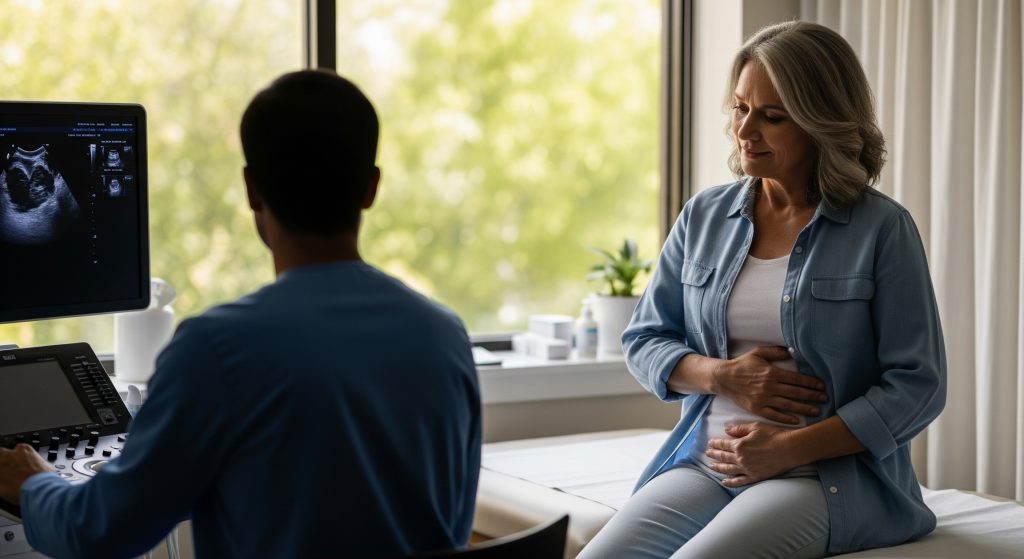
Imaging often follows. As American Cancer Society notes, ultrasound and CT scans are standard, alongside alpha-fetoprotein testing, and biopsy in ambiguous cases. Blood-based surveillance is evolving. As Inside Precision Medicine reports, the Oncoguard Liver test showed higher sensitivity for early HCC than ultrasound in trials, combining DNA methylation and protein markers.
|
Test |
What it clarifies |
|---|---|
|
LFT panel |
Evidence of injury, cholestasis, or impaired synthesis |
|
Ultrasound |
Initial view of focal lesions and vascular flow |
|
CT or MRI |
Detailed lesion character and staging detail |
|
AFP |
Supportive tumour marker trend |
|
Biopsy |
Histology when imaging remains uncertain |
Questions to Ask Your Doctor
A focused set of questions will make the appointment productive. As GUIDELINES FOR THE MANAGEMENT emphasise, early symptoms such as abdominal pain, weight loss, jaundice, fatigue, and appetite change should be discussed explicitly, especially if they cluster. As Mayo Clinic notes, dark urine and pale stools may point to liver failure mechanisms and deserve direct discussion. As Liver cancer guidance also notes, risks from pre-existing conditions should be part of the plan.
-
Which Liver Cancer Symptoms match my presentation, and which do not?
-
What is the next test and how soon can it be arranged?
-
Do I require urgent referral to hepatology or oncology?
-
If imaging is clear, what explains my symptoms, and how will you follow up?
-
How should I monitor changes at home over the next 2 to 4 weeks?
Understanding Liver Cancer Causes and Risk Factors
Risk often forms over years. Your aim is to understand where your profile sits on that curve and reduce modifiable drivers. Naming the likely liver cancer causes helps you act early.
Chronic Hepatitis B and C Infections
Chronic HBV and HCV are leading risk factors globally. Persistent inflammation and cycles of injury and repair can set the stage for malignant change. Vaccination prevents hepatitis B. Direct-acting antivirals cure most hepatitis C infections today. If you carry either virus, discuss structured surveillance. Small tumours found on screening are more treatable.
Cirrhosis and Alcohol-Related Damage
Cirrhosis increases hepatocellular carcinoma risk regardless of the original cause. Alcohol accelerates scarring. If alcohol intake continues, risk rises across the next decade. The practical step is support for sustained reduction or abstinence. It improves liver synthetic function and, to an extent, reduces cumulative risk.
Non-Alcoholic Fatty Liver Disease
NAFLD sits on the metabolic axis of obesity, insulin resistance, and dyslipidaemia. Fibrosis is the inflection point. If fibrosis progresses, risk climbs. Weight reduction of 7 to 10 percent often improves steatosis and may regress early fibrosis. Track HbA1c, triglycerides, and ALT while you make changes. It is the day-to-day inputs that change the trajectory.
Genetic and Hereditary Factors
Conditions such as haemochromatosis and alpha-1 antitrypsin deficiency elevate risk. Family clustering of HCC suggests shared genetic and environmental contributors. If your parent or sibling had HCC, mention it at first assessment. You may qualify for earlier surveillance.
Environmental Toxins and Aflatoxins
Aflatoxin exposure from contaminated grains is a recognised carcinogenic driver. Risk concentrates in regions with poor storage controls. Imported foods are generally monitored, but exposure still occurs. For most people, the risk from industrial solvents or pesticides is lower but non-zero. Reduce cumulative exposure and follow safety guidance at work.
Liver Cancer Stages and Prognosis
Staging organises treatment choices. It explains the spread, the tumour biology, and liver reserve. Together, these factors shape liver cancer stages and your likely path forward. Keep one point in mind. Earlier discovery offers more options.
Stage 1: Early-Stage Cancer
Single small tumours without vascular invasion usually fall into this category. Liver reserve is often preserved. Curative intent treatments, such as surgical resection or ablation, are possible. Transplantation is considered in selected cases where multifocal disease is likely to emerge. This is where surveillance earns its value. Find it small, treat it decisively.
Stage 2: Locally Advanced Cancer
Stage 2 often indicates a larger tumour or limited vascular involvement without distant spread. As STANDARD TREATMENT GUIDELINES ONCOLOGY notes, management ranges from resection or transplant to ablative techniques and systemic therapy depending on liver function. As Treatment strategies for locally advanced hepatocellular carcinoma highlights, immunotherapy combinations such as atezolizumab and bevacizumab are increasingly important.
As Treatment strategies for locally advanced hepatocellular carcinoma also notes, the BCLC system guides therapy and shows the advantage of early intervention when liver function is intact. When surgery is not viable, ablation or TACE can bridge or control disease. As Liver Cancer Treatment – NCI states, radiofrequency and microwave ablation are common tools in this setting.
Stage 3: Regional Spread
At this stage, cancer involves multiple tumours or structures, sometimes with lymph node involvement. As Staging and Prognostic Models explain, tumour size, number, and nodal spread guide both prognosis and strategy. As Hepatocellular Carcinoma – StatPearls notes, more aggressive multimodal plans are required. As Hepatocellular carcinoma – Survival rates suggests, survival is lower than in earlier stages, though immunotherapy is shifting outcomes.
Stage 4: Metastatic Cancer
Metastatic disease has spread beyond the liver to distant organs. Systemic therapy becomes the primary approach. Goals include prolonging survival, controlling symptoms, and maintaining liver function. Clinical trials may offer access to novel combinations. Manage expectations carefully. And still, aim for precision in supportive care.
Survival Rates by Stage
Survival varies by staging system and methodology. Roughly speaking, early-stage cases suitable for surgery or ablation achieve the best 5-year outcomes. Stage 3 and 4 survival rates are lower, though newer systemic regimens have improved median survival compared with older cohorts. Numbers also depend on underlying liver function. A healthy liver tolerates treatment better than a cirrhotic one.
Earlier in this guide, jaundice and dark urine were highlighted as high-alert features. Those signals matter because stage at diagnosis drives prognosis.
Factors Affecting Liver Cancer Prognosis
-
Tumour burden and biology, including vascular invasion.
-
Underlying liver function, often captured by Child-Pugh or ALBI scores.
-
Performance status and co-morbidities that limit therapy.
-
Access to curative options such as surgery, ablation, or transplant.
-
Response to systemic therapy and ability to continue treatment.
Your clinician will synthesise these into a clear plan. Small changes in two or three of these factors can move the needle in a real way.
Taking Action on Liver Cancer Symptoms
Action beats worry. If you recognise Liver Cancer Symptoms described earlier, take the next practical steps and set timelines you can keep.
-
Record symptoms with dates, severity, and triggers. Bring this to your appointment.
-
Book a GP visit within 7 days for persistent symptoms. Sooner if red flags exist.
-
Ask for targeted tests based on your risk, including LFTs and ultrasound.
-
Address modifiable risks now. Alcohol reduction, weight management, and vaccination where eligible.
-
Clarify a follow-up plan. If results are indeterminate, schedule repeat imaging.
This is the practical core. Observe, document, escalate appropriately, and follow through. You protect your future liver function by acting today.
Frequently Asked Questions
Can liver cancer symptoms appear suddenly?
They can, though many develop gradually. Rapid onset of jaundice, severe abdominal pain, vomiting, or confusion warrants urgent evaluation. Some Liver Cancer Symptoms remain subtle for months and then accelerate as bile ducts or vessels become involved. Track the timeline. Sharp change is meaningful.
What percentage of liver masses are cancerous?
It depends on age, risk factors, and liver background. In cirrhosis, a new solid lesion is treated as malignant until proven otherwise. In healthy livers, benign lesions such as haemangiomas and focal nodular hyperplasia are common. The pre-test probability matters more than a single percentage.
How quickly does liver cancer progress?
Growth rates vary. Some tumours double in size over months while others move slower. Progression also rests on vascular invasion and microenvironment. As far as current data suggests, earlier detection and smaller baseline size predict better control. Regular imaging for high-risk groups is therefore critical.
Can blood tests detect early liver cancer?
Standard LFTs are not sufficient on their own. AFP helps but misses many early tumours. Research assays are improving sensitivity. As Inside Precision Medicine reported earlier, the Oncoguard Liver test showed higher early-stage detection in trials. Screening still pairs blood tests with imaging.
What mimics liver cancer symptoms?
Gallstones, viral hepatitis, NAFLD, pancreatitis, stomach ulcers, and biliary strictures can mimic Liver Cancer Symptoms. Anaemia can resemble cancer-related fatigue. Medication side effects can cause nausea or dark urine. Differential diagnosis requires labs and imaging, not guesswork.
Is liver cancer pain constant or intermittent?
Both patterns occur. Some experience dull, constant right-sided ache. Others report intermittent sharp pain after meals or with movement. Pattern often shifts with tumour growth, inflammation, or bile duct involvement. If pain escalates or is accompanied by fever or jaundice, seek urgent care.

