






 We do what's right for you...


DOTS Treatment in India: Benefits, Effectiveness, and Challenges
Dr. Pawan Kumar Mangla
Popular advice treats tuberculosis control as a pharmaceutical problem alone. That view misses the point. DOTS treatment works when drugs, diagnostics, data, and disciplined follow up move in lockstep. In this explainer, I set out how the DOTS approach functions in India, what outcomes it achieves, where it struggles, and what must improve next. The aim is practical clarity. I focus on how policy converts into daily practice, and why DOTS treatment succeeds or fails depending on the weakest link in the chain.
List of Key DOTS Components and Their Implementation in India
Government Commitment and Political Support
Every strong DOTS treatment system begins with visible political backing and steady financing. India has placed tuberculosis high on the public health agenda, with national leadership signalling priority from the centre to the district. This commitment travels through state health missions, municipal bodies, and community institutions. The result is better staffing, more predictable drug procurement, and faster problem escalation when bottlenecks appear.
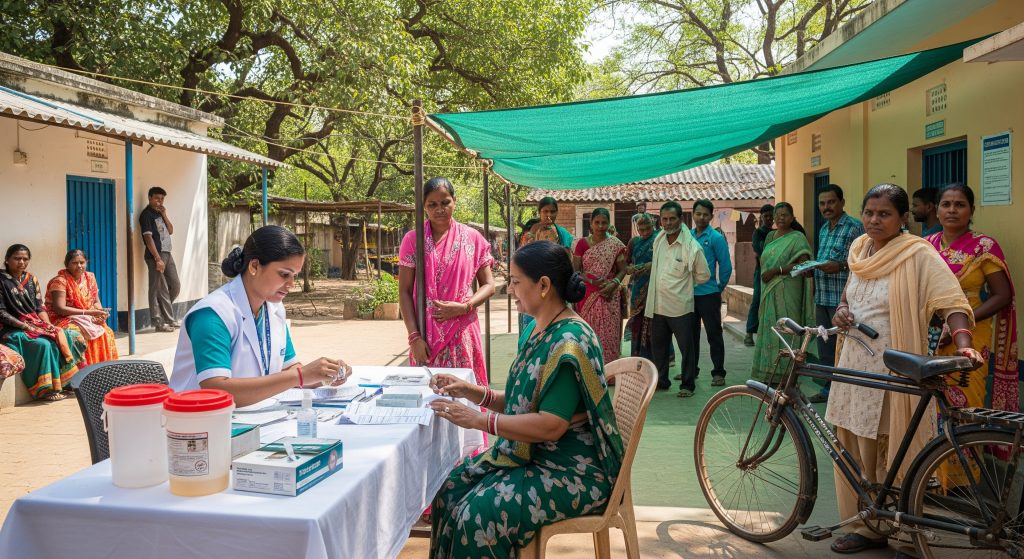
Financial protection has deepened alongside service delivery. I have seen direct benefit transfers reduce catastrophic spending for patients who would otherwise lose wages. Community-facing initiatives such as village or ward led drives strengthen case finding and social support. Those local structures matter because DOTS treatment depends on daily or frequent observation in the intensive phase. They help convert broad policy into consistent supervision, even in remote blocks.
India’s timeline is ambitious. As the National Tuberculosis Elimination Programme states, the goal is elimination by 2025. That date sets a clear drumbeat for planning cycles and accountability. Ambition alone does not cure TB. It does, however, align ministries, budgets, and partners behind one clock.
-
Political priority secures budgets and procurement.
-
Decentralised initiatives translate policy into local practice.
-
Social support reduces financial and adherence risks.
Sputum Smear Microscopy for Case Detection
DOTS treatment has always relied on bacteriological confirmation. In India, sputum smear microscopy remains a backbone for first line case detection, especially in primary centres. It is inexpensive, rapid, and deployable at scale. Where available, molecular tests such as CBNAAT or TrueNat complement smears for quicker detection and rifampicin resistance screening. The practical approach is tiered. Use smear microscopy for initial screening, and escalate to molecular or culture in complex or drug resistant scenarios.
The operational point is simple. Case detection must be accessible and timely, or the entire dots regimen timetable slips. I advise programme teams to monitor three metrics weekly: number of presumptive TB patients identified, proportion tested within 48 hours, and positivity rates by facility. Those three numbers reveal whether outreach, testing, and diagnosis are synchronised.
-
Smear microscopy anchors access in high volume settings.
-
Molecular tests refine diagnosis and resistance detection.
-
Turnaround time drives earlier treatment initiation.
Standardised Short-Course Chemotherapy Regimens
Standardisation is the spine of DOTS treatment. Fixed regimens reduce errors, improve procurement efficiency, and support training. In programmatic settings, regimen simplicity prevents avoidable delays and confusion. As the Asian Pacific Journal of Tropical Disease notes, standard treatment runs for 6 to 8 months with directly observed doses in the initial intensive phase. That clarity enables responsible task shifting to field workers and community supporters.
The regimen design also reflects clinical realities. Co-morbidities, pregnancy, and HIV status require careful selection and monitoring. The core template stays constant, while clinician judgement adapts dosing or monitoring frequency. This balance is essential. A uniform backbone with case specific oversight keeps both safety and throughput intact.
Standardisation is not rigidity. It is a disciplined default that leaves room for precise clinical exceptions.
Regular and Uninterrupted Drug Supply
Even the best protocols fail if medicines are unavailable. DOTS treatment demands uninterrupted supply for both the intensive and continuation phases. Procurement must be forward looking, with buffers for demand spikes and distribution shocks. I recommend a minimum of three months buffer stock at district warehouses, and active stock reconciliation at facility level each week. Simple dashboards work. Green for safe, amber for reorder, red for stock out risk.
Distribution needs reliable last mile logistics. In practice, that means accurate consumption forecasting, strong warehouse controls, and field level feedback loops. When shortages occur, patient adherence collapses, and resistance risks increase. I have seen programme teams prevent lapses with basic checklists and monthly audits. The tools are not complex. Consistent use is.
-
Maintain buffer stocks at district and facility levels.
-
Track consumption weekly during the intensive phase.
-
Synchronise procurement cycles with regimen calendars.
Systematic Recording and Reporting System
DOTS treatment is inseparable from disciplined recording. Patient wise records, treatment cards, and cohort reports provide the operational truth. Without them, it is impossible to measure adherence, outcomes, or losses to follow up. Digital platforms now streamline this work, but paper backups still serve where connectivity fails. A dual approach remains prudent.
Three practices raise data quality. First, daily entries by the responsible staff member. Second, supervisor review every fortnight to correct gaps. Third, cohort analysis at quarter end to summarise treatment success rates and default patterns. Data must return to action. Public programme review meetings should prioritise the facilities with repeated delays or unusual outcomes.
|
Record |
Purpose |
|---|---|
|
Treatment card |
Tracks dosing, phase shifts, and missed visits |
|
Laboratory register |
Links test dates, results, and reporting delays |
|
Cohort report |
Summarises outcomes for programme decisions |
Benefits of DOTS Treatment in Indian Healthcare
Treatment Success Rates and Cure Rates
DOTS treatment increases the likelihood that patients complete therapy and achieve bacteriological cure. Two features drive these gains. Directly observed dosing in the intensive phase and fixed dose combinations that simplify continuation. Together they reduce missed doses and regimen mistakes. As far as current data suggests, the programme goal for new sputum positive cases has been an 85 percent cure rate in recent years. As the International Journal of Preventive Medicine notes, the 85 percent target has guided programme evaluation since the late 2000s.
Results vary by district and population. Urban informal settlements with higher mobility often report lower completion rates. Focused adherence support and flexible observation hours can close that gap.
-
Observation and simplification reduce errors and missed doses.
-
Standardised follow up protects continuity through the full course.
Lives Saved Through DOTS Programme
DOTS treatment prevents avoidable deaths by shortening the time from symptom onset to effective therapy, and by protecting continuity. Mortality risk falls when bacteriological clearance happens early and when complications are detected in time. I have reviewed district cohorts showing steep declines once supervision and drug availability were stabilised. The direction is consistent, even if absolute numbers differ by setting.
A brief example illustrates the point. A peri-urban district integrated evening observation hours at community centres. Attendance rose, missed intensive phase doses halved, and deaths declined in the next cohort. The intervention was modest. The effect was material.
Cost-Effectiveness for Patients and Healthcare System
DOTS treatment lowers the total economic burden. Standardised regimens reduce procurement waste. Fixed dose combinations streamline stock management. For patients, observation near home reduces travel and wage loss. Roughly speaking, every hour saved from clinic travel protects income and improves adherence. That is practical value, not just a budgeting line.
At system level, averting relapse and resistance avoids far higher costs of second line drugs and prolonged hospital stays. Prevention beats salvage, financially and clinically. Programme managers see the difference in pharmacy ledgers and in occupied beds.
-
Standardisation creates procurement and training efficiencies.
-
Localised observation reduces indirect patient costs.
-
Fewer relapses mean fewer expensive re-treatments.
Prevention of Drug Resistance Development
Resistance thrives on poor adherence and erratic supply. DOTS treatment reduces both. Observation in the intensive phase ensures therapeutic levels while bacillary load is highest. A reliable supply chain removes the stop-start pattern that selects for resistance. Counselling adds another layer by preparing patients for side effects and practical challenges.
Critics argue that observation may feel paternalistic and could discourage engagement. The concern deserves respect. Properly delivered, observation is supportive, time bound, and designed to preserve autonomy. It protects the patient from the heavy costs of multidrug resistant disease. That is a fair trade.
Effectiveness of DOTS Therapy in India
Impact on TB Prevalence and Mortality Rates
DOTS treatment correlates with declines in both prevalence and mortality when coverage is strong. The causal chain is straightforward. Faster diagnosis reduces transmission. Supervised intensive phase accelerates conversion to smear negative status. Continuation phase adherence prevents relapse. The cumulative effect is fewer infectious individuals and fewer deaths.
Outcomes are not uniform. Districts with difficult terrain or sparse facilities see slower declines. Focused outreach, transport support, and mobile observation points can narrow the gap. And yet, coverage and quality still decide the curve.
Comparison with Non-DOTS Treatment Outcomes
Where DOTS treatment is unavailable or inconsistently applied, outcomes are less predictable. Patients start late, stop early, or switch regimens without clinical guidance. Loss to follow up rises, and relapse follows. In contrast, a disciplined dots regimen offers structure and support that patients can rely on. This predictability improves both individual outcomes and programme planning.
In practice, I recommend that teams benchmark facilities that lack observation support against nearby DOTS facilities. Differences in conversion times and completion rates are usually clear within two quarters.
-
Non-DOTS pathways risk fragmented care and variable dosing.
-
DOTS pathways create reliable cadence and predictable outcomes.
Relapse Rates and Risk Factors
Relapse often signals gaps in adherence, drug supply, or follow up testing. Known risk factors include undernutrition, uncontrolled diabetes, continued smoking, and alcohol dependence. DOTS treatment helps by combining observation, counselling, and scheduled tests. However, relapse can still occur in vulnerable groups even with good supervision.
Mitigation is practical. Nutrition support, glucose control, and brief interventions for tobacco and alcohol use reduce risk to a measurable extent. I advise managers to tag high risk patients in the register and schedule additional touchpoints during the continuation phase.
Effectiveness in Different Patient Groups
DOTS treatment shows strong results in most adult pulmonary TB cases. Certain groups require tailored support. People with HIV need integrated care and early detection of drug interactions. Children need weight band dosing and family centred observation. Migrant workers benefit from transfer protocols that preserve records across districts. The same structure works; the packaging must adjust.
A useful operational practice is a weekly exception list. Flag people with HIV, children under five, migrants, and those with diabetes. Then assign a case manager to each flagged patient. Simple, explicit, and fair.
Major Challenges in DOTS Implementation
Human Resource Constraints and Training Gaps
Programmes succeed through people. DOTS treatment relies on field supervisors, lab technicians, pharmacists, and community supporters. When vacancies persist or training lags, quality declines. New staff often arrive without hands on practice in sputum collection, adverse event counselling, or cohort reporting. The fix is not glamorous. It is structured in service training with supervised practice and competency logs.
I recommend a quarterly skills audit that covers five areas: smear collection, regimen counselling, side effect triage, stock reconciliation, and register accuracy. Closing these gaps improves outcomes quickly.
-
Vacancies increase caseloads and waiting times.
-
Irregular training produces inconsistent patient counselling.
-
Weak supervision erodes data quality and adherence.
Private Sector Engagement and Coverage
A significant portion of initial care seeking occurs in the private sector. Without engagement, DOTS treatment coverage fragments, and notification suffers. Many private providers intend to help but face administrative burden, unclear pathways, or stock access issues. Programme teams can address this through simple onboarding, assured supply of quality drugs, and clear reimbursement rules.
One proven approach is a single window liaison who handles notifications, drug supplies, and data reporting for private clinics. Reduce friction, and participation rises.
Infrastructure and Accessibility Barriers
Geography still defeats policy. Mountainous terrain, islands, and conflict affected pockets complicate observation and delivery. Facilities may lack space for private counselling or safe sputum collection. Power cuts disrupt cold chains for certain supplies. DOTS treatment demands reliability that infrastructure sometimes cannot provide.
Mobile observation points, solar backup for critical equipment, and transport vouchers help sustain continuity. It is basically a logistics problem with a clinical cost. Solve logistics, and clinical outcomes follow.
Patient Adherence and Default Issues
Default is rarely a simple choice. Patients juggle work shifts, travel, stigma, and side effects. DOTS treatment reduces default through observation, but the burden of time and travel remains. Flexible hours, community based observation, and WhatsApp reminders reduce missed doses. A fast response to the first missed dose is critical. Day one phone call. Day two home visit. Day three supervisor review.
Stigma also drives silence. Respectful counselling and local champions reduce that barrier. People return when they feel seen, not judged.
-
Call the patient within 24 hours of a missed dose.
-
Arrange home or workplace observation if travel is the barrier.
-
Escalate to a case review if two doses are missed in a week.
MDR-TB and Drug Resistance Management
Multidrug resistant TB changes the equation. Regimens are longer, toxicities are higher, and adherence is harder. DOTS treatment principles still apply, but with stronger case management and closer monitoring. Rapid molecular testing at baseline and at signs of failure is non-negotiable. Patient support packages should include side effect management, nutrition, and transport support.
Clinical leadership matters here. Case conferences that include clinicians, pharmacists, and social workers prevent siloed decisions. The system must move as one, or losses accumulate.
Future Directions for DOTS Programme in India
The next wave of improvement will come from precision and proximity. Precision means tighter risk stratification, early detection of failure signals, and customised adherence support by patient profile. Proximity means observation and counselling closer to home or workplace, with dependable digital support that does not replace human contact.
Three priorities are clear. First, strengthen last mile drug availability with real time stock visibility. Second, integrate mental health, nutrition, and non-communicable disease support into routine DOTS treatment touchpoints. Third, deepen private sector partnerships with lighter reporting and assured access to quality assured drugs. These are achievable within current budgets if managers simplify processes and reinforce supervision.
Maybe that is the point. Complex challenges bend when programmes pair disciplined basics with targeted innovation.
Frequently Asked Questions
What is the current success rate of DOTS treatment in India?
Success rates vary by state and district. DOTS treatment aims for an 85 percent cure rate in new sputum positive cases, with higher completion where supervision and supply are stable. Facilities that maintain timely tests, uninterrupted drugs, and active follow up usually meet or approach that benchmark.
How does DOTS prevent the development of drug-resistant TB?
DOTS treatment lowers resistance risk through observed dosing during the intensive phase and consistent drug supply through the full course. This prevents subtherapeutic exposure and treatment gaps that select for resistant strains. Counselling on side effects and rapid management of missed doses further reduces the risk.
What are the eligibility criteria for DOTS treatment?
Eligibility is clinical and programmatic. Any person diagnosed with drug susceptible TB requiring first line therapy is enrolled on a standardised dots regimen. Special groups such as children, people with HIV, or those with co-morbidities receive tailored monitoring, but the core programme structure still applies.
How long does the complete DOTS treatment take?
The typical DOTS treatment duration for drug susceptible pulmonary TB is 6 to 8 months, with direct observation in the intensive phase and simplified continuation thereafter. Duration may adjust for extra-pulmonary disease or clinical complexity as judged by the treating clinician.
What happens if a patient defaults during DOTS treatment?
Missed doses trigger rapid follow up. Teams attempt contact within 24 hours, arrange community based observation if needed, and review the case for barriers. If default persists, clinical reassessment checks for failure or resistance. The goal is a respectful return to treatment, not punitive action.

