






 We do what's right for you...


DIY Home Solutions to Fade Dark Spots and Pigmentation Naturally
Dr. Payal Gupta
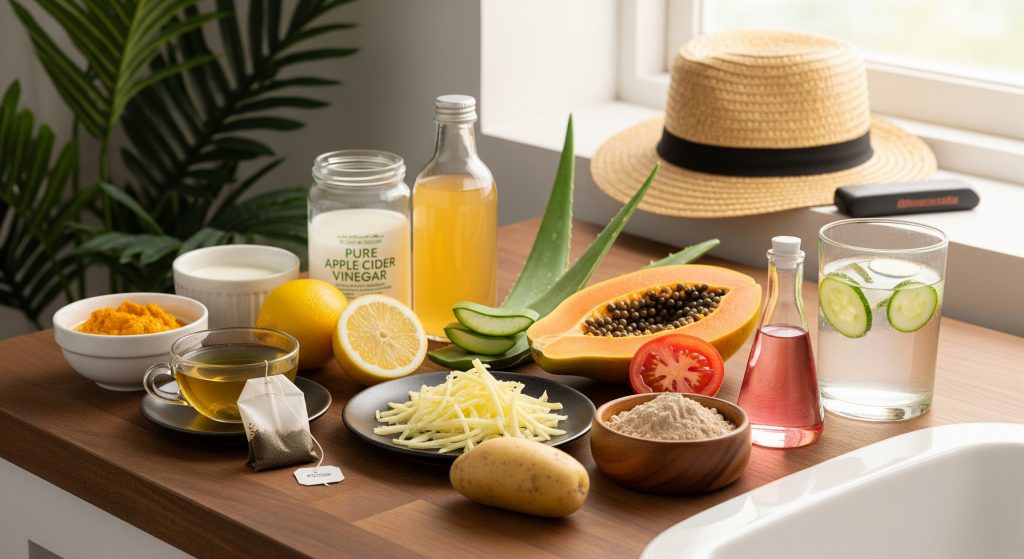
Conventional advice suggests waiting for expensive serums to erase dark spots. That approach is slow and often underwhelming. I prefer a disciplined plan built around hyperpigmentation home remedies, evidence-informed routines, and clear safety steps. Used correctly, these options help brighten skin and reduce excess pigment without harsh interventions.
Top Natural Remedies to Reduce Hyperpigmentation at Home
1. Lemon Juice Treatment
Lemon offers mild exfoliation and brightness, but it is strong. I dilute fresh juice with water or mix with a soothing base like honey to tame sting and dryness. Apply with a cotton bud to marks only, leave for 5 to 8 minutes, then rinse and moisturise. Never apply before sun exposure. I integrate this sparingly within hyperpigmentation home remedies to avoid irritation.
-
Best for small dark spots, not all-over use.
-
Pair with SPF during the day to prevent rebound darkening.
-
Discontinue if tingling becomes persistent.
2. Turmeric and Milk Paste
A short turmeric mask is a sensible first line. I blend a pinch of turmeric with milk or yoghurt to create a thin paste. Apply for 10 minutes, then remove with lukewarm water. The paste can support brighter tone while staying gentle, which suits ongoing hyperpigmentation home remedies.
-
Use twice weekly for evenness.
-
Add chickpea flour for a thicker, less drippy consistency.
3. Aloe Vera Gel Application
Pure aloe gel is calming and practical. I smooth a thin layer over affected areas at night to support repair after daily stress. It sits well under other natural remedies for skin pigmentation, and it suits sensitive skin prone to post-acne marks.
-
Store-bought gel should be fragrance-free.
-
Layer under a bland moisturiser if skin feels tight.
4. Apple Cider Vinegar Toner
ACV is potent, so dilution is non-negotiable. A simple starting blend is 1 part ACV to 2 parts water for dab-on use to dark spots. As Healthline explains, this ratio helps limit irritation while supporting clarity. I keep contact time short, then rinse and follow with moisturiser.
-
Limit to 2 to 3 nights per week.
-
Avoid on broken or freshly exfoliated skin.
5. Potato Juice Extract
Fresh potato juice is a classic option in hyperpigmentation home remedies. I grate a peeled potato, squeeze out the juice, and apply it with a cotton pad to spots for 10 minutes. It pairs well with gentle routines when used consistently.
-
Patch test first if skin is reactive.
-
Use within 10 minutes of extraction for best freshness.
6. Green Tea Compress
A cooled green tea bag can serve as a short compress. I brew, cool, and press to areas with uneven tone for 5 minutes. It is soothing, practical, and easy to repeat. Importantly, it fits a broader plan of natural remedies for skin pigmentation without overloading the skin.
-
Keep in the fridge for a refreshing effect.
-
Follow with a hydrating serum if skin feels tight.
7. Liquorice Root Extract
Liquorice root is worth attention. I apply a diluted, cosmetic-grade extract as a targeted serum step a few evenings a week. It sits comfortably within hyperpigmentation home remedies because it plays well with other gentle actives such as niacinamide.
-
Use on clean skin before moisturiser.
-
Rotate with aloe on off nights for balance.
8. Papaya Enzyme Mask
Ripe papaya provides a soft enzymatic polish. I mash a small piece, add a teaspoon of yoghurt, and apply for 5 to 8 minutes. This short contact improves smoothness and brightness without abrasive scrubs. It is basically a tidy, at-home mini facial.
-
Keep duration brief to avoid tingling.
-
Rinse thoroughly and moisturise immediately after.
9. Tomato Pulp Treatment
Tomato pulp offers a gentle brightening pass. I pulp a fresh slice and dab onto uneven areas for 5 minutes. It is a simple, low-cost step within hyperpigmentation home remedies, especially when the skin needs a very light touch.
-
Test around the mouth area last, as it can be sensitive.
-
Do not combine with acids the same day.
10. Sandalwood Powder Remedy
Sandalwood mixed with rose water delivers a classic calming mask. I apply a thin layer for 10 minutes when the skin looks inflamed or after a sunny day. It complements other home remedies for melasma by reducing the urge to scratch or pick, which often worsens marks.
-
Choose genuine, unadulterated powder.
-
Rinse gently to avoid friction.
How to Create Effective DIY Face Masks for Dark Spot Treatment
Honey and Cinnamon Mask for Melasma
I use 1 teaspoon honey with a small pinch of cinnamon for a 5-minute mask. Honey comforts the skin while cinnamon provides a light boost in circulation. This is better as an occasional supporting mask within home remedies for melasma, not a daily staple.
-
Reduce cinnamon if any warmth persists after rinsing.
-
Apply only to intact skin.
Yoghurt and Oatmeal Brightening Mask
For a calm, bright finish, I combine 1 tablespoon yoghurt with 1 teaspoon finely milled oats. The mix spreads easily and rinses clean. It suits sensitive types who still want a nudge toward clarity using hyperpigmentation home remedies.
-
Leave on for 8 to 10 minutes.
-
Optional: add a few drops of rose water for slip.
Multani Mitti Clay Mask Recipe
Multani Mitti offers a traditional clarifying base. I blend 1 tablespoon clay with enough rose water to form a paste. Apply a thin layer for 7 minutes and mist lightly to stop it drying hard. This supports tone while avoiding the tight, flaky finish many dislike.
-
Add a teaspoon of yoghurt for extra comfort.
-
Do not allow the mask to crack on the face.
Vitamin E and Almond Oil Blend
For evening care, I puncture one vitamin E capsule and mix with 3 drops of almond oil. I massage a trace over dark marks only. It sits well within hyperpigmentation home remedies when used sparingly and shielded by SPF the next day.
-
Avoid near active breakouts.
-
Use 2 to 3 nights per week to start.
Cucumber and Rose Water Pack
Grated cucumber with a splash of rose water makes a cooling compress. I apply with a gauze sheet for 5 minutes after a long day. It is ideal after mild redness or heat, when skin needs calm more than intensity.
-
Keep grated cucumber chilled.
-
Follow with moisturiser to seal hydration.
Neem and Tulsi Paste Formula
For blemish-prone skin with marks, I blend fresh neem leaves and tulsi with rose water into a thin paste. Apply for 5 minutes and rinse. It complements natural remedies for skin pigmentation where breakouts and marks coexist.
-
Use once weekly to avoid dryness.
-
Moisturise well after removal.
Daily Routine and Lifestyle Changes to Prevent Melanin Overproduction
Morning Skincare Steps for Pigmentation
I keep the morning routine short and repeatable. This reduces friction and prevents over-treatment, which can worsen marks. The sequence stays steady, whether using hyperpigmentation home remedies or not.
-
Cleanser: a gentle, low-foam wash to avoid barrier stress.
-
Antioxidant serum: vitamin C or liquorice-based for brightness.
-
Barrier support: light moisturiser with glycerin or squalane.
-
Sun protection: high UV shield, reapplied as needed.
For a quick boost, I add niacinamide in the morning for tone and calm. It is basically a safe, multi-situation active that supports evenness.
Night-time Remedies Application Guide
Night is the primary window for pigment care. Absorption improves, and actives can work without UV exposure. I rotate supportive agents across the week to protect the barrier while staying consistent with hyperpigmentation home remedies.
-
Cleanser: gentle cleanse to remove sunscreen and dust.
-
Treatment: aloe or liquorice on alternate nights.
-
Mask: yoghurt-oat blend once or twice weekly.
-
Seal: light moisturiser to reduce water loss.
Where tolerated, I add a mild exfoliation once a week using lactic acid or an enzyme mask. Small steps. Consistent rhythm.
Dietary Changes to Reduce Melanin
Diet influences visible skin outcomes to an extent. I prioritise colourful produce, protein, and hydration to support repair. This approach complements hyperpigmentation home remedies and reduces inflammatory triggers.
-
Focus on citrus, berries, kiwi, and leafy greens.
-
Include omega-3 sources like fish, walnuts, and flax.
-
Favour fermented foods to support a healthy skin barrier.
-
Reduce refined sugars and ultra-processed snacks.
This is not a quick fix. It lowers background noise so topical care can show its effect.
Sun Protection Natural Methods
UV exposure is the main driver of uneven tone. For those preferring natural measures, clothing and shade strategies are essential. As Mayo Clinic notes, protective clothing and sun avoidance help prevent new age spots. I rely on wide-brim hats, tightly woven fabrics, and shade planning.
-
Use UPF-rated clothing when outdoors for long periods.
-
Plan outdoor time away from peak sun hours.
-
Carry a compact umbrella for midday errands.
If a mineral sunscreen is acceptable, combine it with these methods. The combined effect is stronger than any single step.
Hydration and Detox Practices
Hydration keeps the barrier resilient. I layer a humectant serum, then a moisturiser, then sun protection each morning. This reduces irritation risk from hyperpigmentation home remedies and minimises flaking.
-
Apply moisturiser within 3 minutes after cleansing.
-
Use a bedside humidifier in dry seasons.
-
Increase water-rich foods such as cucumber and watermelon.
Some prefer simple detox drinks for a morning routine. Choose options that emphasise hydration and gentle antioxidants over extreme cleanses.
Safety Precautions and Expected Timeline for Natural Remedies
Patch Testing Guidelines
Patch testing is mandatory when working with new ingredients, especially acids or spices. As American Academy of Dermatology guidance suggests, evaluate a small area over 48 hours to check for redness or itching. I test on the inner arm or behind the ear before any face use.
-
Apply a tiny amount on clean, dry skin.
-
Do not wash the area for a day unless irritation begins.
-
Assess for delayed reactions the next day as well.
Stop immediately if stinging or swelling appears. No exceptions.
Ingredients to Avoid for Sensitive Skin
Not every natural ingredient is gentle, and not every synthetic ingredient is harsh. That said, I avoid high-alcohol toners, strong fragrances, and sulfate-heavy cleansers in pigment care. With hyperpigmentation home remedies, I also limit undiluted acids and strong essential oils.
-
Avoid ethanol and isopropyl alcohol around irritated areas.
-
Skip cinnamon or lemon on raw, freshly exfoliated skin.
-
Do not mix multiple acids in the same session.
One more point. Hydroquinone is effective but requires medical oversight. Home use is not advised without supervision.
Realistic Timeline for Results
Natural care requires patience. Visible improvements typically take weeks, not days. As PSRI Hospital notes, results often appear after 6 to 8 weeks of consistent application. I set checkpoints at week 4, week 8, and week 12 to gauge progress and adjust.
|
Checkpoint |
What to assess |
|---|---|
|
Week 4 |
Texture, reduced redness, slightly softer edges of spots. |
|
Week 8 |
Noticeable lightening on recent spots, improved uniformity. |
|
Week 12 |
Stubborn patches show gradual shift, fewer new marks. |
Progress is rarely linear. I expect plateaus. Then I re-evaluate frequency or switch one mask for another.
When to Combine Multiple Remedies
Combination plans usually work better than a single step. I stack gentle options rather than doubling intensity. For instance, aloe at night plus a yoghurt-oat mask weekly and daytime shade control. This respects the barrier and still advances results in hyperpigmentation home remedies.
-
Do not layer lemon, ACV, and clay on the same day.
-
Pair a calm night with a protective morning.
If irritation appears, scale back frequency first. If marks are static after 12 weeks, consider a professional consultation.
Making Natural Pigmentation Treatment Work for You
A workable routine is deliberate, not complicated. I prioritise three pillars: gentle brightening, rigorous protection, and consistency. Here is a compact framework that keeps hyperpigmentation home remedies on track without guesswork.
-
Choose two calm actives: aloe and liquorice, or yoghurt and papaya.
-
Set a schedule: short masks twice weekly, spot toning once or twice.
-
Lock protection: morning antioxidant, moisturiser, and shade strategy.
-
Audit monthly: photos in consistent lighting for objective comparison.
For those asking how to reduce melanin naturally, this is the answer in practice: align small daily habits, protect from UV, and keep the barrier calm. It is not dramatic. It is effective.
Two final notes. First, natural remedies for skin pigmentation are supportive, not magical. Second, home remedies for melasma can help, but melasma is recalcitrant, and professional guidance may still be required. Start with care, measure with honesty, and iterate.
Frequently Asked Questions
Can I use lemon juice daily on my dark spots?
I would not. Even diluted, daily use increases irritation risk and may worsen pigmentation. Limit to twice weekly, keep contact short, and follow with moisturiser and day-time protection. If stinging persists, discontinue and switch to milder hyperpigmentation home remedies such as yoghurt or aloe.
How long does turmeric take to lighten hyperpigmentation?
Results vary by depth and cause of pigmentation. With consistent use two to three times per week, initial changes may appear around week 4, with clearer improvement by week 8. Use a light paste and keep wear time short to protect the barrier.
Which home remedy works fastest for melasma treatment?
Melasma typically responds to combination care rather than a single remedy. A steady plan using liquorice or niacinamide for daily support, plus weekly yoghurt-oat or papaya masks, tends to outperform lone steps. Sun control remains the decisive factor.
Is it safe to mix different natural ingredients for pigmentation?
Yes, if you combine gentle options and avoid stacking multiple acids or irritants. Pair a calming ingredient, such as aloe, with a mild brightener, such as yoghurt. Test changes one at a time and avoid applying lemon, ACV, and clay together.
Can home remedies completely remove dark spots permanently?
Some spots fade significantly, particularly recent post-acne marks. Deep dermal pigment or longstanding melasma may only lighten. Maintenance is necessary, since sun exposure can re-trigger pigment. A careful routine keeps results stable.
What kitchen ingredients help reduce melanin production naturally?
Useful options include liquorice, green tea, yoghurt, turmeric, and papaya. These can be integrated into hyperpigmentation home remedies and paired with strict UV protection. For those exploring how to reduce melanin naturally, start with these, applied gently and consistently.

