






 We do what's right for you...


Bronchiolitis Treatment: Step-by-Step Care for Children & Adults
Dr. Kunal Luthra
Common advice says bronchiolitis treatment requires a battery of medications – nebulisers, steroids, antibiotics. For decades, parents and even some healthcare providers operated under this assumption. That advice is not just outdated; it’s potentially harmful. The evidence now points in a completely different direction: supportive care, executed properly and tailored to age, remains the gold standard for managing this respiratory condition.
Bronchiolitis primarily affects infants and young children, though adults can develop it too, particularly those with compromised immune systems. The condition inflames the small airways in the lungs, causing wheezing, coughing, and difficulty breathing. Understanding the right bronchiolitis treatment approach – and equally important, what to avoid – can make the difference between a smooth recovery at home and an unnecessary hospital admission.
Essential Bronchiolitis Treatments by Age Group
Supportive Care for Infants
Here’s the thing about bronchiolitis treatment in infants: there’s no magic pill. No antiviral medication currently exists that can target the viruses responsible for this condition. Instead, the focus shifts entirely to keeping the infant comfortable, hydrated, and breathing adequately.
Regular monitoring forms the backbone of supportive care. Parents and healthcare providers need to watch for signs of respiratory distress – that distinctive pulling in of the chest muscles, flaring nostrils, or grunting sounds with each breath. Hydration status matters enormously because infants who struggle to breathe often struggle to feed. It’s exhausting work, breathing through congested airways and trying to latch or take a bottle simultaneously.
Most cases can be managed at home with close observation. The infant needs frequent small feeds, a clear nose where possible, and a calm environment. Hospitalization becomes necessary when symptoms escalate – when oxygen levels drop, when the baby refuses feeds entirely, or when breathing becomes dangerously laboured. As Mayo Clinic notes, treatment for bronchiolitis primarily focuses on supportive care, including hydration and oxygen supplementation.
Oxygen Therapy Guidelines
Oxygen therapy isn’t routine. It’s reserved for infants and children whose oxygen saturation levels fall below acceptable thresholds – typically below 90-92%, depending on clinical guidelines and individual circumstances. The decision to start supplemental oxygen depends on more than just a number on a pulse oximeter screen.
Healthcare providers assess the whole picture: How hard is the child working to breathe? Are they maintaining their oxygen levels but exhausting themselves in the process? Is there a downward trend? Oxygen therapy provides breathing room – quite literally – while the body fights off the viral infection. It doesn’t cure bronchiolitis; it simply supports the child through the worst of it.
Continuous monitoring remains essential throughout oxygen therapy. Saturation levels can fluctuate, particularly during feeding or sleep. The goal is to wean off supplemental oxygen as soon as the child maintains adequate levels independently.
Fluid Management Strategies
Dehydration sneaks up on children with bronchiolitis. They’re working harder to breathe, sweating more, often running a fever, and frequently refusing feeds because eating feels impossible when every breath is a struggle. Fluid management becomes critical.
The preference is always oral hydration when possible. Frequent small sips, shorter but more frequent breastfeeds, or smaller bottle feeds given more often can maintain hydration without overwhelming a struggling infant. The key is persistence and patience.
When oral intake fails, nasogastric (NG) tube feeding offers an excellent middle ground before resorting to intravenous fluids. NCBI research highlights that nasogastric hydration can be a viable alternative to intravenous hydration in infants admitted for bronchiolitis. Many parents find NG tubes less distressing than IV cannulation, particularly when multiple attempts at IV access become necessary.
Intravenous fluids are reserved for severe dehydration or when other routes prove impossible. The method matters less than the outcome: keeping the child adequately hydrated while they recover.
Nasal Suctioning Techniques
I’ll admit something. Nasal suctioning sounds straightforward until you’re faced with a screaming, congested infant and a bulb syringe that seems designed for torture. The instinct is to suction aggressively and frequently, clearing every bit of mucus. That instinct is wrong.
Superficial, gentle suctioning before feeds can help significantly. An infant with clear nasal passages latches better, feeds more effectively, and experiences less distress during mealtimes. But routine deep suctioning causes more problems than it solves. According to NCBI research, deep suctioning is generally discouraged as it can lead to complications without clear benefits.
The technique matters enormously:
-
Use saline drops to loosen secretions before suctioning
-
Squeeze the bulb syringe before inserting into the nostril
-
Insert gently – only into the outer part of the nostril
-
Release slowly to create suction
-
Clean the syringe thoroughly between uses
-
Limit suctioning to before feeds or when visibly necessary
Overzealous suctioning irritates the nasal passages, causes swelling, and can even lead to bleeding. Mucosal trauma creates more problems than the original congestion.
Treatment for School-Age Children
School-age children with bronchiolitis (though it’s less common in this age group) generally fare better than infants. Their airways are larger, their immune systems more developed, and they can communicate discomfort clearly. But what does this mean for treatment?
Supportive care remains the foundation. Adequate rest, plenty of fluids, and monitoring for worsening symptoms form the core approach. Children old enough to blow their noses have a distinct advantage over infants – they can clear secretions themselves. Steam from a warm shower or bath can help loosen congestion, and elevating the head of the bed slightly may ease nighttime breathing.
The bronchiolitis symptoms in school-age children often mirror a bad cold initially: runny nose, cough, mild fever. Parents should watch for escalation – increased breathing rate, visible chest retractions, or persistent feeding difficulties.
Adult Bronchiolitis Management
Adults can develop bronchiolitis, though it’s considerably rarer. When it occurs, it typically affects those with underlying lung conditions, weakened immune systems, or following lung transplantation. The approach differs somewhat from paediatric management.
Bronchodilators – medications that open the airways – may actually help adults, unlike in children where evidence shows minimal benefit. Corticosteroids sometimes play a role in adult cases, particularly when underlying conditions like asthma coexist. The key difference lies in the underlying pathophysiology: adult airways respond differently to these medications than infant airways.
Hydration and rest remain universally important. Adults should monitor their symptoms carefully and seek medical attention if breathing becomes increasingly difficult or oxygen levels drop. Pulse oximeters, now widely available for home use, provide useful data for adults managing respiratory illness at home.
High-Flow Nasal Cannula Therapy
HFNC – High-Flow Nasal Cannula therapy – represents a step up from standard oxygen therapy. It delivers heated, humidified oxygen at higher flow rates through nasal prongs, creating positive pressure that helps keep airways open.
Think of it like this: standard oxygen is a gentle breeze helping you breathe. HFNC is more like a supportive hand on your back, actively assisting each breath. The positive pressure reduces the work of breathing, flushes out carbon dioxide more effectively, and maintains better oxygen levels.
HFNC occupies a middle ground between standard oxygen and mechanical ventilation. For many infants with moderate-to-severe bronchiolitis, it provides enough support to avoid intubation. The therapy requires hospital monitoring but offers a less invasive option than a ventilator.
Home Care Essentials
Most bronchiolitis cases resolve at home. The list of essentials is shorter than many parents expect:
|
Essential |
Purpose |
|---|---|
|
Bulb syringe or nasal aspirator |
Gentle mucus removal before feeds |
|
Saline drops |
Loosening nasal secretions |
|
Pulse oximeter (optional) |
Monitoring oxygen levels |
|
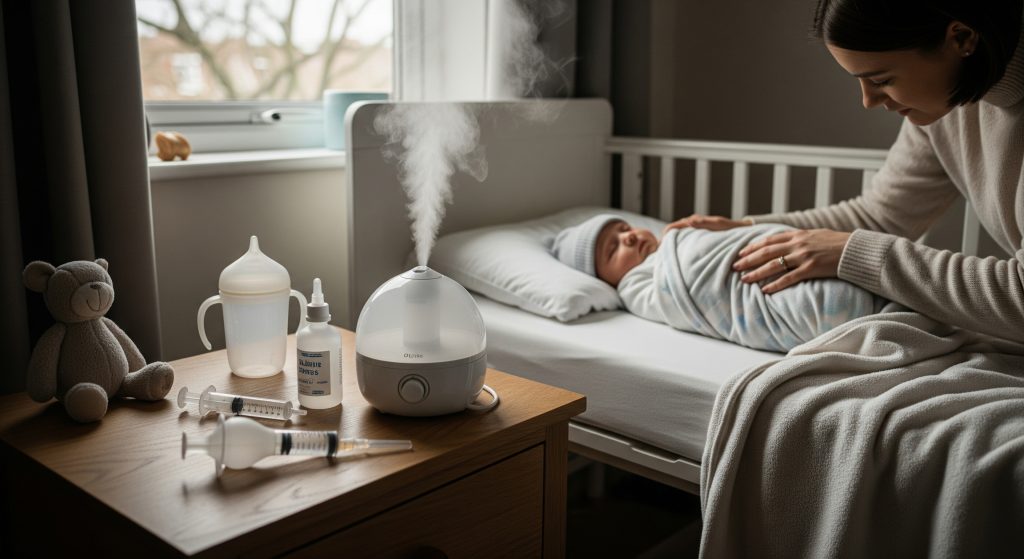
Humidifier |
Adding moisture to air |
|
Paracetamol/Ibuprofen (age-appropriate) |
Fever and discomfort management |
Frequent feeding – even if feeds are smaller than usual – maintains hydration. Skin-to-skin contact can help calm distressed infants and regulate their breathing. A slightly elevated sleeping position (achieved through raising the mattress, not with pillows for infants) may ease nighttime congestion.
Recognising Bronchiolitis Symptoms and When to Seek Help
Early Warning Signs
Bronchiolitis typically begins like any ordinary cold. Runny nose, sneezing, mild cough, perhaps a low-grade fever. For the first few days, nothing seems particularly alarming. Then comes the shift.
The cough intensifies. Breathing becomes audibly harder. You might notice wheezing – that high-pitched whistling sound during exhalation. Feeding takes longer, with frequent pauses for breath. These early bronchiolitis symptoms signal that the infection has moved from the upper airways into the bronchioles.
Respiratory Distress Indicators
Respiratory distress looks different from simply “breathing fast.” The signs are visible and often alarming:
-
Nasal flaring – nostrils widening with each breath
-
Intercostal retractions – visible pulling in between the ribs
-
Subcostal retractions – pulling in below the ribcage
-
Head bobbing – particularly in infants, the head moves with each breath
-
Grunting – a sound made during exhalation as the body tries to keep airways open
-
Tracheal tug – visible pulling at the base of the throat
Any of these signs warrant immediate medical assessment. They indicate the child is working excessively hard to breathe and may be tiring.
Symptoms in Newborns
Bronchiolitis in newborns presents particular challenges. These tiny patients have minimal respiratory reserve and can deteriorate rapidly. The bronchiolitis symptoms may be subtle initially – just reduced feeding, mild irritability, slightly faster breathing.
Apnoea – pauses in breathing – represents a specific concern in very young infants. Premature babies face heightened risk. Any newborn with suspected bronchiolitis requires careful medical evaluation, and the threshold for admission should be lower than for older infants.
Temperature instability may occur in newborns with bronchiolitis. Rather than a straightforward fever, some newborns become hypothermic. Feeding difficulties often appear early and progress quickly.
Adult Bronchiolitis Symptoms
Adults with bronchiolitis typically experience persistent cough (often lasting weeks), wheezing, and shortness of breath, particularly with exertion. The symptoms overlap significantly with other respiratory conditions, making diagnosis challenging.
Unlike the acute presentation in children, adult bronchiolitis often follows a more gradual course. Symptoms may wax and wane over extended periods. Exercise tolerance decreases. The cough becomes productive. Adults may notice increased breathlessness with activities they previously managed easily.
Emergency Warning Signs
Some signs demand immediate emergency attention. Don’t wait. Don’t monitor. Go:
Blue or grey discolouration around lips or fingernails, severe breathing difficulty with inability to speak or feed, extreme lethargy or unresponsiveness, and apnoea (breathing pauses) are medical emergencies requiring immediate care.
When in doubt, seek help. Parents know their children. If something feels seriously wrong – even if you can’t articulate exactly what – trust that instinct and get medical assessment.
Monitoring Oxygen Levels
Home pulse oximeters became household items during the pandemic. They can be useful for monitoring bronchiolitis, but interpretation requires context.
Normal oxygen saturation typically ranges from 95-100%. Readings consistently below 92% in a child with bronchiolitis warrant medical attention. However, the number shouldn’t be viewed in isolation. A child with good colour, normal activity levels, and adequate feeding at 93% saturation may be managing better than a child at 95% who appears exhausted and won’t eat.
Positioning affects readings. Cold hands give unreliable results. Movement creates artefact. Use the oximeter as one piece of information, not the sole decision-maker.
Understanding Bronchiolitis Causes and Risk Factors
Common Viral Causes
Viruses cause bronchiolitis. Full stop. Not bacteria. This distinction matters enormously for treatment decisions.
Multiple viruses can trigger bronchiolitis, with Respiratory Syncytial Virus (RSV) accounting for the majority of cases – somewhere between 50-80% depending on the study and season. But RSV isn’t alone in this space.
RSV and Other Pathogens
RSV remains the most significant bronchiolitis cause, particularly in infants under one year. The virus spreads through respiratory droplets and contaminated surfaces, surviving on hard surfaces for hours. During RSV season (typically autumn through spring in the UK), cases surge predictably.
Other viral culprits include:
-
Human metapneumovirus
-
Rhinovirus
-
Influenza viruses
-
Parainfluenza viruses
-
Adenoviruses
-
Coronaviruses (including common cold varieties)
Co-infections occur – sometimes multiple viruses are identified in a single patient. Whether this affects severity remains debated among researchers.
Risk Factors in Children
Not all children face equal risk. Several factors increase the likelihood of severe bronchiolitis:
-
Prematurity – lungs haven’t fully developed
-
Age under 12 weeks – smallest airways, least reserve
-
Congenital heart disease – compromised cardiovascular function
-
Chronic lung disease – pre-existing airway vulnerability
-
Immunodeficiency – reduced ability to fight infection
-
Neuromuscular disorders – weakened cough and secretion clearance
Second-hand smoke exposure consistently emerges as a modifiable risk factor. Children exposed to household smoking face higher rates of severe bronchiolitis and hospitalisation.
Adult Risk Factors
Adult bronchiolitis tends to occur in specific populations. Lung transplant recipients can develop bronchiolitis obliterans syndrome – a different but related condition affecting transplanted airways. Immunocompromised adults face increased risk from typical respiratory viruses.
Smoking, unsurprisingly, features prominently. Both active smoking and significant historical smoking exposure damage small airways, creating vulnerability. Occupational exposures to inhaled irritants contribute in some cases.
Environmental Triggers
Environment matters more than many realise. Crowded households, childcare attendance, and older siblings all increase exposure risk. RSV moves efficiently through families and daycare settings.
Air quality plays a role. Areas with high pollution levels see increased bronchiolitis hospitalisations. Indoor air quality matters too – poor ventilation, damp conditions, and mould exposure all stress respiratory systems.
Seasonality cannot be ignored. Bronchiolitis peaks during colder months in temperate climates, when people spend more time indoors in close contact and viruses survive longer in cool, dry air.
Treatment Approaches Not Recommended
Medications to Avoid
What drives me crazy is how many children still receive medications that evidence clearly shows don’t work for bronchiolitis. Parents request them. Some clinicians prescribe them. But the data is unequivocal.
The following have no role in routine bronchiolitis treatment:
-
Bronchodilators (salbutamol/albuterol nebulisers)
-
Systemic corticosteroids
-
Inhaled corticosteroids
-
Antibiotics (unless secondary bacterial infection is confirmed)
-
Chest physiotherapy
-
Over-the-counter cough and cold medications
The temptation to “do something” is powerful. Watching a child struggle to breathe while doing nothing except supportive care feels inadequate. But ineffective treatments aren’t benign – they carry side effects, costs, and false reassurance.
Why Antibiotics Don’t Work
This cannot be stated clearly enough: antibiotics do not treat viral infections. Bronchiolitis causes are viral. Antibiotics target bacteria. These medications simply cannot help.
Yet antibiotic prescription for bronchiolitis remains surprisingly common. Sometimes it’s pressure from worried parents wanting “something.” Sometimes it’s diagnostic uncertainty. Sometimes it’s habit.
The harm extends beyond the individual child. Unnecessary antibiotic use drives resistance, disrupts gut microbiome, and occasionally causes allergic reactions or other adverse effects. Unless clear evidence of secondary bacterial infection exists (which is uncommon), antibiotics have no place in bronchiolitis management.
Ineffective Therapies
Nebulised saline, once popular, shows inconsistent benefits in studies. Hypertonic saline (higher concentration salt water) may slightly reduce hospital length of stay in admitted patients but doesn’t prevent admission or significantly alter outcomes.
Chest physiotherapy – tapping, vibration, postural drainage – provides no benefit and may actually distress children. The idea that percussion helps clear secretions doesn’t hold up under scientific scrutiny for viral bronchiolitis.
Epinephrine nebulisers occasionally show short-term improvement in clinical scores but don’t translate to meaningful outcomes like reduced hospitalisation or faster recovery. The momentary improvement doesn’t justify routine use.
Moving Forward with Bronchiolitis Care
Bronchiolitis treatment has evolved toward simplicity, not complexity. The most effective approach involves watching, supporting, and waiting while the immune system does its work. This feels counterintuitive in an era of advanced medical interventions, but the evidence is robust.
Prevention deserves mention. Hand hygiene reduces transmission significantly. Keeping unwell individuals away from vulnerable infants helps. For high-risk babies, palivizumab (a monoclonal antibody) offers seasonal RSV protection. Newer vaccines and preventive medications continue emerging.
The single most frustrating part of bronchiolitis care is the waiting. Parents want action. They want medication that helps. They want visible improvement. Instead, they get saline drops and small frequent feeds and watching and waiting. But that waiting, that supportive care – that is the treatment. Done properly, it works.
Frequently Asked Questions
How long does bronchiolitis typically last in children?
Most children recover from bronchiolitis within 2-3 weeks. Symptoms typically peak around days 3-5 of illness, then gradually improve. The cough often persists longest, sometimes lasting 3-4 weeks even after other symptoms resolve. Premature infants and those with underlying conditions may experience prolonged illness.
Can adults develop serious bronchiolitis complications?
Yes, particularly in adults with compromised immune systems, underlying lung conditions, or following lung transplantation. Bronchiolitis obliterans represents a serious complication in transplant recipients. Adults with pre-existing respiratory disease may develop significant exacerbations requiring hospitalisation.
What home remedies are safe for managing bronchiolitis symptoms?
Safe home measures include saline nasal drops, gentle nasal suctioning before feeds, adequate fluid intake, cool-mist humidifiers, and appropriate fever management with paracetamol or ibuprofen (following age-appropriate dosing). Steam from warm baths may help loosen congestion. Avoid honey in children under one year and never use over-the-counter cough medications in young children.
When should oxygen therapy be started for bronchiolitis?
Oxygen therapy is typically initiated when oxygen saturation falls persistently below 90-92%, though clinical assessment matters as much as numbers. A child maintaining borderline saturations with significant respiratory distress may need supplementation, while another with similar numbers but minimal distress may not. Healthcare providers assess the complete clinical picture.
Is bronchiolitis contagious between family members?
Absolutely. The viruses causing bronchiolitis spread easily through respiratory droplets and contaminated surfaces. Older children and adults often experience the same virus as a mild cold while infants develop bronchiolitis. Hand washing, avoiding face-touching, and keeping unwell family members away from vulnerable infants helps reduce transmission.
What preventive measures reduce bronchiolitis risk in newborns?
Key prevention strategies include hand hygiene, avoiding contact with unwell individuals, keeping newborns away from crowded places during RSV season, ensuring household members are up-to-date on vaccinations (particularly influenza), avoiding smoke exposure, and breastfeeding where possible (breast milk contains protective antibodies). High-risk infants may qualify for palivizumab prophylaxis.
How is bronchiolitis different from bronchitis?
Bronchiolitis affects the smallest airways (bronchioles) and primarily occurs in infants and young children, caused almost exclusively by viruses. Bronchitis affects the larger airways (bronchi) and occurs across all ages, sometimes with bacterial involvement. The pathophysiology, treatment approach, and typical patient population differ significantly between these two conditions.

