






 We do what's right for you...


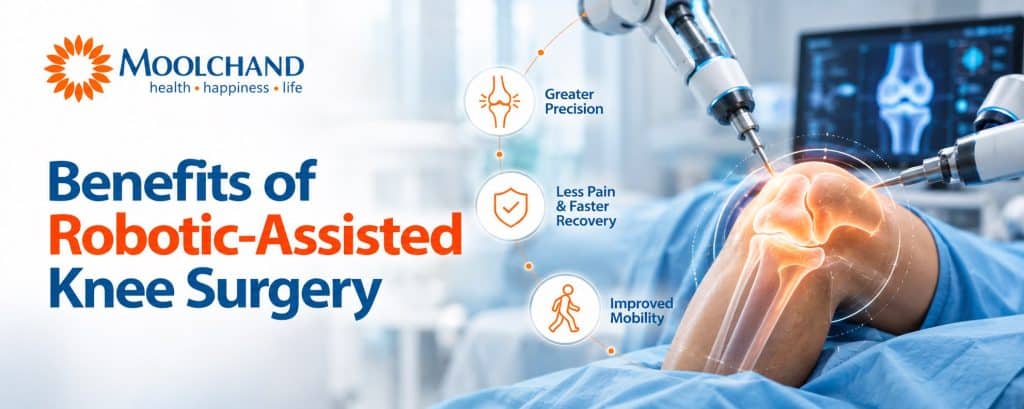
Benefits of Robotic-Assisted Knee Surgery
Dr. Dattatreya Mohapatra
Introduction
Knee pain can slowly change a person’s daily life. Simple activities can become difficult and uncomfortable. Walking, climbing stairs, or standing may cause constant pain. For many people, severe knee arthritis affects their independence and confidence.
Knee replacement can help improve movement and reduce long-term knee pain. Modern technology has also changed the way some knee replacement procedures are performed. Robotic-assisted surgery combines advanced technology with the experience of an orthopaedic surgeon.
Many patients now search for robotic knee replacement when considering surgery. They want to understand its benefits and recovery process. They also want to know whether robotic surgery is suitable for their condition. At Moolchand, every treatment decision begins with the patient’s individual needs.
A Simple Story Behind the Need for Knee Surgery
Rajesh had experienced knee pain for several years. He slowly stopped taking morning walks with his friends. Climbing stairs also became difficult for him. Even short walks started causing discomfort.
Medicines provided temporary relief for some time. Physiotherapy also helped during the early stages. However, his knee pain gradually affected his daily activities. His doctor then discussed different treatment options with him.
Rajesh wanted to understand whether robotic surgery could help. His doctor explained the difference between conventional and robotic-assisted procedures. He learned that the robot does not replace the surgeon. Instead, it provides advanced planning and surgical guidance.
This explanation helped Rajesh understand his treatment better. He realized that technology and surgical experience work together. His final treatment decision was based on his individual knee condition.
What Is Robotic-Assisted Knee Surgery?
Robotic-assisted knee surgery uses advanced technology during knee replacement procedures. It supports detailed planning before and during surgery. The surgeon first evaluates the patient’s knee condition and overall health.
Advanced imaging may help create a three-dimensional surgical plan. This plan helps the surgeon understand the patient’s individual knee anatomy. During surgery, the system can provide additional information about alignment and positioning.
The surgeon remains responsible for important surgical decisions. The robotic system acts as a surgical support tool. It helps the surgeon execute the planned procedure with greater control.
Benefits of Robotic-Assisted Knee Surgery
Greater Precision During Surgery
Precision is an important benefit of robotic assistance. The system can support detailed planning of bone preparation and implant positioning. It provides measurements that can help the surgeon during important surgical steps.
Accurate implant positioning is important during knee implant surgery. Proper alignment can support knee movement and overall implant function. However, robotic assistance does not guarantee a particular outcome for every patient.
Personalized Surgical Planning
Every patient’s knee anatomy is different. Arthritis can also affect the knee in different ways. Robotic technology can support personalized surgical planning for individual patients.
Three-dimensional planning allows the surgeon to review the patient’s anatomy. The surgeon can plan implant positioning before surgery. This approach can support a more individualized knee replacement surgery plan.
Better Assessment of Knee Alignment
Correct alignment is important during total knee replacement surgery. Robotic systems can provide detailed alignment information during the procedure. This information can help the surgeon assess implant positioning.
The technology can also support evaluation of the mechanical axis. These measurements provide additional information during surgery. The surgeon can use this information while making clinical decisions.
Reduced Soft-Tissue Trauma
Robotic assistance can support controlled bone preparation during surgery. The system helps the surgeon work according to the planned surgical boundaries. This may help limit unnecessary tissue handling in suitable cases.
However, incision size and tissue handling depend on the surgical technique. They also depend on the patient’s anatomy and the surgeon’s approach. Therefore, smaller incisions should not be considered guaranteed with every robotic procedure.
Potentially Less Early Postoperative Pain
Some studies have reported lower early pain after robotic-assisted knee surgery. Some patients may also require less pain medication during the early recovery period.
However, pain levels differ between patients. Pain management also depends on the surgical technique and recovery plan. Your surgeon can explain the expected recovery based on your condition.
Potentially Faster Early Recovery
A major goal of knee operation is helping patients return to daily activities. Robotic-assisted procedures may support early functional recovery in some patients.
Recovery depends on several factors. These include age, fitness, medical conditions, surgical complexity, and rehabilitation. Following physiotherapy instructions is also important after surgery.
Consistent Surgical Planning
Robotic technology provides digital measurements during surgery. These measurements allow the surgical team to compare the surgical plan with the actual procedure.
This can support consistent surgical execution across different patient anatomies. However, surgical experience remains essential throughout the procedure. Technology supports the surgeon but does not replace clinical judgment.
Support for Soft-Tissue Balancing
Successful knee replacement involves more than accurate bone preparation. Soft-tissue balance also affects knee movement and stability.
Robotic systems can provide information about ligament balance during surgery. This information can help the surgeon make appropriate adjustments. The goal is to create a balanced and functional knee.
Improved Implant Positioning
Correct implant positioning is an important part of knee implant surgery. Poor positioning can affect knee mechanics and movement.
Robotic planning can support accurate positioning according to the surgical plan. This may help reduce variations during certain surgical steps. However, robotic technology does not guarantee a specific long-term result.
Potential Long-Term Benefits
Correct implant positioning is important for long-term knee function. Robotic technology aims to improve planning and positioning during surgery.
Better alignment may support good implant function. However, implant durability depends on several factors. Implant type, activity levels, bone quality, weight, and surgical technique can all influence results.
Benefits for Surgeons and Care Teams
Robotic technology can provide useful information to surgeons and care teams. Digital systems can offer detailed measurements during different stages of surgery.
Enhanced digital guidance can help surgeons understand individual knee anatomy. Three-dimensional models can support personalized surgical planning. Real-time information can also assist with alignment and soft-tissue assessment.
Robotic technology may also support consistent surgical execution. This can be helpful when patients have different anatomical characteristics. However, experienced surgical judgment remains an essential part of the procedure.
Robotic Knee Replacement vs Conventional Knee Replacement
Patients often compare robotic surgery with conventional knee replacement. Both procedures aim to reduce pain and improve knee function. Both require careful surgical planning and postoperative rehabilitation.
Robotic-assisted surgery adds digital planning and intraoperative guidance. Conventional surgery relies more heavily on established manual techniques.
The benefits of robotic assistance can differ between patients. Therefore, robotic surgery should not automatically be considered necessary for everyone. Your surgeon should assess your condition before recommending the procedure.
Who May Need Total Knee Replacement Surgery?
Doctors may recommend total knee replacement surgery when severe knee damage affects daily life. Advanced osteoarthritis is one common reason for knee replacement.
Patients may experience persistent pain despite medicines and physiotherapy. They may also have difficulty walking, climbing stairs, or performing routine activities.
A detailed medical evaluation is required before surgery. Your orthopaedic surgeon may review your symptoms, physical condition, imaging, and previous treatments.
Is Robotic Knee Replacement Suitable for Everyone?
Robotic surgery is not automatically suitable for every patient. Your surgeon first evaluates your knee condition and overall health.
Imaging can help assess the amount of joint damage. Previous surgeries and significant deformities may also affect surgical planning.
The surgeon will explain whether robotic assistance may provide meaningful benefits. The final decision should be based on your individual medical needs.
Why Patients at Moolchand Choose Robotic Surgery
Patients considering robotic knee replacement often want advanced technology and experienced medical care. At Moolchand, treatment decisions focus on the individual patient.
Moolchand has superb physicians with extensive surgical experience. Their clinical expertise remains central throughout the treatment process. Technology is used to support appropriate surgical planning and execution.
Moolchand follows an integrity-driven approach to treatment. Robotic surgery is considered when it can provide meaningful value to the patient. Technology is not recommended simply because it is available.
Patients also receive compassionate care throughout their treatment journey. The care team supports patients before surgery, during hospitalization, and during recovery.
Moolchand also focuses on affordable prices for advanced healthcare. Patients can discuss treatment options and expected costs during consultation.
The hospital combines cutting-edge technology with experienced medical professionals. This approach helps patients understand their available treatment options.
Why Choose Robotic-Assisted Knee Surgery?
Patients considering knee replacement surgery often want to understand the real benefits of robotic assistance. The technology can support detailed planning, alignment, implant positioning, and surgical guidance.
However, technology is only one part of successful treatment. Experienced surgeons, proper patient selection, rehabilitation, and follow-up are equally important.
At Moolchand, total knee replacement surgeons assess every patient individually. They consider the patient’s symptoms, anatomy, lifestyle, and treatment goals.
The aim is to recommend an appropriate treatment for each patient. Robotic assistance is considered when it can provide meaningful clinical value.
Recovery After Robotic Knee Surgery
Recovery after robotic-assisted surgery varies between patients. Many patients begin movement soon after surgery under medical supervision.
Physiotherapy plays an important role during recovery. Patients may initially need walking support. Strength, flexibility, and confidence gradually improve with rehabilitation.
The recovery timeline depends on individual health and surgical factors. Your surgeon and physiotherapy team will provide personalized recovery instructions.
Following rehabilitation advice can support a safe return to daily activities. Patients should also attend recommended follow-up appointments.
Is Robotic Knee Surgery Safe?
Robotic-assisted knee surgery is used for knee replacement procedures. The robotic system supports the surgeon during specific surgical steps.
It does not independently perform the complete operation. The surgeon controls the procedure and makes important clinical decisions.
Like every major surgery, knee implant surgery has potential risks. These may include infection, blood clots, stiffness, bleeding, and implant-related complications.
Your surgeon will explain these risks before surgery. They will also discuss expected benefits and available alternatives.
Understanding the Term Knee Transplant Surgery
Patients sometimes search online for knee transplant surgery. However, knee replacement is generally called knee arthroplasty.
Knee replacement involves replacing damaged joint surfaces with artificial components. It is different from an organ transplant procedure.
Patients may also use terms such as knee operation or knee implant surgery. These terms can describe different types of knee procedures.
It is important to discuss the exact procedure with your orthopaedic surgeon. This helps ensure that you understand the planned treatment.
How to Choose a Knee Replacement Surgeon
Choosing a surgeon is an important decision before knee replacement. Patients should consider the surgeon’s qualifications and relevant surgical experience.
You can also discuss the surgeon’s experience with different knee replacement techniques. Ask questions about expected recovery and rehabilitation.
Patients searching for the best knee replacement surgeon in Delhi should focus on appropriate expertise and individualized care. A consultation allows the surgeon to assess your specific condition.
Patients searching for the best doctor for orthopedic in Delhi should also consider communication and treatment planning. Clear explanations can help patients make informed healthcare decisions.
Choosing an Orthopaedic Hospital in Delhi
The hospital environment also matters during knee replacement treatment. Patients should consider surgical facilities, orthopaedic expertise, rehabilitation support, and postoperative care.
Patients searching for the best orthopaedic hospital Delhi should understand the complete treatment pathway. Good care involves more than the surgical procedure itself.
Moolchand combines experienced specialists with advanced medical technology. Patients can discuss robotic and conventional treatment options with their orthopaedic team.
Frequently Asked Questions
1. What is robotic knee replacement?
Robotic knee replacement uses advanced technology during knee replacement surgery. It supports planning, alignment, and implant positioning.
2. Is robotic knee replacement better than conventional surgery?
Robotic surgery offers additional digital planning and surgical guidance. Its benefits can vary depending on the patient and procedure.
3. Does robotic knee replacement cause less pain?
Some patients may experience less early postoperative pain. Individual pain levels can vary after surgery.
4. Does robotic surgery provide faster recovery?
Some patients may experience faster early functional recovery. Rehabilitation and overall health also influence recovery.
5. Does robotic surgery use smaller incisions?
Incision size depends on the surgical technique and patient anatomy. Robotic assistance does not guarantee smaller incisions.
6. Does robotic surgery make knee implants last longer?
Accurate positioning may support good implant function. Long-term implant durability depends on several factors.
7. What is total knee replacement surgery?
It replaces damaged knee joint surfaces with artificial components. It is commonly performed for advanced knee joint damage.
8. Who performs robotic knee replacement?
An experienced orthopaedic surgeon performs the procedure. The robotic system supports specific surgical steps.
9. How do I find the best knee replacement surgeon in Delhi?
Consider qualifications, relevant surgical experience, technology, and patient-focused care. Discuss your condition directly with the surgeon.
10. How do I choose the best orthopaedic hospital in Delhi?
Consider specialist expertise, technology, surgical facilities, rehabilitation, and postoperative care. A consultation can help you understand suitable treatment options.
Conclusion
Robotic-assisted knee surgery combines surgical expertise with advanced technology. It can support detailed planning, alignment, and implant positioning.
Some patients may also experience improved early recovery. However, robotic surgery does not guarantee better outcomes for every patient.
The right treatment depends on individual medical needs. Your surgeon should assess your condition before recommending robotic assistance.
At Moolchand, superb physicians combine experience with cutting-edge technology. Patients also receive compassionate care throughout their treatment journey.
Our approach is guided by integrity and patient-focused decision-making. We also focus on affordable prices for advanced healthcare.
For patients considering robotic knee replacement, an expert consultation can clarify suitable options.
You can easily book your appointment online, through the Moolchand MyHealth App, by calling 011 4200 0000

