






 We do what's right for you...


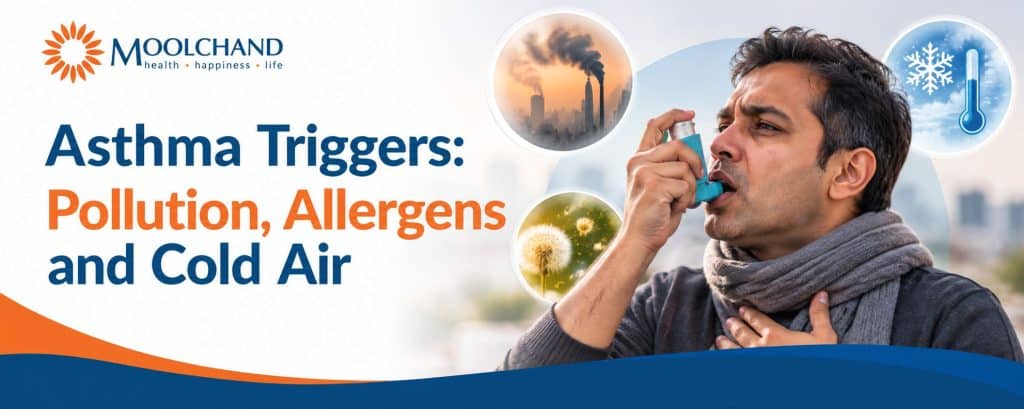
Asthma Triggers: Pollution, Allergens and Cold Air
Introduction
Asthma often worsens in Delhi from October because air quality drops sharply. Stubble burning, vehicle emissions, construction dust and festive firecrackers contribute to this problem. Still winter air can also trap pollutants near the ground. Viral infections rise during seasonal changes. Cooler evenings may irritate sensitive airways. Seasonal pollen and dust mites can add to the trigger load.
The most important protection is taking your controller inhaler regularly. Check the daily AQI and limit outdoor exertion on poor-air days. Keep a written asthma action plan and follow it during flare-ups.
Key Takeaways
PM2.5 particles penetrate deep into the lungs. They can trigger airway inflammation and asthma attacks.
Do not stop your preventer or controller inhaler when you feel well. October can increase exposure to several asthma triggers.
Global asthma guidance no longer recommends using a reliever alone without an inhaled steroid.
Check the CPCB AQI daily. Plan outdoor activity during lower-pollution periods.
Get your annual flu vaccine. Respiratory viruses can trigger asthma attacks.
What Are the Triggers of Asthma?
The triggers of asthma vary from person to person. Common triggers include air pollution, cigarette smoke, dust mites, pollen, mould, cold air and respiratory infections.
Some people develop symptoms after exercise. Strong perfumes, incense smoke and mosquito coils can also trigger symptoms. Identifying personal triggers can help reduce asthma flare-ups.
Keeping a symptom diary can help identify patterns. Your doctor can use this information while preparing your asthma action plan.
What Is the Cause of Asthma?
Many people ask, what is the cause of asthma? Asthma does not usually have one single cause.
Genetic factors can increase the risk of asthma. Environmental exposure can also contribute to airway sensitivity. Allergies, pollution, respiratory infections and occupational exposures may worsen symptoms.
Some people develop asthma during childhood. Others develop it during adulthood. A person’s triggers can also change over time.
Related: टीबी (Tuberculosis) क्या है? टीबी के लक्षण, कारण और उपचार
Why October Is Hard for People With Asthma in Delhi
Pollution: Stubble burning in neighbouring states, vehicle emissions, construction dust and firecrackers around Dussehra and Diwali can increase PM2.5 levels.
Temperature inversion: Cooler, still air can trap pollutants near the ground. This is particularly relevant during nights and early mornings.
Cold air: Dry, cool evening air can narrow sensitive airways.
Allergens: Post-monsoon mould, dust mites, weed pollen and grass pollen can contribute to symptoms.
Viral infections: Colds and flu can become more common as the season changes. Respiratory infections are a common trigger for asthma attacks.
Asthma Symptoms in Adults
Asthma symptoms in adults can vary from mild to severe. Common symptoms include wheezing, coughing, chest tightness and breathlessness.
Symptoms may become worse at night or early in the morning. Some people notice symptoms during exercise or after exposure to pollution.
Common symptoms of asthma include:
- Wheezing while breathing
- Recurrent coughing
- Chest tightness
- Shortness of breath
- Difficulty breathing during exercise
- Night-time coughing
- Symptoms that worsen after exposure to triggers
Not everyone experiences all these symptoms. Recurrent symptoms should be evaluated by a doctor.
Delhi AQI Categories and What to Do
| AQI (CPCB) | Category | Advice for People With Asthma |
|---|---|---|
| 0–50 | Good | Normal activity |
| 51–100 | Satisfactory | Normal activity; carry reliever |
| 101–200 | Moderate | Reduce prolonged or heavy outdoor exertion |
| 201–300 | Poor | Avoid outdoor exercise; take controller regularly |
| 301–400 | Very poor | Stay indoors as much as possible; use a well-fitted N95 mask outdoors |
| 401–500 | Severe | Avoid going out; keep windows shut and follow your action plan closely |
AQI categories can guide daily activity decisions. Your personal asthma action plan should take priority when symptoms worsen.
Common Asthma Triggers and How to Manage Them
| Trigger | Why It Matters | What Helps |
|---|---|---|
| PM2.5 and smoke | Inflames airways | Check AQI, use an N95 mask outdoors and consider a HEPA air purifier indoors |
| Firecracker smoke | Sudden increase in particles and gases | Stay indoors during peak hours; keep reliever handy |
| Cold, dry air | Can narrow sensitive airways | Cover nose and mouth with a scarf; warm up before exercise |
| Dust mites | Common indoor allergen | Wash bedding weekly in hot water; use mite-proof covers |
| Mould | Thrives after the monsoon | Fix leaks, ventilate bathrooms and avoid damp rooms |
| Viral infections | Can trigger attacks | Annual flu vaccine and good hand hygiene |
| Incense and mosquito coils | Produce indoor smoke | Avoid burning them in closed rooms |
How Asthma Is Diagnosed
Spirometry: This test measures how much and how quickly you can breathe out. Significant improvement after a reliever can support an asthma diagnosis.
Peak flow monitoring: Daily readings at home can show airflow variability. They may provide an early warning of worsening asthma.
FeNO test: This measures airway inflammation in selected patients.
Allergy testing: This can identify specific allergic triggers.
Your doctor may recommend one or more tests depending on your symptoms and medical history.
Asthma Treatment
The main goal of asthma treatment is to control symptoms and prevent attacks. Treatment depends on symptom severity, triggers, age and other health conditions.
According to GINA guidance:
- Inhaled corticosteroids (ICS) are a foundation of asthma control.
- For many adults and adolescents, an ICS-formoterol inhaler can be used as both maintenance and reliever therapy.
- Reliever-only treatment with salbutamol without an inhaled steroid is not recommended as the sole treatment.
- Add-on medicines and biologic treatments may be considered for severe asthma.
- Correct inhaler technique is important.
- Your doctor or nurse should check your inhaler technique regularly.
Never change or stop your prescribed asthma medicines without discussing it with your doctor.
How to Cure Asthma?
Many people search for how to cure asthma. At present, there is no guaranteed permanent cure for asthma.
However, asthma can often be controlled very effectively. The right treatment can reduce symptoms and lower the risk of serious attacks.
Good asthma control includes regular controller treatment, trigger avoidance, correct inhaler technique and regular medical review.
Some children may have fewer symptoms as they grow. However, symptoms can return later. Regular follow-up remains important.
Related: H1N1 Virus in Delhi: Symptoms, Treatment, Prevention
Your Asthma Action Plan Zones
| Zone | Symptoms / Peak Flow | Action |
|---|---|---|
| Green | No symptoms; peak flow above 80% of personal best | Continue regular treatment |
| Yellow | Cough, wheeze, night waking; 50–80% of best | Use reliever and step up treatment as per plan; contact doctor |
| Red | Severe breathlessness, unable to speak in sentences; below 50% of best | Use reliever and seek emergency care immediately |
Your doctor should personalize these zones according to your condition.
Recovery After an Asthma Flare
Mild flares may settle within a few days after appropriate treatment. Recovery depends on the severity of the attack and the person’s underlying asthma control.
After an emergency visit or a course of oral steroids, follow-up within 1–2 weeks is advised. Your doctor can review medicines and update your asthma action plan.
When to Seek Emergency Care
Seek emergency medical help if you experience:
☐ Breathlessness at rest or inability to complete sentences
☐ Reliever not helping or needed more often than every four hours
☐ Lips or fingertips turning bluish
☐ Drowsiness or confusion
☐ Peak flow below 50% of your personal best
☐ Chest tightness getting worse despite treatment
Internal link → Moolchand Pulmonology & Respiratory Medicine
Internal link → Moolchand Emergency (Lifeline 4200 0102)
Internal link → Related: “Delhi Air Quality in October: How Rising AQI Damages Your Lungs”
Finding Asthma and Lung Care in Delhi
People searching for a chest hospital in Delhi should look for a facility with respiratory specialists and appropriate diagnostic services.
A Pulmonology hospital in delhi can provide evaluation for asthma, chronic cough, wheezing and other respiratory conditions.
People may also search for a lungs hospital in delhi or the best lungs hospital in delhi when looking for specialized respiratory care. The right choice should depend on specialist availability, diagnostic facilities and the patient’s medical needs.
Related: 10 Warning Signs of Lung Disease You Shouldn’t Ignore
A chest specialist in Delhi can evaluate recurring wheezing, breathlessness and persistent cough. A chest specialist doctor in delhi may also recommend spirometry or other tests when required.
Patients looking for the best pulmonologist in Delhi should consider the doctor’s experience, relevant specialization and the facilities available for diagnosis and treatment.
For respiratory emergencies, choose a hospital in delhi that provides appropriate emergency care and respiratory support.
Frequently Asked Questions About Asthma
What are the symptoms of asthma?
Common symptoms of asthma include wheezing, coughing, breathlessness and chest tightness. Symptoms may worsen at night, during exercise or after exposure to triggers.
What are asthma symptoms in adults?
Asthma symptoms in adults commonly include recurrent wheezing, shortness of breath, coughing and chest tightness. Some adults mainly experience coughing without obvious wheezing.
What are the triggers of asthma?
The common triggers of asthma include pollution, dust mites, pollen, mould, smoke, cold air, respiratory infections and exercise. Personal triggers can differ between individuals.
What is the cause of asthma?
If you are asking what is the cause of asthma, there is usually no single cause. Genetic tendency, allergies and environmental exposures can all contribute to asthma.
Can pollution make asthma worse?
Yes. PM2.5 and other air pollutants can irritate the airways. Poor AQI can increase asthma symptoms and the risk of flare-ups.
Does cold air trigger asthma?
Yes. Cold and dry air can narrow sensitive airways. Covering your nose and mouth can help warm the air before it reaches your lungs.
Does dust cause asthma?
Dust can contain dust mites and other particles that trigger symptoms in sensitive people. Regular bedding cleaning can help reduce exposure.
Are N95 masks useful for people with asthma?
A well-fitted N95 mask can reduce inhalation of airborne particles outdoors. People with severe breathing difficulty should follow their doctor’s advice.
Are air purifiers useful for asthma?
A properly sized HEPA air purifier can reduce indoor airborne particles. It may be particularly useful in bedrooms and other frequently used rooms.
Can I exercise if I have asthma?
Yes. Most people with controlled asthma can exercise. On poor AQI days, choose indoor exercise and follow your prescribed treatment plan.
Are inhalers addictive?
No. Asthma inhalers are not considered addictive. Controller inhalers help reduce airway inflammation and prevent symptoms.
Can I stop my inhaler when I feel better?
Do not stop prescribed controller treatment without medical advice. Feeling better can mean that your treatment is controlling the airway inflammation.
Can steam inhalation cure asthma?
No. Steam may temporarily soothe nasal congestion, but it does not treat the underlying airway inflammation caused by asthma.
Can asthma be cured permanently?
There is no guaranteed permanent cure for asthma. However, appropriate asthma treatment can control symptoms and reduce the risk of serious attacks.
How to cure asthma naturally?
There is no proven natural remedy that permanently cures asthma. Avoiding triggers, maintaining a healthy lifestyle and following prescribed treatment are more reliable approaches.
Do not replace controller medicines with herbal remedies without consulting your doctor.
Can children outgrow asthma?
Some children experience fewer symptoms as they grow. However, asthma symptoms can return later. Regular medical review remains important.
Should people with asthma get the flu vaccine?
Annual influenza vaccination is recommended for many people with asthma. Discuss vaccination with your doctor based on your age and health condition.
When should I see a chest specialist in Delhi?
See a chest specialist in delhi if symptoms are frequent, interfere with sleep or activities, or require repeated emergency treatment.
You should also seek medical advice if your reliever is not controlling symptoms adequately.
How do I choose a chest specialist doctor in Delhi?
A chest specialist doctor in delhi should be able to evaluate asthma symptoms and recommend appropriate respiratory testing. Consider relevant experience, specialist qualifications and access to diagnostic facilities.
Where can I find a pulmonology hospital in Delhi?
A Pulmonology hospital in delhi should ideally provide pulmonary consultation, spirometry, emergency respiratory care and appropriate diagnostic services.
When should I look for a lungs hospital in Delhi?
People with recurring breathlessness, wheezing, persistent cough or uncontrolled asthma may need evaluation at a lungs hospital in delhi or a respiratory medicine department.
How do I find the best pulmonologist in Delhi?
When searching for the best pulmonologist in Delhi, consider the specialist’s experience with asthma, diagnostic facilities, treatment options and follow-up care.
How do I see a chest specialist at Moolchand?
You can easily book your appointment online, through the Moolchand MyHealth App, by calling 011 4200 0000
Book Appointment

