






 We do what's right for you...


Advantages of Consulting a Urologist Surgeon in India
Dr. Mohammed Tabish Rayee
Conventional wisdom says to prioritise the nearest hospital and get treated quickly. That mindset can backfire with complex urology issues. I prefer to start with the right specialist and the right platform, then optimise for distance and cost. For many patients, a urologist surgeon in India offers that mix of specialist depth, advanced technology, and disciplined care pathways. The difference shows up in surgical precision, recovery time, and long term function. It also shows up in cost control for self funded or under insured patients.
Top Urologist Surgeons and Advanced Centres in India
1. Leading Robotic Surgery Centres
I look for robotic capability first when evaluating a centre for prostate, kidney, or bladder surgery. The da Vinci platform and newer systems raise precision and reduce trauma. As UrologyTimes reported, an alternative platform secured FDA clearance for key urologic procedures and delivered a surgical success rate of 98.5% in trials. That kind of validation matters for complex oncological cases, though technique and surgeon skill still drive outcomes.
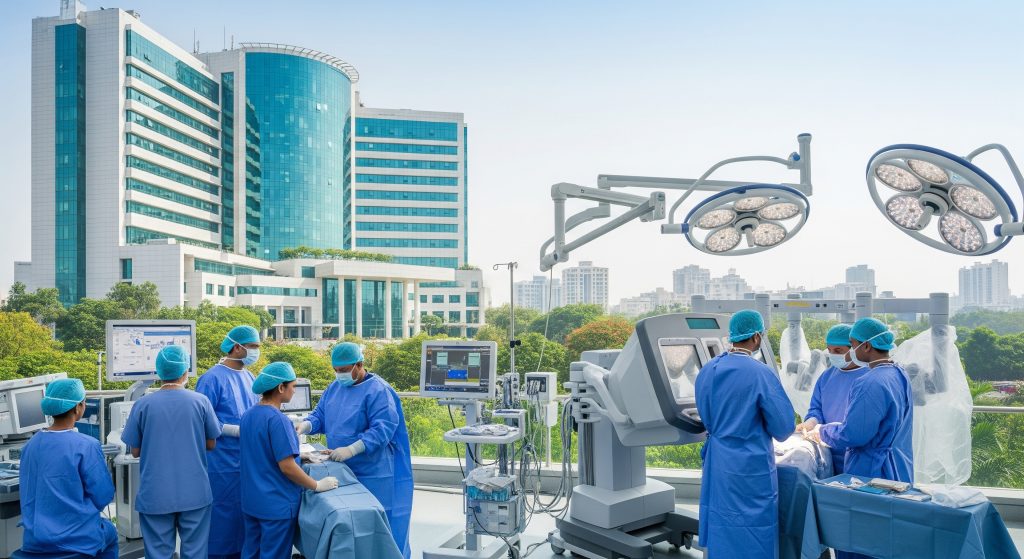
In practice, leading programmes in India have built full robotic suites with multidisciplinary support. Centres focused on robotic urology surgery tend to provide structured prehabilitation, anaesthesia protocols for minimal blood loss, and post operative ERAS pathways. I see value when the urologist surgeon works shoulder to shoulder with radiology, nephrology, and oncology. It reduces friction and speeds decision making. It also shortens the time from diagnosis to definitive treatment.
-
Dedicated robotic consoles with high definition 3D visualisation.
-
Specialised nursing and scrub teams trained for urologic robotics.
-
Standardised pathways for prostatectomy, partial nephrectomy, and cystectomy.
-
Integrated imaging and pathology for rapid intraoperative decisions.
One small example illustrates the impact. A patient with a 2.8 cm renal mass underwent robotic partial nephrectomy. Ischaemia time stayed low, margins were clear, and discharge occurred on day two. That is the compound effect of platform, protocol, and experience.
2. Premier Urologists and Their Expertise
Names matter less than patterns. I look for surgeons who publish, train teams, and adopt technology responsibly. The best programmes feature consultants recognised for endourology, laparoscopic reconstructive work, and transplant support. Many have built reputations in stone disease, prostate disease, and functional urology. Several also lead programmes in renal transplantation and complex pelvic oncology. Titles and awards are useful signals, but I prioritise case mix, volume in the target procedure, and complication reporting.
If the brief calls for oncology, I shortlist surgeons who handle nerve sparing prostatectomy and complex lymphadenectomy routinely. For stones, I prefer surgeons comfortable with mini PCNL, flexible URS, and laser platforms. For benign prostatic enlargement, I review outcomes across TURP, HoLEP, and newer laser techniques. The right urologist surgeon selects the procedure to fit anatomy, comorbidities, and life goals. Not the other way round.
-
Evidence of multidisciplinary tumour boards for cancer pathways.
-
Endourology capability with flexible scopes and high power lasers.
-
Reconstructive skill for urethral strictures and functional disorders.
-
Transplant experience when renal replacement options are in play.
This is where the search term best urologist in india can mislead. Rankings rarely capture nuanced case selection or complication rescue. I request anonymised outcomes and speak with the clinical coordinator. A five minute conversation on protocol tells me more than a glossy brochure.
3. Regional Distribution of Excellence
Quality concentrates in metro corridors. Major hubs in Delhi NCR, Mumbai, Bengaluru, Chennai, and Hyderabad host high volume urology units with robotic capacity. Secondary cities show steady progress, though availability remains uneven. Patients from remote districts often choose to travel for complex reconstructions or cancer surgery. That is rational. It reduces redo risk, and it secures access to intensive care protocols when needed.
Professional bodies encourage wider skill distribution through training and collaborative programmes. Over time, that will improve access, particularly for functional and stone disease pathways. But still, advanced pelvic oncology and transplant linked procedures remain clustered near academic and corporate tertiary centres. For patients weighing travel, the calculus is simple. Select the clinical skill first. Then optimise for proximity.
-
Metro centres: broader robotics and laser availability.
-
Tier two cities: strong endourology, growing robotics access.
-
Rural access: referral based pathways into metro centres.
I remain pragmatic on this point. A referral pathway that gets the patient to the right urologist surgeon quickly is better than a nearby option that struggles with complexity.
4. Cost Advantages for International Patients
Pricing is often decisive for self pay patients. As IndiCure notes, many urology surgeries in India are priced up to 75% below typical Western tariffs, with common procedures listed in the low to mid four figure US dollar range. The exact figure varies by technique, hospital tier, and comorbidities, but the differential is material.
I advise comparing two to three itemised quotes for an apples to apples review. Include surgeon fee, anaesthesia, consumables, ICU, ward stay, and imaging. Ask for the likely variance band, not just a single headline number. Then add a buffer for unforeseen care, however small the risk.
|
Procedure |
Typical India Price Band (USD) |
|---|---|
|
Kidney stone removal (endoscopic or laser) |
2,500 – 6,000 |
|
Prostate surgery (various techniques) |
3,000 – 8,000 |
|
TURP or equivalent BPH surgery |
~3,000 – 4,000 |
|
Radical nephrectomy |
~3,500 and above |
|
Cystectomy spectrum |
~4,500 and above |
Two practical tips. Confirm whether robotic consumables are bundled. Verify ward category, because room class can affect total billing significantly. A clear financial letter reduces surprises and improves trust.
Revolutionary Technologies and Treatment Options
Latest Robotic Surgical Systems
Robotics is now integral to modern urological surgery. High magnification 3D optics, wristed instruments, and tremor filtration support precise dissection in tight pelvic spaces. Nerve preservation becomes more reliable. Lymph node clearance becomes more complete and yet controlled. The outcome is not just a smaller incision. It is better functional preservation when disease allows.
Adoption continues to rise. As MerilLife highlighted, India has deployed over 76 robotic systems with roughly 500 trained surgeons. That footprint signals critical mass for oncology, reconstruction, and complex stone disease in select centres.
AI enabled features are entering the stack, from image guidance to energy modulation. I treat these as adjuncts, not replacements. The urologist surgeon remains the deciding variable. The platform enhances skill and consistency. It does not create either.
-
Stable port placement and ergonomics for long pelvic cases.
-
Enhanced vision that aids nerve and vessel identification.
-
Motion scaling for millimetre level suturing and reconstruction.
One caveat deserves mention. Capital and training costs are substantial. Some centres may overextend indications to amortise investment. I always ask how often the team converts to open surgery and why. Honest conversion patterns are a positive sign, not a weakness.
Minimally Invasive Procedures Available
Minimally invasive urology is broader than robotics. Laparoscopy, endourology, and laser systems address much of the case mix. Flexible ureterorenoscopy with laser lithotripsy handles stones with minimal trauma. Laparoscopic partial nephrectomy preserves renal tissue with controlled warm ischaemia. For BPH, laser enucleation offers durable relief with lower bleeding risk.
The clinical advantages are consistent. Smaller incisions reduce tissue disruption and pain. Hospital stays shorten. Return to normal activity accelerates through reduced wound burden and lower infection risk. These are not cosmetic gains. They influence functional recovery and overall cost of care.
-
Flexible endoscopy for intrarenal stones and upper tract lesions.
-
Holmium or thulium lasers for precise cutting and coagulation.
-
Laparoscopic reconstruction for ureteric strictures and reflux.
In practical terms, I match approach to anatomy and goals. A sedentary patient with a large median lobe may benefit from enucleation. An active patient with a small gland might prefer a less invasive office based option. The urologist surgeon should define options with clear trade offs and likely timelines for recovery.
Specialised Treatments for Complex Conditions
Complex urology demands a broad armamentarium. Precision imaging steers tumour mapping. Energy devices refine dissection. Reconstruction techniques protect continence and sexual function where possible. Precision medicine is gaining ground, with protocols tailored to anatomy, tumour biology, and lifestyle requirements.
Kidney stones demonstrate the shift well. High power lasers fragment stones efficiently with reduced retropulsion. Real time imaging helps target energy and minimise collateral injury. For incontinence, minimally invasive options such as bulking agents or sling systems can restore function with modest downtime. The key is rigorous patient selection and expectation setting.
-
Holmium laser lithotripsy for complex, hard stones.
-
Selective enucleation techniques for large prostates.
-
Targeted reconstruction for sphincter and urethral support.
An experienced urologist surgeon will not chase novelty. The aim is durable function and oncological safety. If that means a conventional approach in a specific case, so be it.
Comparison with Traditional Methods
Open surgery still has a place. Large tumours with vascular invasion or hostile abdomens may favour open exposure. And yet, for many indications, minimally invasive approaches deliver comparable oncological control with fewer trade offs.
Robotic and laparoscopic approaches reduce incision burden and usually shorten hospital stay while preserving surgical intent.
Pros vs Cons
-
Pros: smaller incisions, less blood loss, faster mobilisation, lower wound complications, fine control in confined spaces.
-
Cons: higher capital costs, longer learning curve, potential access limitations in smaller centres.
My decision rule is conservative. If a minimally invasive route compromises safety or margin, I choose open. If not, I leverage robotics or laparoscopy for their clear recovery advantages. It is basically a safety first algorithm, not a technology first mindset.
Patient Experience and Medical Tourism Benefits
Comprehensive Pre-Consultation Services
Strong programmes deliver clarity before travel. I expect a virtual review of reports, a preliminary plan, and a probable itinerary with contingencies. Imaging protocols should be specified to avoid repeat scans on arrival. A dedicated coordinator helps with visa letters, accommodation guidance, and scheduling.
-
Structured triage of reports within a defined response time.
-
Early anaesthesia review for comorbidity planning.
-
Clear list of required tests and likely add ons.
Patients often search for a urology specialist near me first, then widen the net when the case appears complex. I respect the instinct. My role is to map the shortest path to the right care, even if it involves travel.
Hospital Accreditation and Quality Standards
Accreditation signals process discipline. It is not a guarantee, but it correlates with better documentation, incident learning, and patient communication. As NABH frames it, the standards emphasise patient safety, measurable quality improvement, and sustainability in delivery. In my reviews, accredited units usually demonstrate stronger medication safety, infection control, and handoff practices.
I also examine quality dashboards. Time to antibiotics in sepsis, catheter associated infection rates, and return to theatre rates tell a story. Staff training logs and morbidity meetings fill in the rest. Accreditation is a floor. Culture and data discipline raise the ceiling.
Post-Treatment Care Excellence
Recovery is a team sport. High quality centres operationalise ERAS protocols, early mobilisation, and hydration targets. Dieticians support protein intake. Nurses reinforce wound care and thrombosis prevention. Remote follow up continues after discharge, with clear escalation channels.
-
Structured pain control with opioid sparing regimens where possible.
-
Hydration and nutrition plans that match the surgery type.
-
Scheduled virtual check ins to catch issues early.
I encourage patients to track symptoms and fluid intake during the first fortnight. A short checklist can prevent avoidable readmissions. Small habits compound. So do small oversights.
Language and Communication Support
India’s major centres operate multilingual support desks and bedside translation. Written instructions are provided in plain English, with language adaptations where possible. This reduces friction for international families and improves adherence to postoperative instructions. Communication is not a soft factor. It is clinical safety in disguise.
Making the Right Choice for Urological Care
My selection framework is simple and strict. Prioritise the clinical fit first. Confirm the team’s depth in the target procedure. Validate protocols, escalation plans, and ICU access. Only then weigh convenience and price. A skilled urologist surgeon with a coherent programme will outperform a convenient option in complex disease. That holds whether the case involves cancer, stones, or reconstruction.
-
Confirm the surgeon’s current case volume in the relevant procedure.
-
Review perioperative pathways and expected recovery milestones.
-
Request an itemised estimate with a defined variance band.
-
Ensure follow up plans are practical for your location and timeline.
As for discovery, general searches like best urologist in india are a starting point, not an end point. I triangulate with peer referrals, outcome data, and a direct call with the clinical coordinator. One honest conversation can surface strengths and constraints. It also sets the tone for the relationship. The right choice is rarely the flashiest website. It is the team that answers precise questions without defensiveness and with clarity.
Frequently Asked Questions
How much does robotic urology surgery cost in India compared to other countries?
Robotic procedures in India are typically priced well below Western averages. As IndiCure summarises, many surgeries come in up to 75% lower, with common urology operations listed in the low to mid four figures in US dollars. I still recommend an itemised estimate and a buffer for contingencies.
What is the recovery time for robotic prostate surgery in India?
Most candidates mobilise the same day and discharge within a few days. Return to routine activity usually occurs within two to four weeks, subject to the extent of dissection and continence recovery. The urologist surgeon will tailor pathways to comorbidities and baseline fitness.
Can international patients get virtual consultations before travelling to India?
Yes. Reputed centres offer pre travel virtual consults, imaging review, and a provisional plan. I advise sending complete reports and a concise medical summary for an efficient discussion.
Which Indian cities offer the best urological treatment facilities?
Delhi NCR, Mumbai, Bengaluru, Chennai, and Hyderabad host concentrated expertise and robotic platforms. Several tier two cities provide excellent endourology and growing robotic access. Final selection should align with the required procedure and surgeon experience.
What are the success rates for kidney stone removal procedures in India?
Success depends on stone size, location, and technique. Flexible endoscopy with laser offers high clearance rates for suitable stones. Complex burdens may require staged interventions. A detailed plan from the urologist surgeon clarifies expected clearance and timelines.
How do I verify the credentials of a urologist surgeon in India?
Request the surgeon’s medical council registration, fellowship details, and current hospital privileges. Review case volume in the target procedure and ask for pathway documents. A brief discussion on complication management reveals real expertise.
What insurance options are available for medical tourists seeking urology treatment?
Coverage varies by insurer and policy country. Some international plans reimburse out of network care with prior authorisation. Many patients self fund and claim reimbursement later. The hospital financial counsellor can issue medical necessity letters and itemised bills to support claims.

